What does a house clearance service remove?
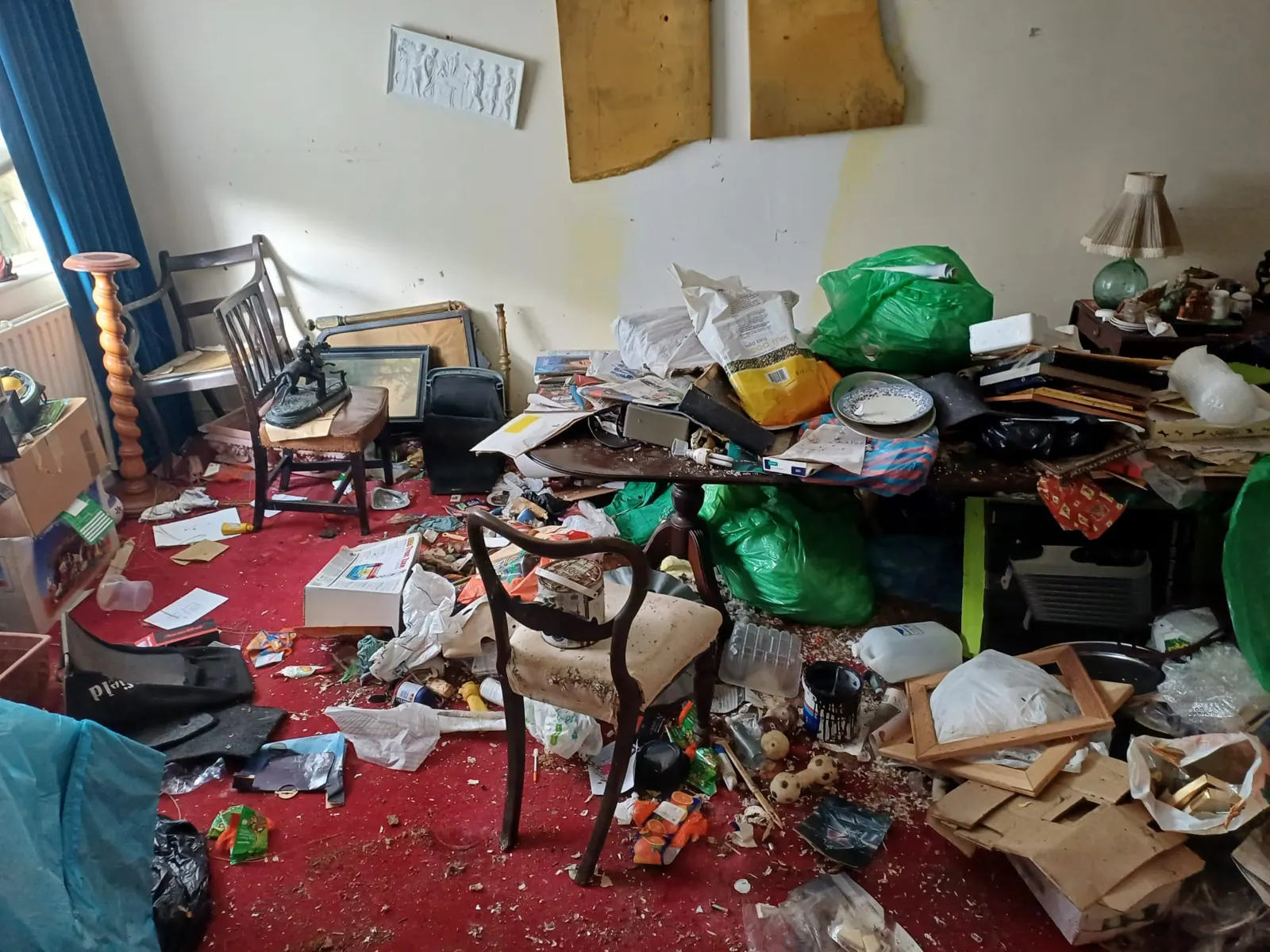
A house clearance service removes almost everything left in a home: furniture, white goods, mattresses, carpets, electrical items, garden things, books, clothes and the bags of general household waste that any clear-out produces. The main exceptions are hazardous materials such as paint, solvents, oils, chemicals, gas bottles and asbestos, which we do not collect. If something is unusual, ask first and you will get a straight answer.
Below is what a two-person crew will take from a typical Dublin house or flat, what needs a conversation before the day, and where each kind of item ends up.
Do house clearance companies take furniture?
Yes, and it is the bulk of most jobs. Beds, wardrobes, chests of drawers, sofas, armchairs, dining tables and chairs, sideboards, bookcases, coffee tables, desks and the kitchen table that has been there since the house was built.
Nothing needs to be dismantled first. The crew takes wardrobes apart on the landing if they will not fit down the stairs, and carries sofas out the way they came in. If a piece is in good condition, it is set aside for reuse or donation rather than going to the transfer station.
Fitted furniture is slightly different. Built-in wardrobes and fitted kitchens are a strip-out rather than a clearance, so send a photo and ask.
What about white goods and kitchen appliances?
Fridges, freezers, washing machines, tumble dryers, dishwashers, cookers and microwaves all go. Fridges and freezers should be emptied and, ideally, defrosted the day before so they are not dripping down the stairs. Gas cookers need to be disconnected by someone qualified before the crew arrives; we lift, we do not disconnect gas.
White goods are electrical waste and are handled under the WEEE recycling scheme rather than going into general waste.
Do you take mattresses, carpets and soft furnishings?
Yes. Mattresses, bed bases, duvets, pillows, curtains, cushions and rugs are everyday items on a clearance. Old carpet and underlay can be lifted and taken too, so mention it in your photos and it goes into the quote.
These items are among the dearer things to dispose of at a licensed transfer station, which is one reason a house full of soft furnishings costs more to clear than a house full of timber furniture. Our guide to what drives the cost of a house clearance explains that in more detail.
Will a clearance crew take electrical items (WEEE)?
Televisions, computers, printers, lamps, kettles, toasters, hoovers, radios, old video players and the drawer of tangled cables all go. In Ireland these are classed as Waste Electrical and Electronic Equipment, usually shortened to WEEE, and they are separated from general waste for recycling.
Batteries, light bulbs and fluorescent tubes also need to be kept out of the general waste. Put them in a box and ask us first; shops that sell them and civic amenity sites take them back under the WEEE scheme.
Do you clear sheds, gardens and garages too?
Yes, on the same visit. Garden furniture, broken barbecues, lawnmowers, plant pots, rusted tools, bikes, paddling pools and the contents of a shed that nobody has opened in a decade are all normal.
Soil, rubble, concrete and large volumes of green waste are a different kind of job and are usually better handled by a skip or a dedicated garden waste service. Send photos and ask. Our garage clearance and shed clearance pages cover the outdoor side in more detail.
What about books, clothes, paperwork and the small stuff?
All of it. Books, clothes, shoes, bedding, crockery, pots and pans, ornaments, toys, photographs, Christmas decorations, the hot press full of towels, and the carrier bags of carrier bags.
You do not need to bag or sort any of it. The crew bags loose items as it goes and separates clothes and books in good condition for donation. The one thing we ask is that you set aside anything you want to keep, because once a bag is on the van it is hard to find again.
Personal paperwork is yours to deal with before the day. Shred or keep anything with names, account numbers or medical details rather than letting it go in a general waste bag.
What will a house clearance service not take?
Hazardous waste. That means asbestos (including old Artex ceilings and garage roof sheets that may contain it), chemicals, pesticides, solvents, oil, gas bottles and cylinders, fire extinguishers, clinical or medical waste, and paint in any amount.
These need a licensed hazardous waste contractor or a trip to a civic amenity site that accepts them. That includes a single tin of paint in a shed: take paint, solvents, oils and chemicals to a civic amenity site or hazardous waste collection, and we clear the rest.
Anything you are unsure of, send a photo. “Ask us first” is always the right answer and nobody will mind the question.
What happens to each category once it leaves the house?
| What we remove | What usually happens to it |
|---|---|
| Furniture in good condition | Set aside for reuse, donation or resale |
| Worn or broken furniture | Licensed waste transfer station |
| White goods and electricals | Separated for WEEE recycling |
| Mattresses, carpets, soft furnishings | Licensed waste transfer station |
| Books and clothes in good condition | Donation where possible |
| Scrap metal, cardboard, timber | Separated for recycling |
| General household waste | Licensed waste transfer station |
We recycle, donate or reuse as much as we can, and everything else goes to a licensed facility under our Waste Collection Permit (NWCPO-25-13287-01). Our article on what happens to items after a house clearance follows a van load from the front door to its final destination.
Frequently asked questions
Do I need to empty the wardrobes and drawers before you arrive?
No. The crew empties furniture as it goes and bags the contents. The only thing you need to do is remove anything you want to keep, and deal with personal paperwork, before the day.
Can you take a piano or a very heavy item?
Yes. Send a photo and tell us where it is in the house. Upright pianos, cast-iron ranges, safes and solid oak wardrobes on an upper floor need planning and sometimes an extra pair of hands, and we would rather know in advance than discover it on the landing.
Will you take a fridge or freezer that still has food in it?
We would much rather it was emptied first. Spoiled food is unpleasant for everyone, leaks on stairs and hallways, and makes a heavy appliance heavier. Empty it, prop the door open overnight to defrost, and it is a simple lift on the day.
Will you take a pet hutch, kennel or bird cage?
Yes, once it has been emptied of bedding, food and droppings. Timber hutches and kennels go for timber recycling and metal cages for scrap, while anything in good condition can be set aside for reuse. Large runs or kennels that are fixed to the ground or a wall need to be freed first, so mention them in your photos.
Will you take a mattress that is stained, damp or falling apart?
Yes. Condition only matters for reuse, not for removal, and nobody on the crew will comment on it. A damp or badly stained mattress goes for processing at a licensed facility like any other, so there is no need to wrap it or apologise for it.
Do you take mirrors, glass and broken picture frames?
Yes. Mirrors, framed pictures and glass-fronted cabinets are normal clearance items, and anything in good condition is set aside for reuse. If glass is already broken, put it in a box or wrap it in newspaper and mark it, so nobody is cut when the bags are lifted.
Will you take an old portable gas heater?
The heater itself, yes, once the gas cylinder has been taken out. The cylinder is not something we carry, so return it to the supplier named on it or one of their stockists. If you are not sure whether there is still a cylinder inside, leave it alone and send us a photo.
Can you take old radiators or a fireplace that has already been taken out?
Yes, once they are disconnected, drained and loose. Radiators and cast-iron fireplaces go for metal recycling, and marble or timber surrounds can sometimes be reused if they are intact. They are heavy, so mention them in your photos with the floor they are on, and leave taking them off the wall to your plumber or builder.
Will you take planters and pots that are still full of soil?
The pots and planters, yes, but empty them first if you can. A few pots of compost are fine, while large troughs full of wet soil are extremely heavy, and soil in any quantity is skip material rather than van material. Tip the soil onto a bed or the lawn and the pots themselves are a simple lift.
Will you take an electric recliner or a sofa bed?
Yes. An electric or riser recliner has a motor and wiring, so it is treated as electrical waste rather than ordinary furniture, and a sofa bed hides a heavy metal frame inside. Both are heavier than they look, so tell us which floor they are on.
Next step
Whether it is one sofa or a whole house, the quickest way to find out what we can take is to send photos of each room to 085 202 1222 on WhatsApp or through our free quote form. For a full home, start with our house clearance service; for a few bulky pieces, see furniture removal in Dublin.