What happens to your items after a house clearance?

We recycle, donate or reuse as much as we can, and only the genuine waste goes to a licensed waste transfer station. On the day, the crew sorts everything into four streams: items that can be reused or donated, items with resale value, materials that can be recycled, and genuine waste that goes to a licensed waste transfer station under our Waste Collection Permit. Here is how each stream works, and why the permit matters more than most people realise.
How is everything sorted on the day?
Sorting starts before the van is even loaded. As the crew carries items out of each room they are grouping them: solid furniture to one side, scrap metal to another, cardboard flattened, electricals kept separate, and black bags of genuine rubbish last.
You do not need to do any of this yourself. The only thing we ask is that anything you want to keep is set aside before we arrive.
Which stream an item goes into depends on condition, not age. A thirty-year-old teak sideboard in good nick is a reuse item. A three-year-old flat-pack wardrobe with a cracked back panel is timber for recycling.
What gets reused or donated?
Anything that still does its job and is in a condition someone else would be happy to own. In practice that means solid furniture, kitchenware, books, pictures, bikes, garden tools, working lamps, and clothes that are clean and wearable.
Dublin has a wide network of charity shops, and many of them run furniture outlets that will take sofas, tables and wardrobes as long as they are clean, dry and (for upholstered items) still carry the fire-safety label. There are also community groups, resource centres and online free-to-collector boards that rehome household goods. We use whichever route suits the item; we do not have exclusive arrangements with anyone, and your price does not change depending on where something ends up.
Charity shops are selective because they have to be. A sagging mattress or a scuffed chipboard chest of drawers will be refused, and those items go to the recycling stream instead.
What about items with real value?
Occasionally a clearance turns up something worth money: a mid-century chair, a decent bike, a set of good tools, a working appliance, vintage records, old cameras. If we spot something like that before we start, we tell you, because it is your property and the decision is yours.
Some families want to keep or sell these pieces themselves. Others ask us to take them as part of the job, in which case we resell what we can. Either way, you will know before it goes in the van, and we never quote a job on the assumption that we will make money on your belongings.
Which materials get recycled?
This is where the bulk of a clearance goes. The main recycling streams are:
| Stream | What goes in it |
|---|---|
| Metal | Bed frames, filing cabinets, radiators, pots and pans, garden furniture, white-goods casings |
| Timber | Broken furniture, flat-pack carcasses, shelving, doors, pallets |
| Cardboard and paper | Boxes, packaging, old magazines and files once personal documents are removed |
| WEEE (electricals) | Fridges, washing machines, TVs, microwaves, kettles, cables, anything with a plug or a battery |
| Textiles | Curtains, bedding, towels and clothing too worn to donate |
Waste electrical and electronic equipment (WEEE) is meant to be collected separately and never mixed with general waste, so that the metals and plastics are recovered and anything hazardous inside (refrigerant, capacitors, batteries) is handled properly. We keep electricals separate from the moment they come off the wall.
Mattresses are awkward to recycle, which is why they are so often fly-tipped. Ours go to a licensed facility for processing rather than into general waste; that costs more, which is why mattresses are listed separately on a quote.
Where does the genuine waste go?
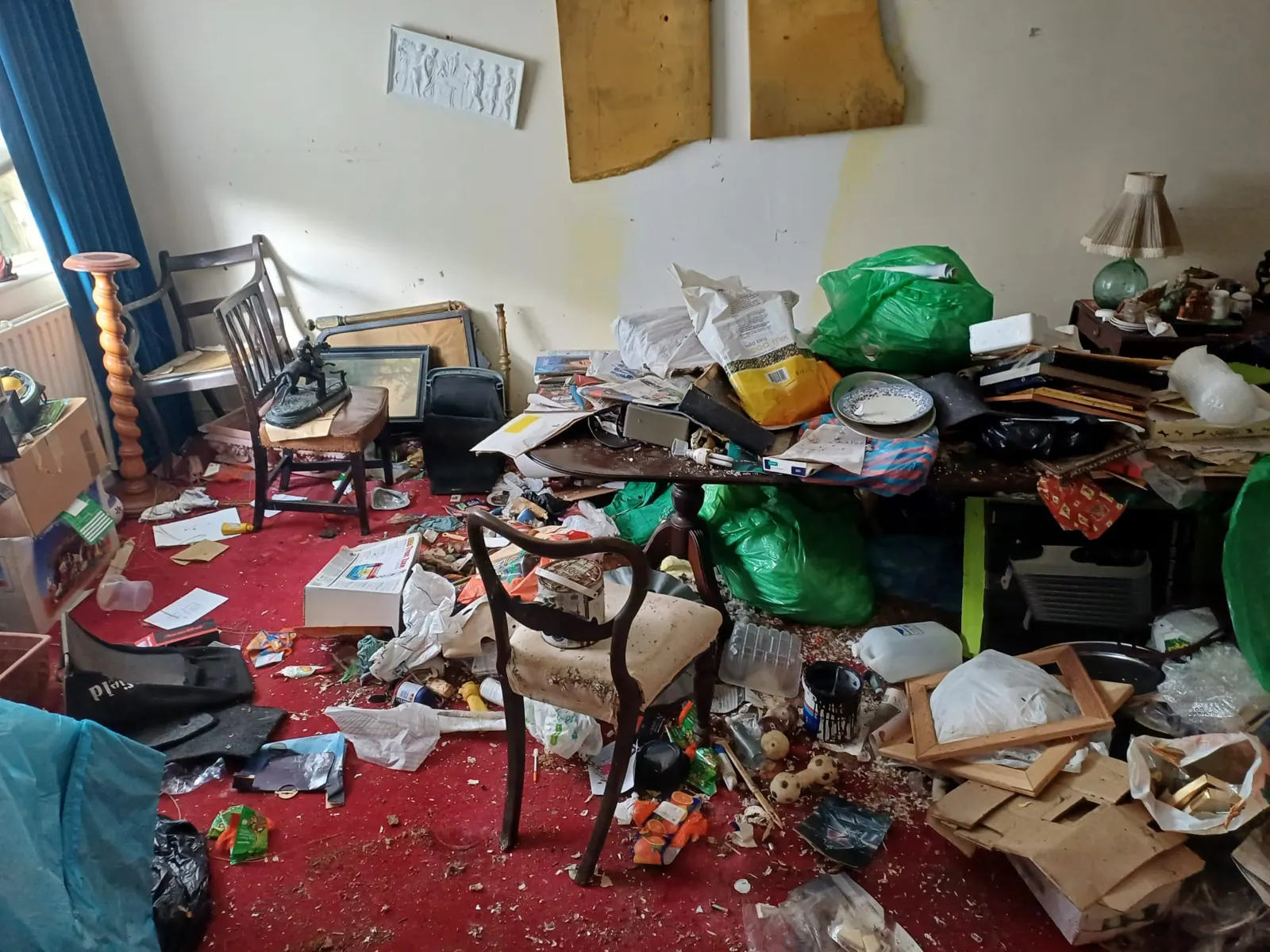
Whatever is left after reuse, resale and recycling is genuine waste: soiled soft furnishings, broken plastics, mixed rubbish, the contents of a hoarded room that cannot be salvaged. That goes to a licensed waste transfer station, where it is weighed in, documented and processed before onward disposal.
A transfer station is not a landfill. It is a permitted site that accepts mixed waste from carriers like us, pulls out anything that can still be recovered, and sends the residue on for final disposal. Each load is recorded against our permit, which creates a paper trail from your house to the facility.
Why does the waste permit matter?
In Ireland, anyone who collects waste for payment must hold a Waste Collection Permit from the National Waste Collection Permit Office (NWCPO). Ours is NWCPO-25-13287-01, and you can check any permit number on the NWCPO’s public register before you book a company.
This matters for you, not just for us. Under Irish waste law the householder has a duty of care: if you hand your rubbish to someone who is not permitted and it turns up dumped in a laneway or on a mountain road, the person who paid for the collection can be held responsible. A collector who charges a bit less is often cheaper because he is skipping the transfer station fee entirely.
A permitted carrier has to account for where the waste went. That is the whole point of the permit, and it is why we put the number on our quotes. If you want the longer version, there is a plain-English guide to what a waste collection permit is and how to check one.
What should you take out before we arrive?
Three things, because once they are in the van they are hard to get back.
- Personal documents: passports, bank statements, deeds, medical records, anything with a name and address on it. We do not read paperwork for sensitive content; shred it or keep it.
- Anything with sentimental value: photographs, letters, children’s drawings, the odd ornament. These are easy to miss inside drawers and boxes.
- Valuables: jewellery, cash, watches, documents of title. Check coat pockets, bedside drawers and the back of the wardrobe.
Everything else can stay exactly where it is. If you are weighing up what a service will and will not take, our guide to what a house clearance removes goes through it room by room, and if you are comparing the van to a skip, the house clearance versus skip hire article covers where each one wins.
Frequently asked questions
Can I ask you to donate specific items to a particular charity?
Yes, within reason. If you want a dining table to go to a particular charity shop, tell us when you book and we will drop it there if they accept it and it is on a sensible route. If they refuse it on the day, we move it to the next best stream rather than bringing it back to you.
Do you give me a receipt showing where the waste went?
We can provide a receipt for the job that includes our permit number. Transfer station weighbridge dockets are issued to us as the carrier rather than per customer, but if you need documentation for a solicitor, a landlord or a management company, ask when you book and we will provide what we can.
Is there anything you will not take?
Yes. We do not collect paint, solvents, oils or chemicals, and we do not take asbestos, gas cylinders or clinical waste, because those need specialist handling and a different permit. If you are unsure about something, send us a photo on WhatsApp and we will tell you straight whether it can go in the van or where it should go instead.
What happens to the data on old phones, laptops and computers?
We do not wipe it, so deal with it before the day. Phones, laptops and computers go into the WEEE recycling stream exactly as they leave the house. Back up what you want and do a factory reset, or take the hard drive out and keep it; if you are unsure, simply hold on to the device.
What happens to food left in the kitchen?
Opened and perishable food goes out with the general waste. Unopened tins and packets that are still in date are better dropped to a local food bank or community group by you, after checking what they accept. Emptying the fridge and the presses before the day also makes the kitchen much quicker to clear.
What happens to books?
Books in good condition go to charity shops and other outlets that rehome them, and paperbacks and old textbooks that nobody will want go for paper recycling. Damp or mouldy books cannot be donated and go with the general waste. If you think a book might be valuable, an old first edition or a signed copy, take it out before the day.
Why do you use licensed transfer stations rather than the council recycling centre?
Council recycling centres are generally set up for householders bringing in their own waste, not for commercial carriers. As a permitted carrier we use licensed transfer stations and recycling facilities, where each load is weighed in and recorded against our permit. That record is what lets us show where your waste went.
Can broken plastic garden furniture and toys be recycled?
Not often. Hard plastics such as old patio chairs, slides and ride-on toys are difficult to recycle, so broken ones usually go to a licensed transfer station, where anything recoverable is pulled out. Plastic furniture and toys that are clean and in good condition are set aside for reuse instead.
What happens to old carpets and rugs?
Fitted carpet and underlay that has been lifted is almost never reusable, so it goes to a licensed transfer station with the other bulky soft waste. Rugs are different: a clean rug in good condition can be donated. The carpet offcuts kept in the attic or garage for repairs go the same way as the fitted carpet.
Will an old piano be reused?
Sometimes, but less often than people hope. Many upright pianos have little resale value today and charity shops rarely have room for one, so if it plays well it is worth offering it free online or to a local school or choir first. If nobody takes it, it leaves with the rest of the clearance and goes for recycling where possible.
Next step
If you would like a house cleared with the sorting done properly, send us a few photos on WhatsApp to 085 202 1222 or request a free quote and we will come back to you with a price. Our house clearance service covers the whole process from the first photo to the swept floor, and for smaller loads our junk removal page explains how we handle single items and part loads.