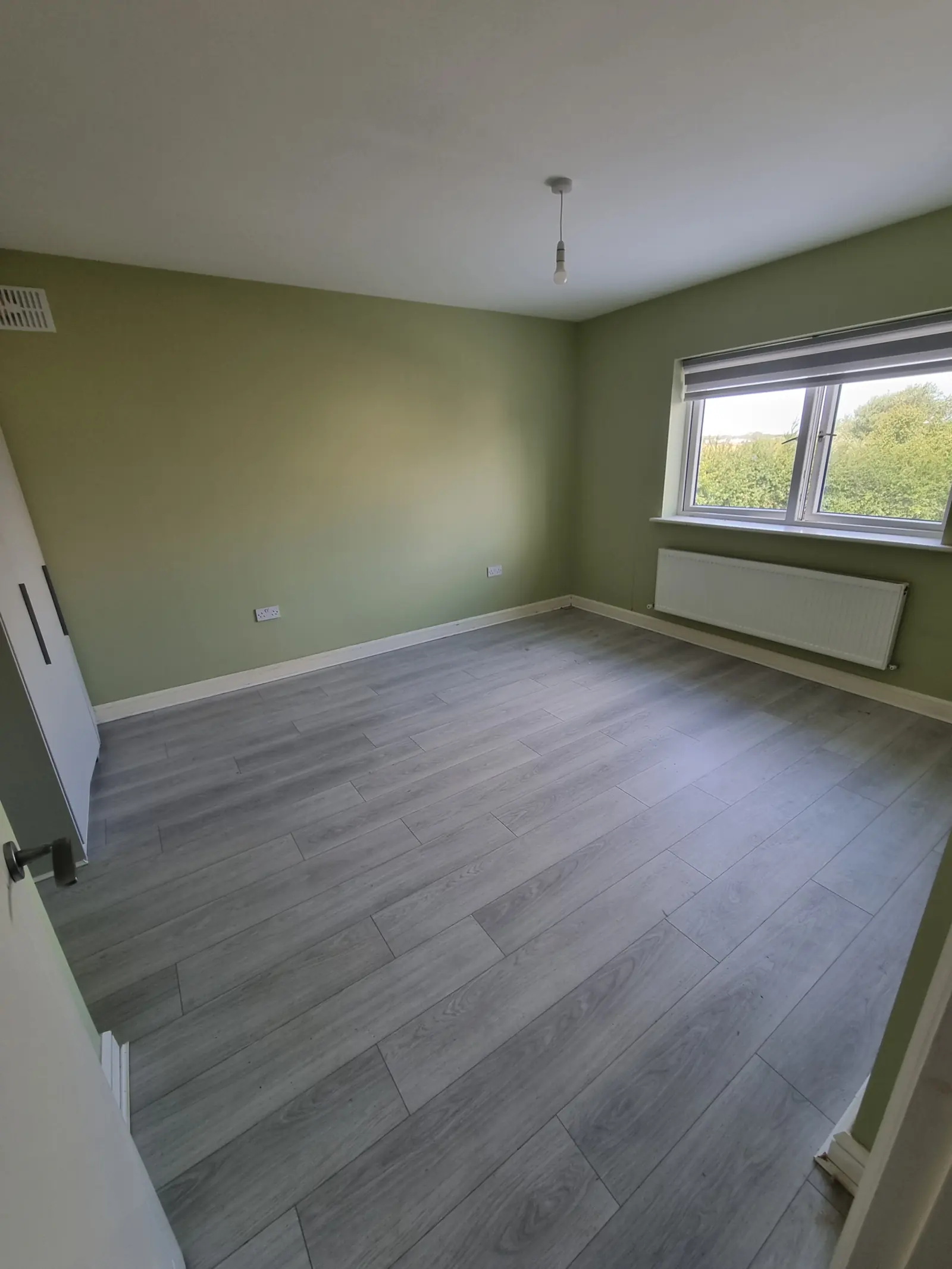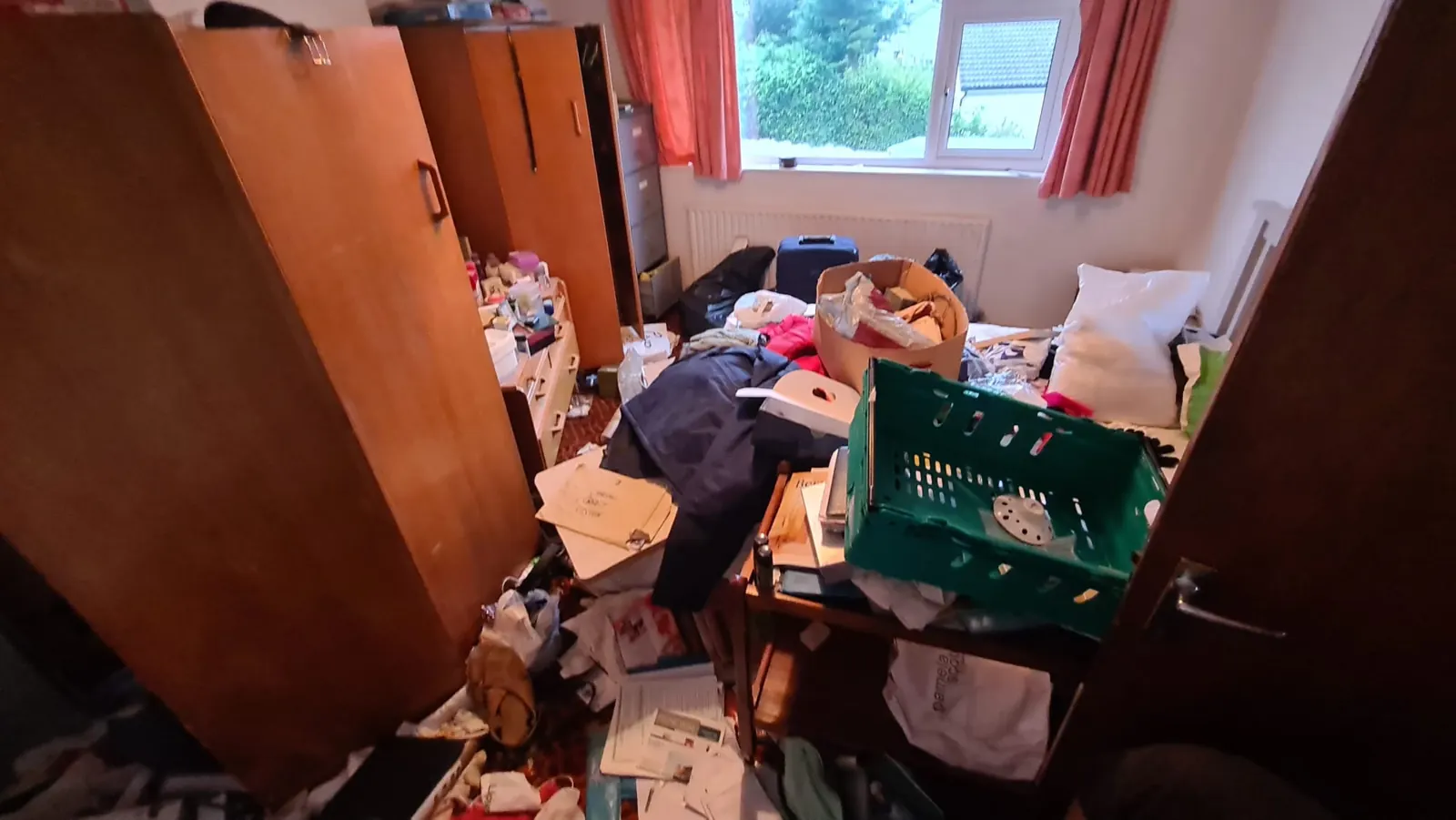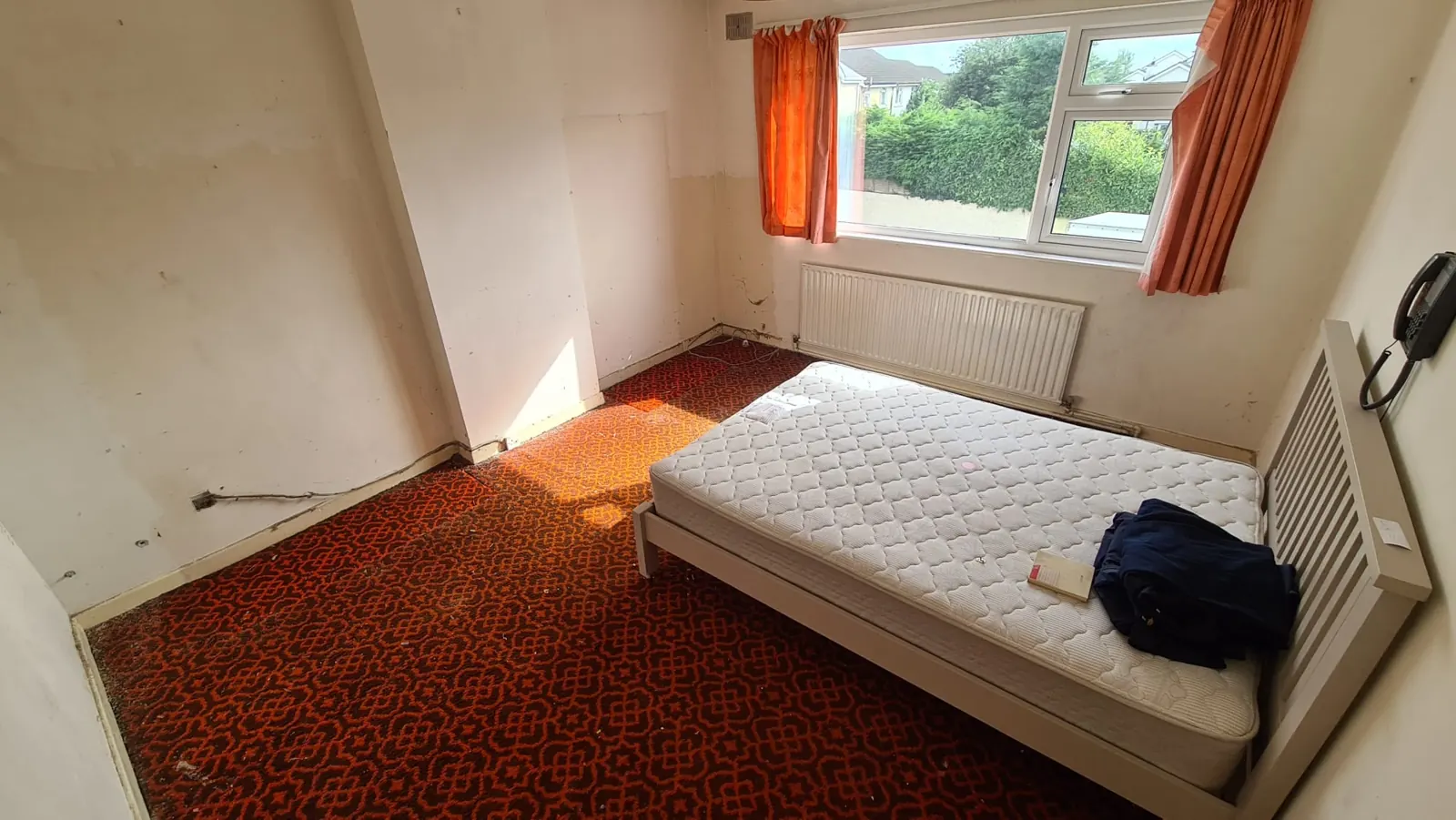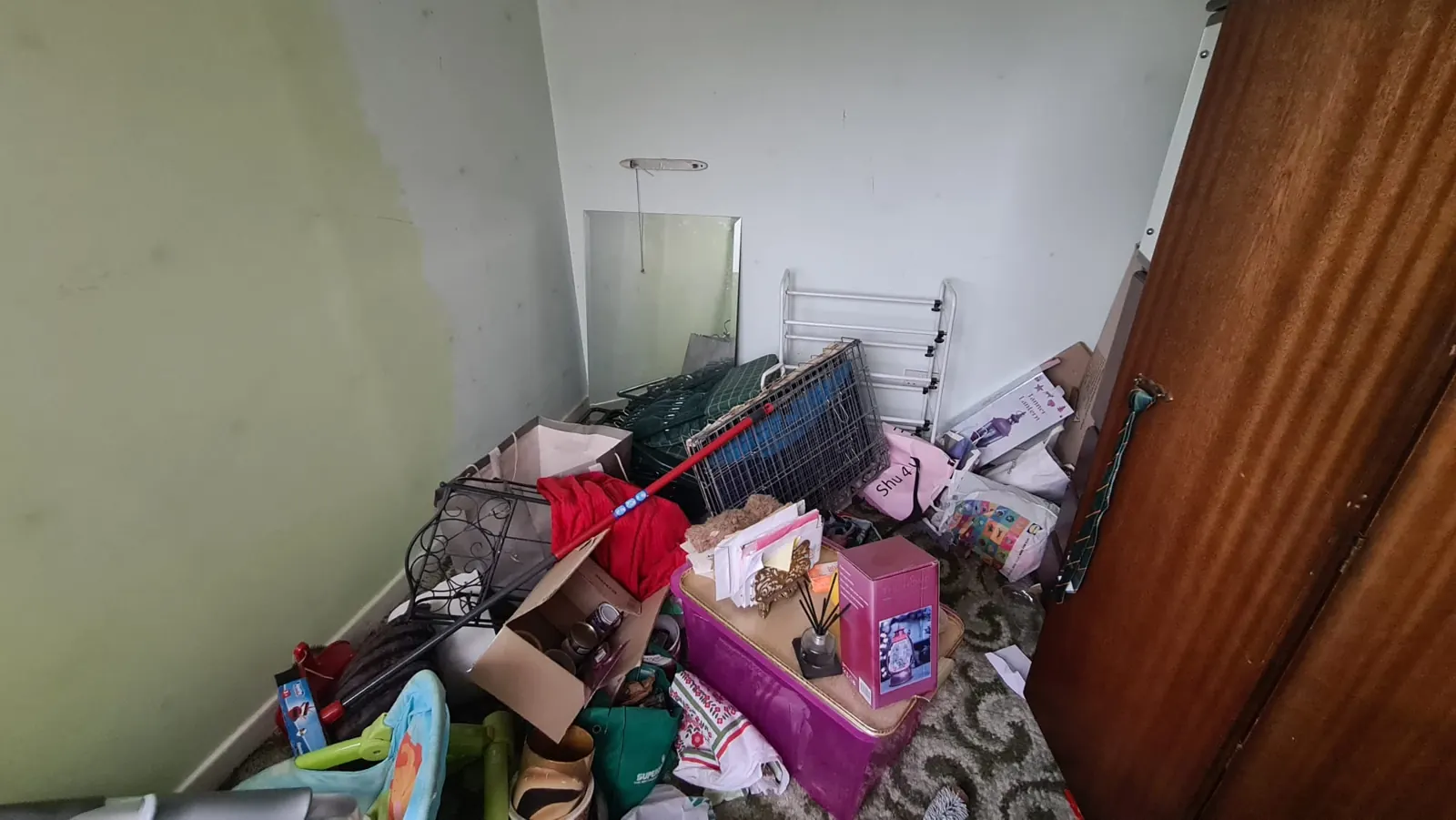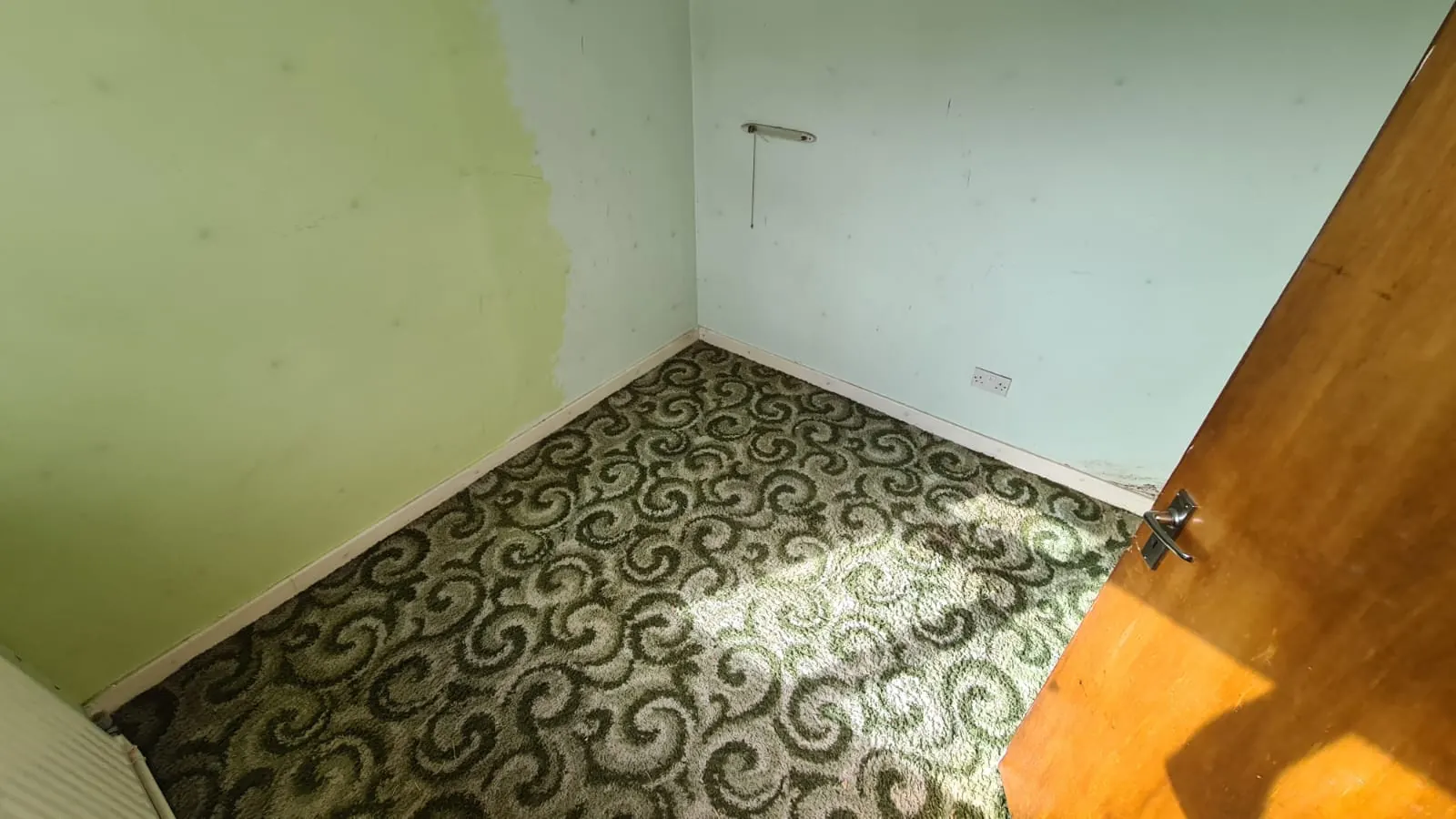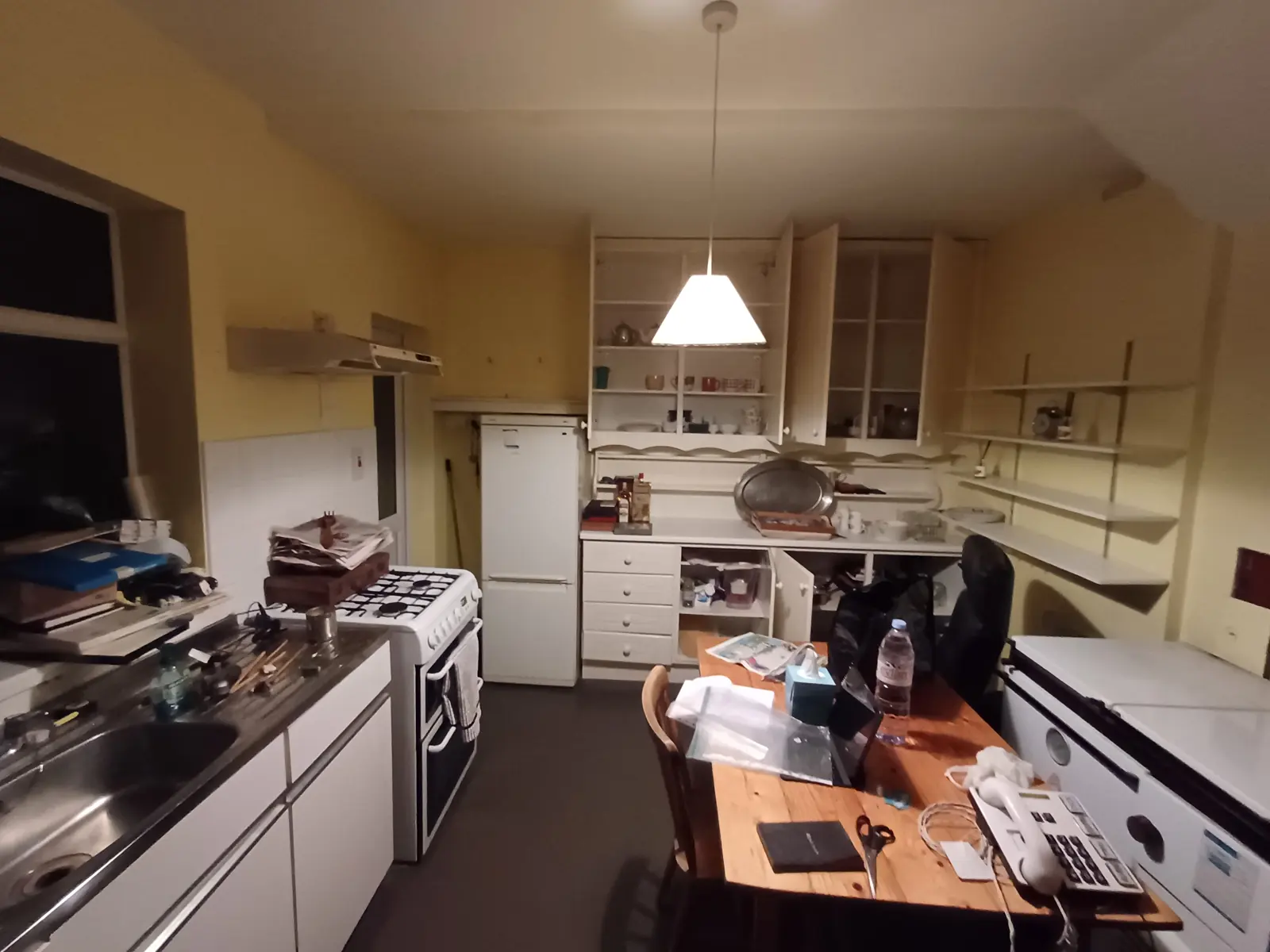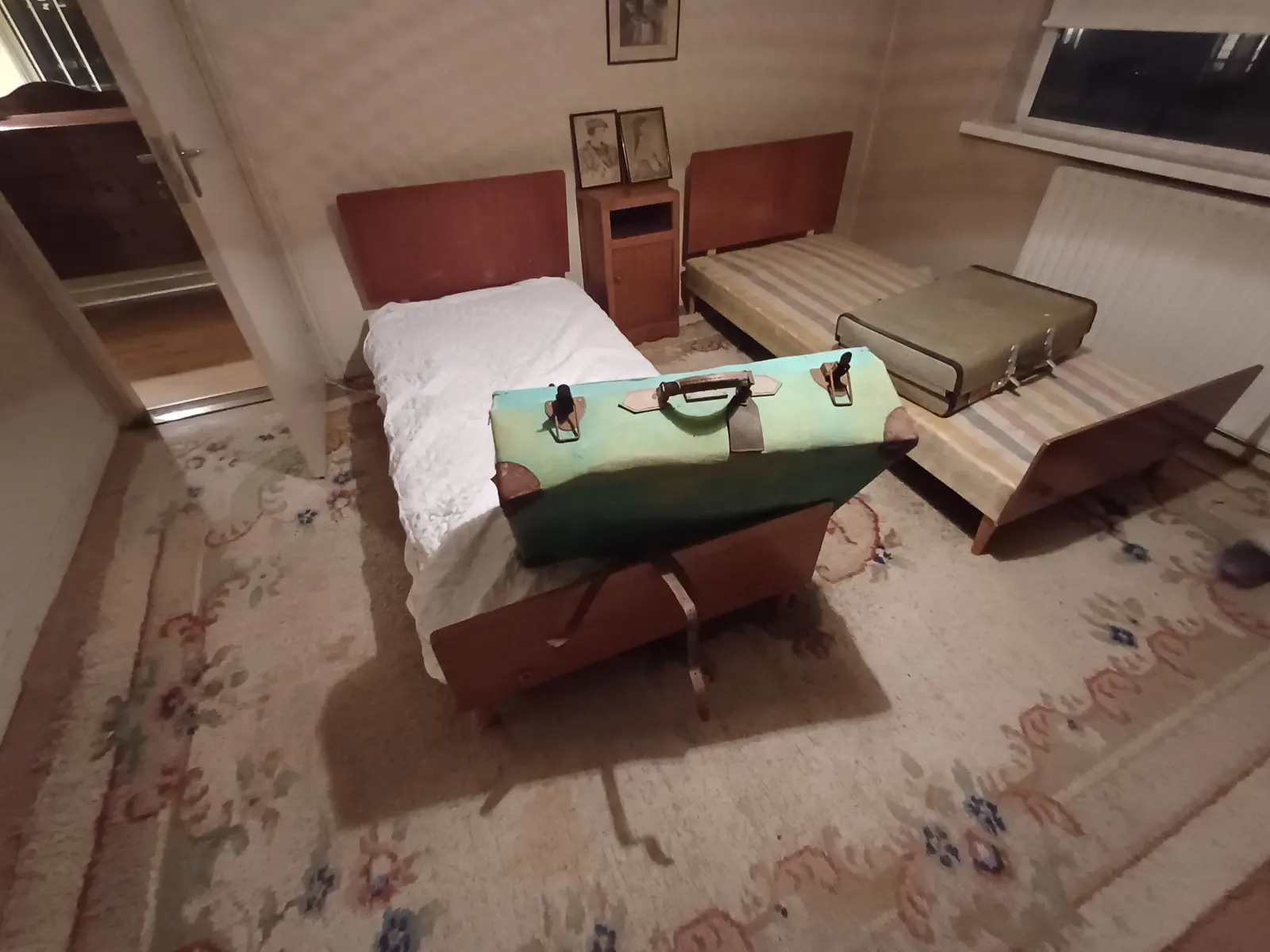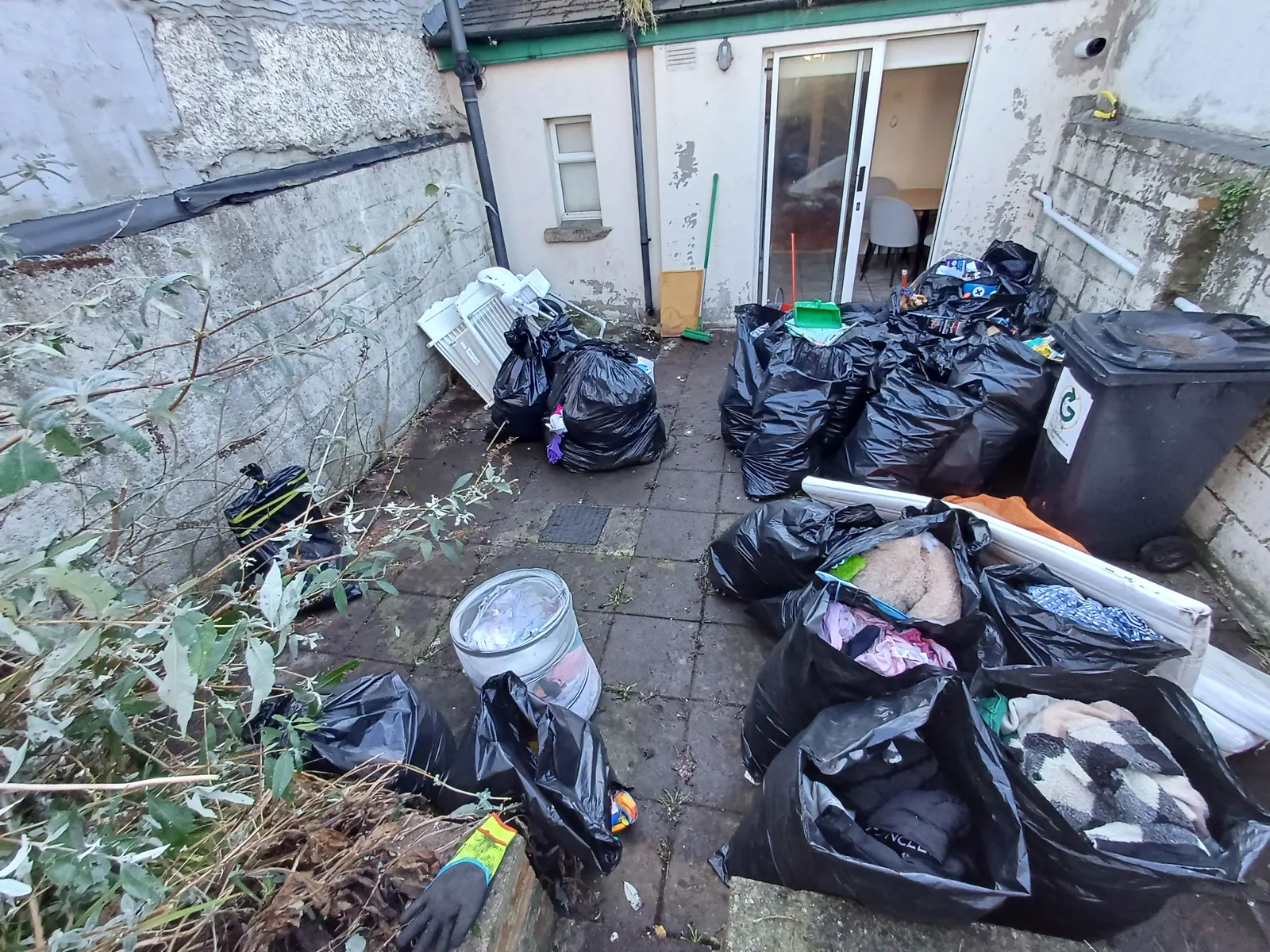
What a house clearance from us involves
Every job starts with photos. You send us pictures of the rooms, the attic, the shed, or the pile in the hall, and we send back a price for the whole job: the crew, the van, the loading and the disposal. There are no hourly rates and no surprise charges for stairs.
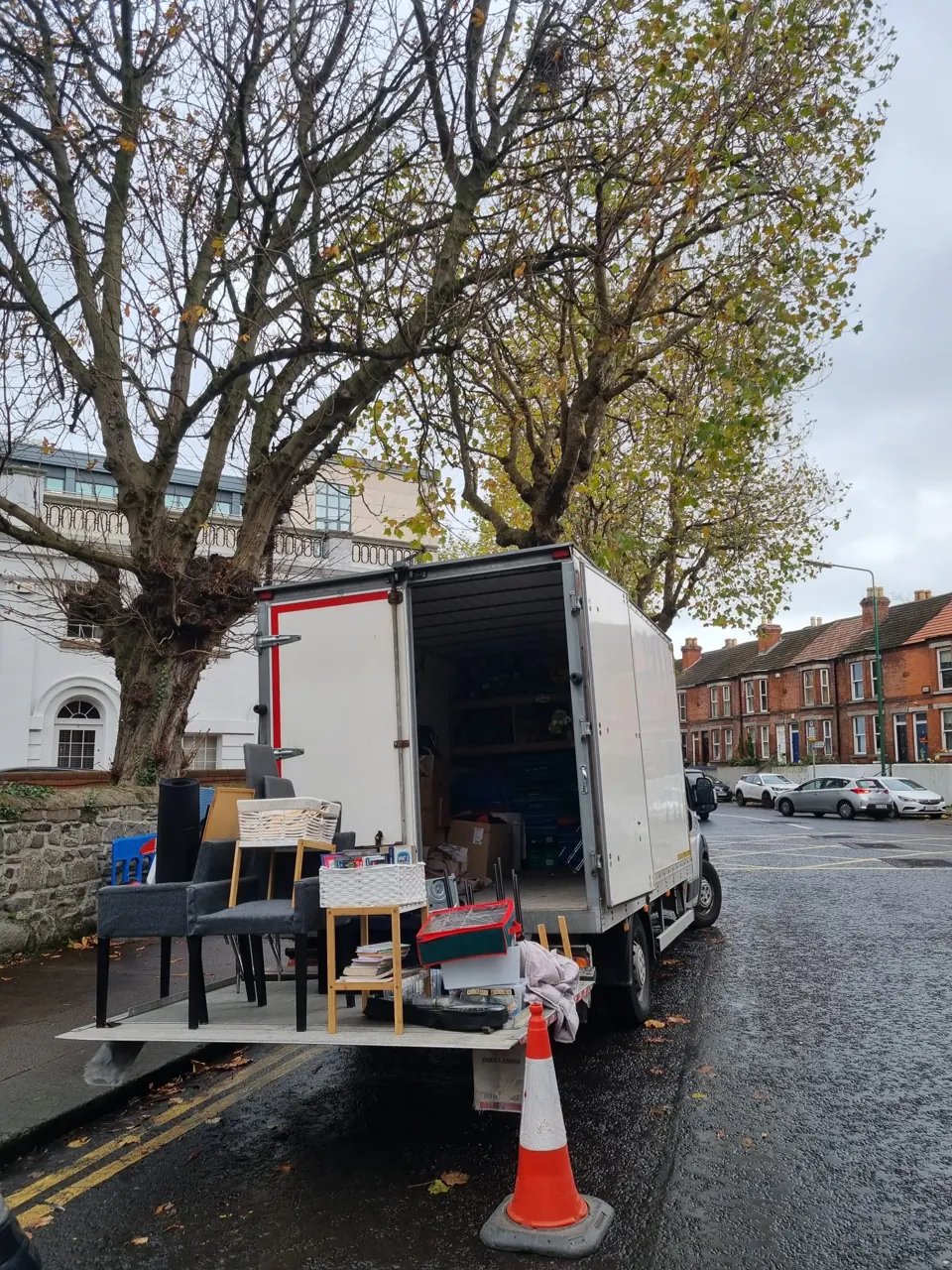
On the day, a two-person crew arrives at the time we agreed. You show them what stays, or you have already told us by message, and they take everything else from wherever it is in the house. Nothing has to be bagged, moved to the door or carried downstairs beforehand.
Who uses our house clearance service
- Families selling a home, often a parent’s house that has been lived in for forty or fifty years and holds everything from the good sideboard to the Christmas decorations in the attic. If the clearance follows a death, our bereavement clearance page explains how we approach that differently.
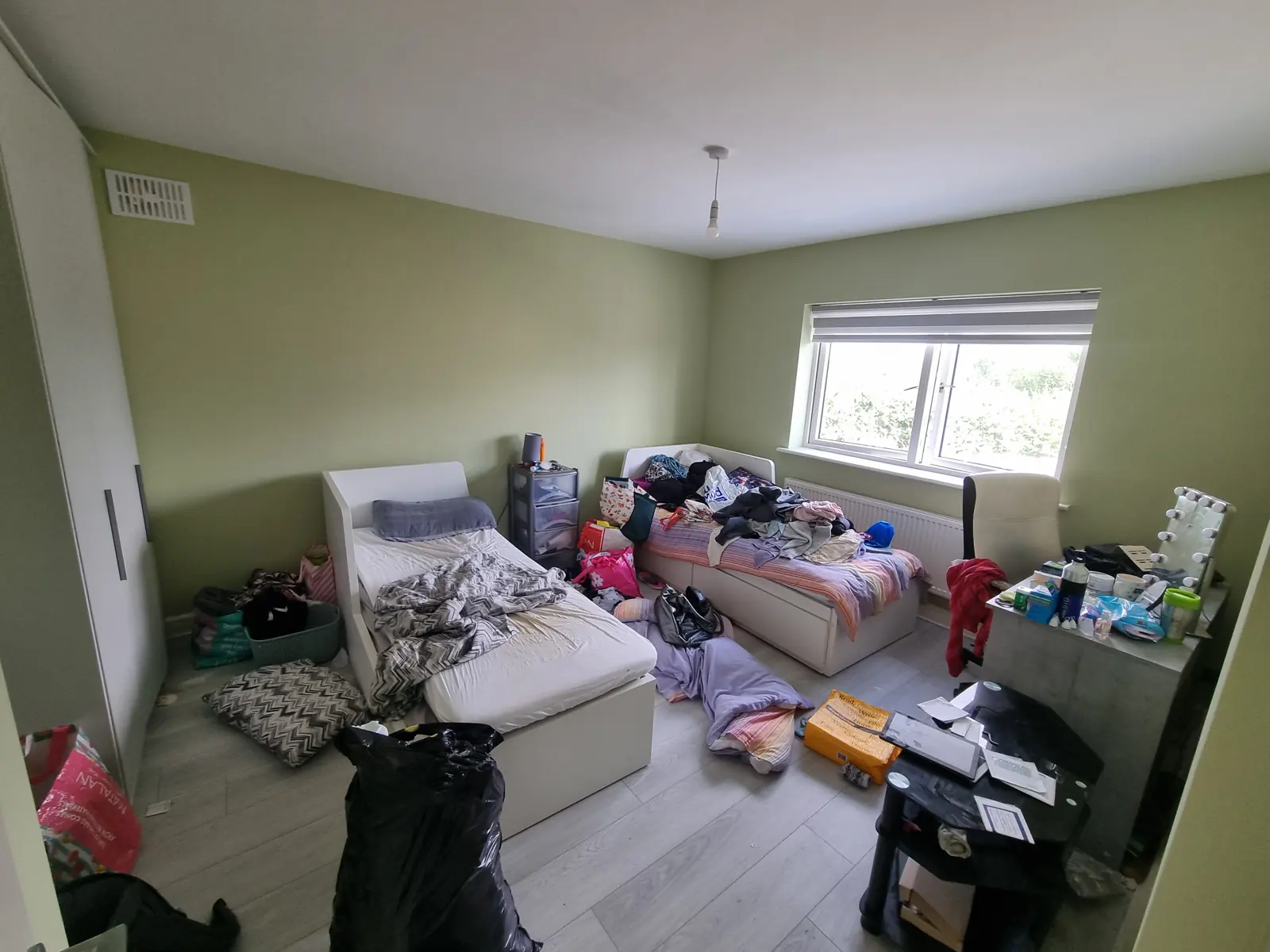
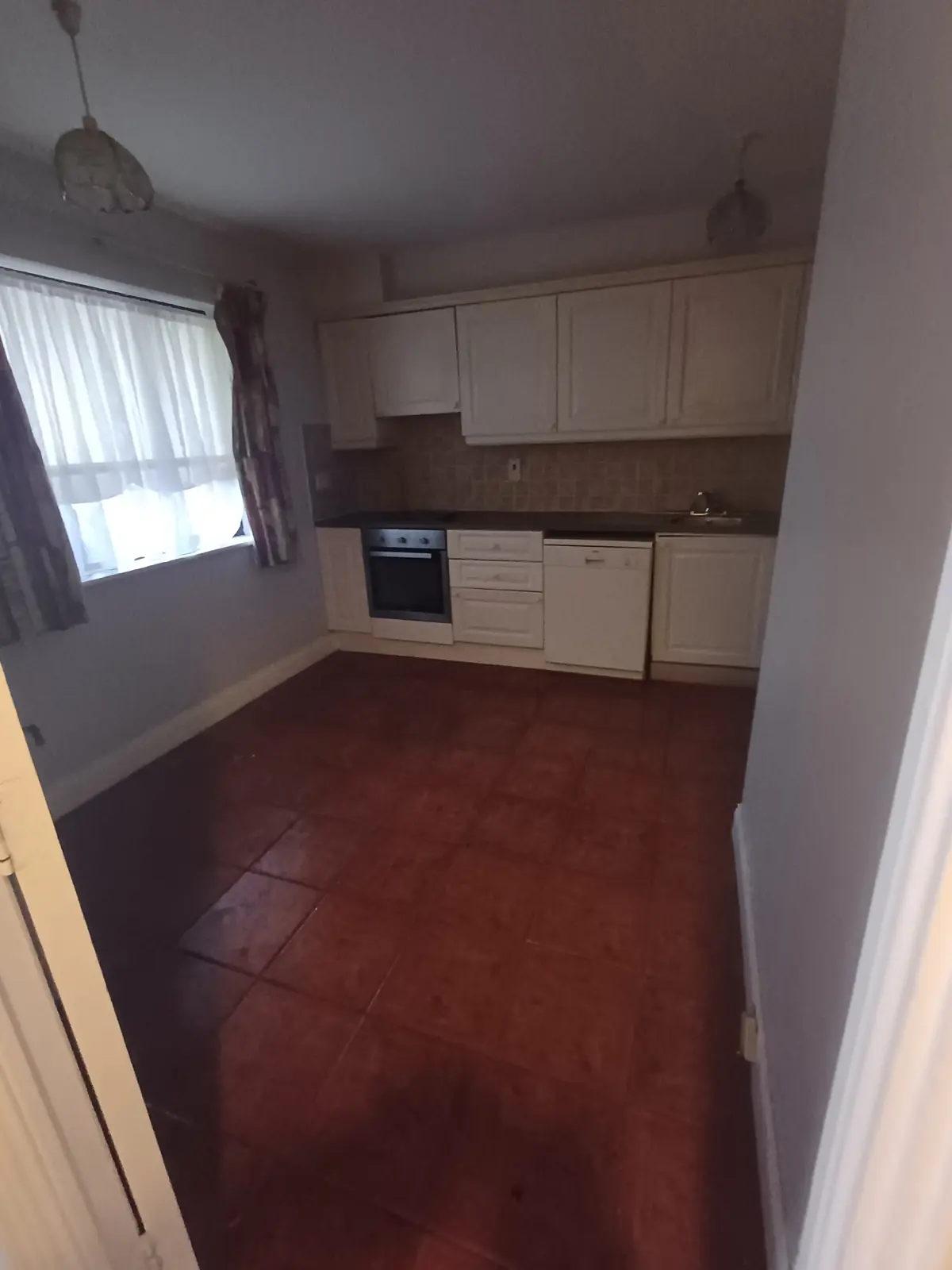
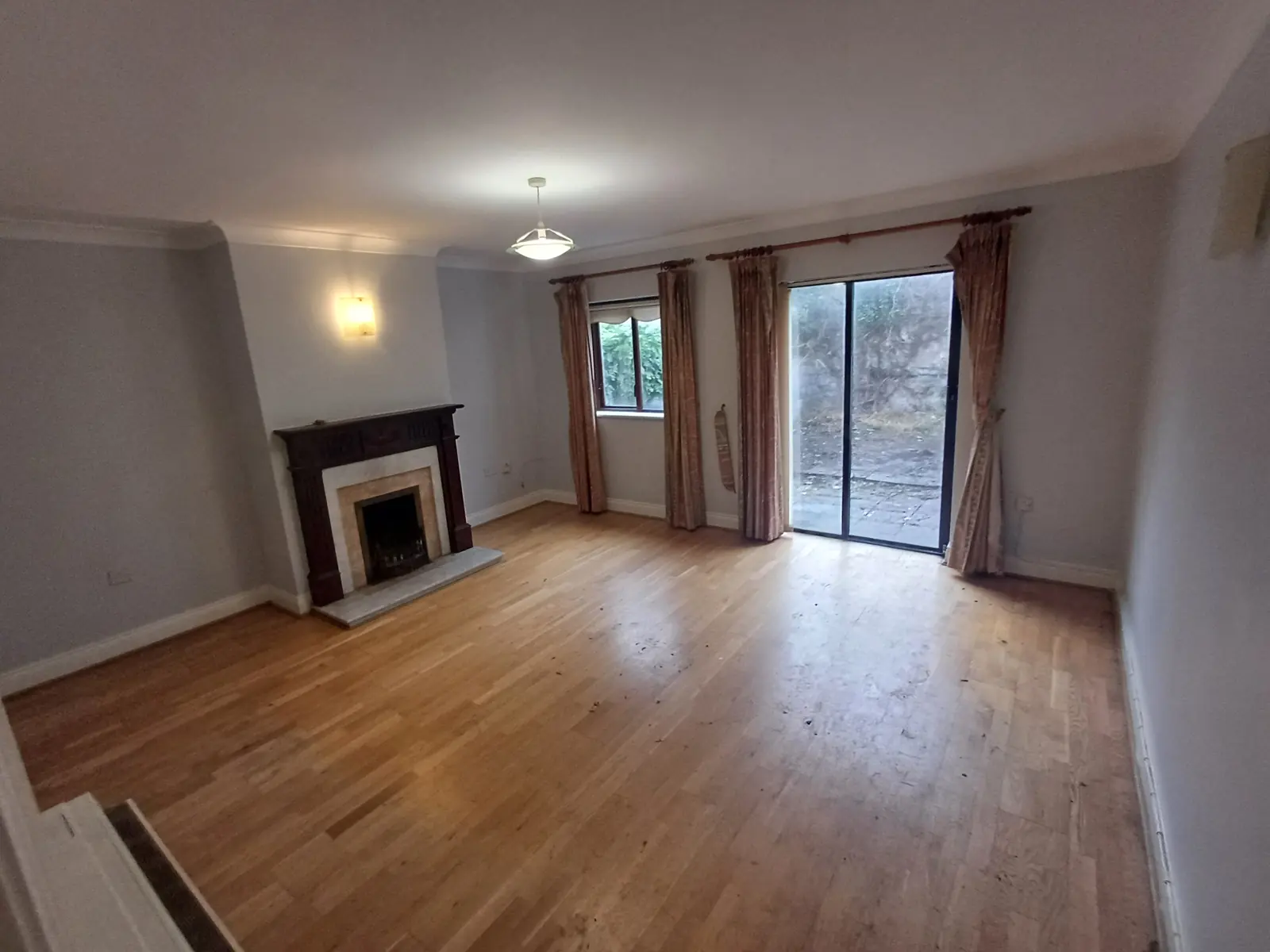
- Landlords and letting agents clearing between tenants, where the house or apartment needs to be empty for viewings by a fixed date.
- People downsizing or moving abroad who have sold or given away what they want to and need the rest gone in one visit.
- Executors and solicitors handling an estate, who need a reliable crew, a clear invoice and a property left ready for the agent.
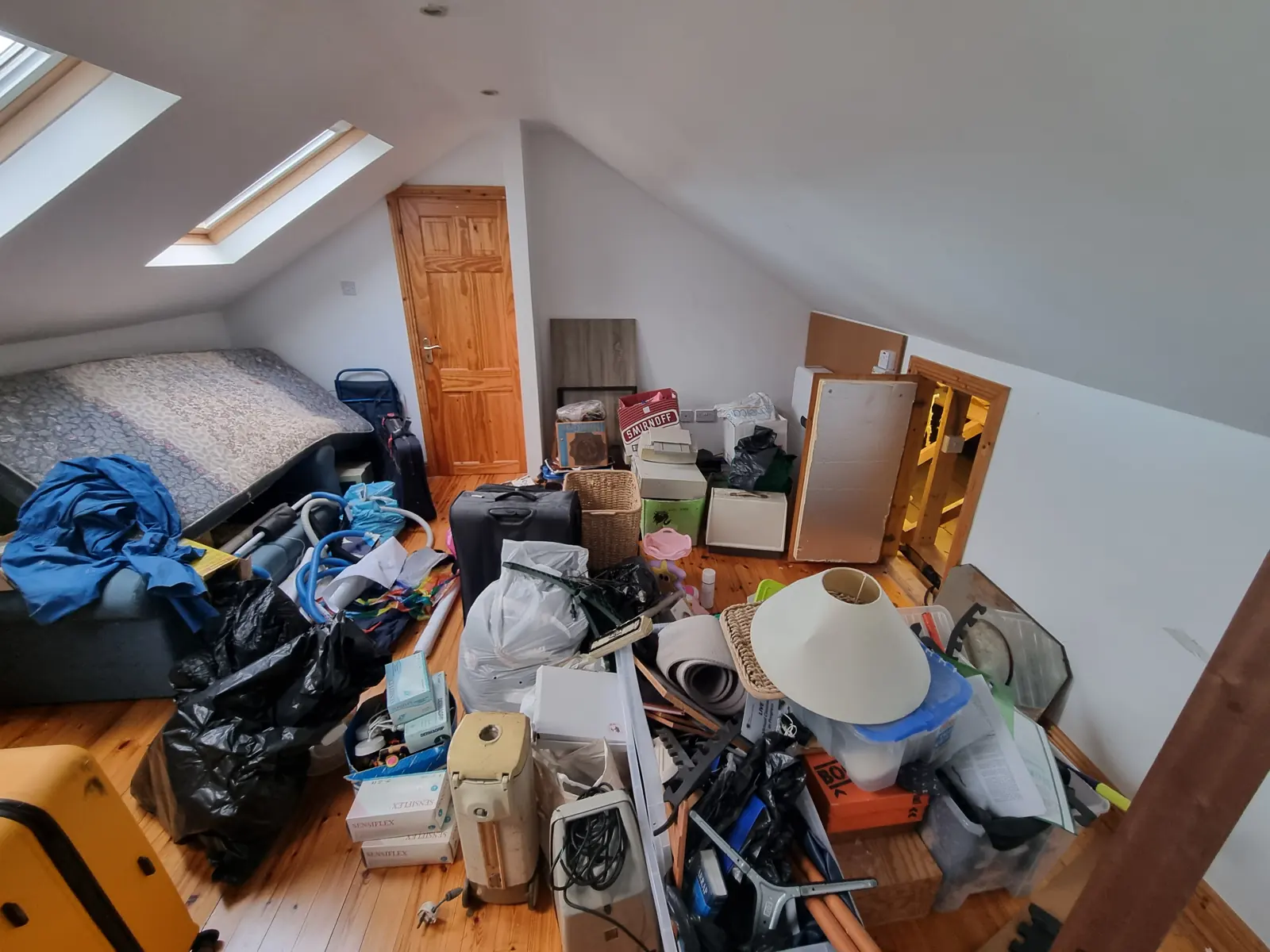
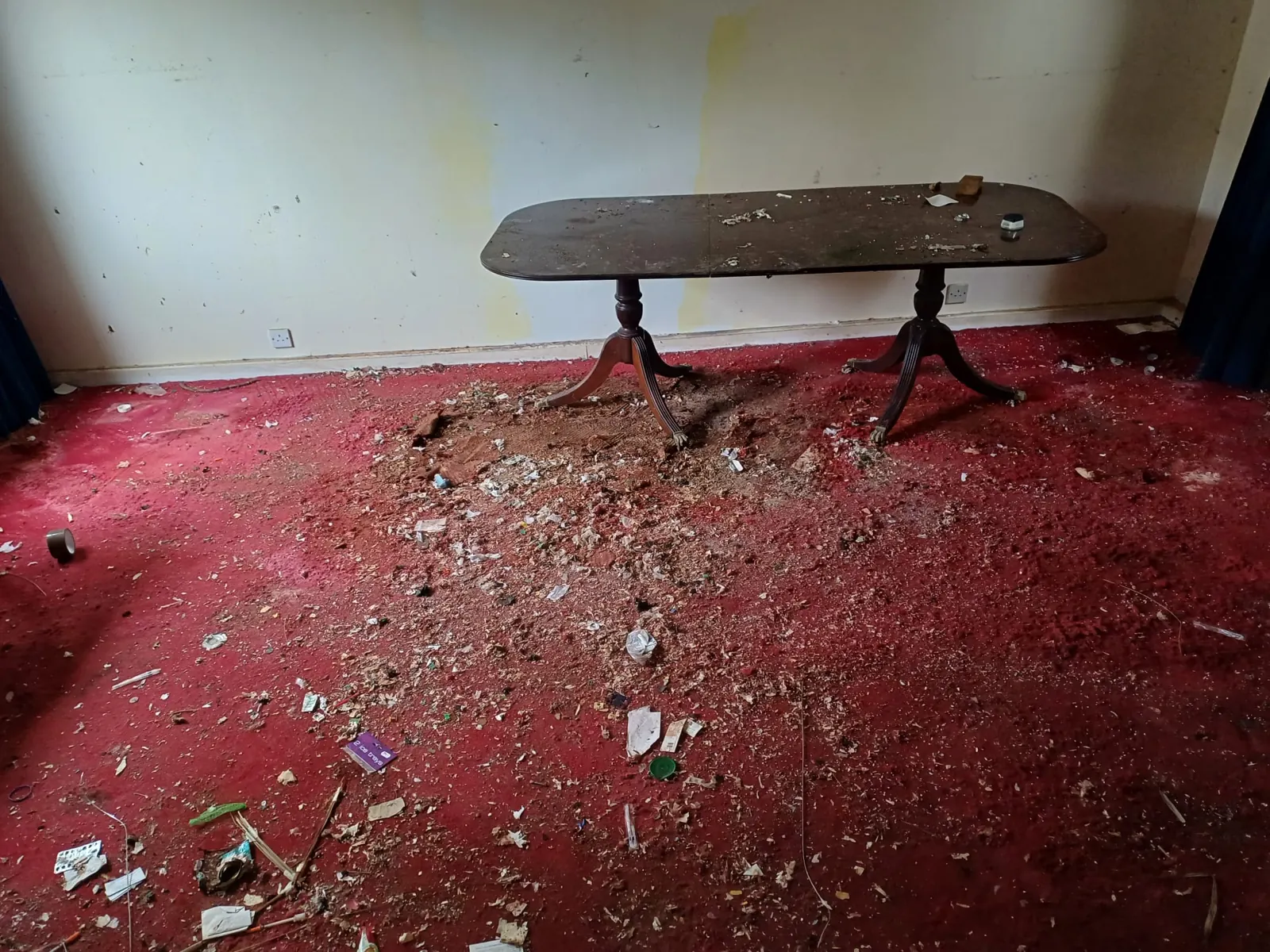
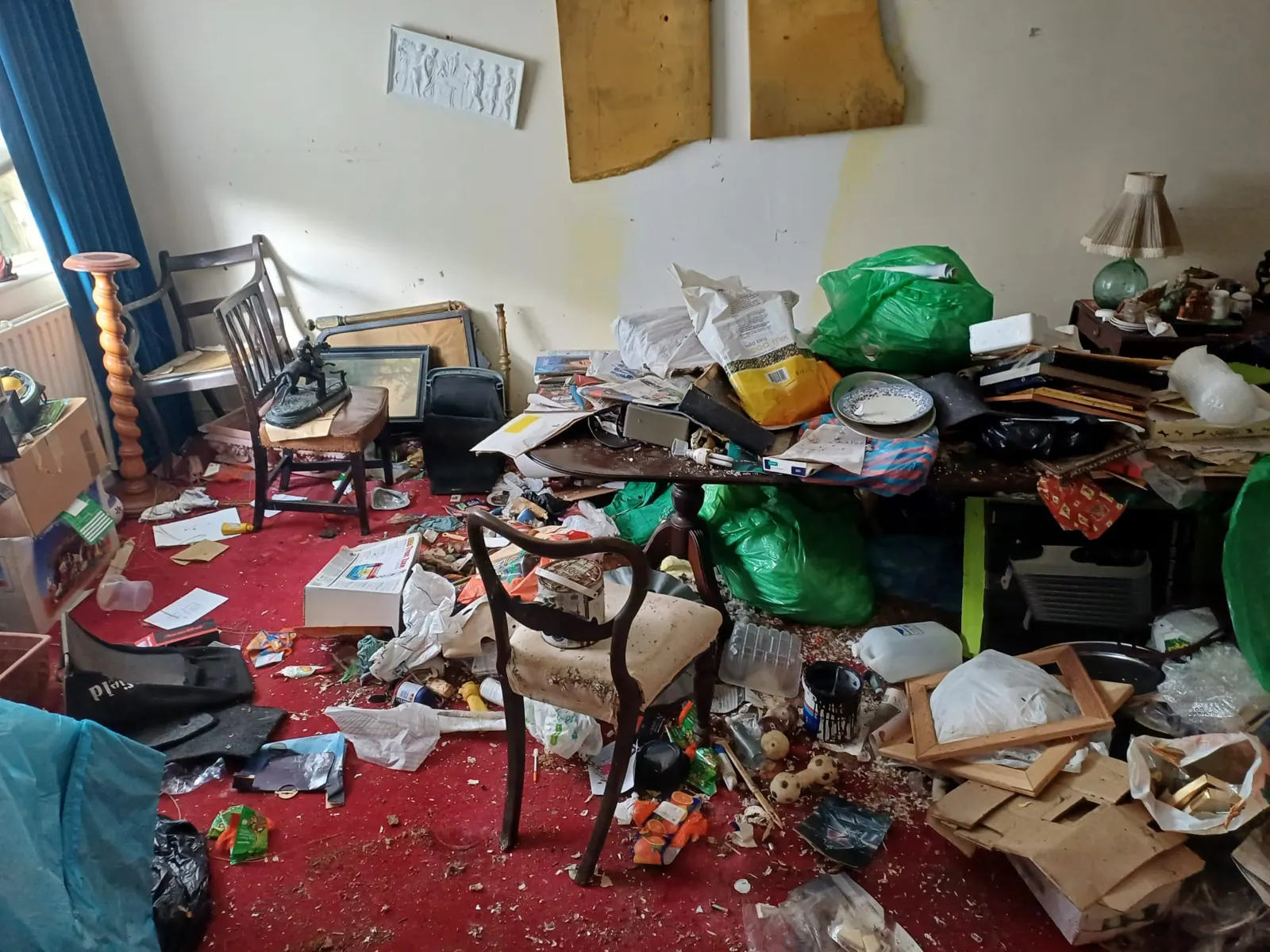
- Anyone whose house has simply filled up, including hoarded homes, which we clear with patience and without judgement.
What we take
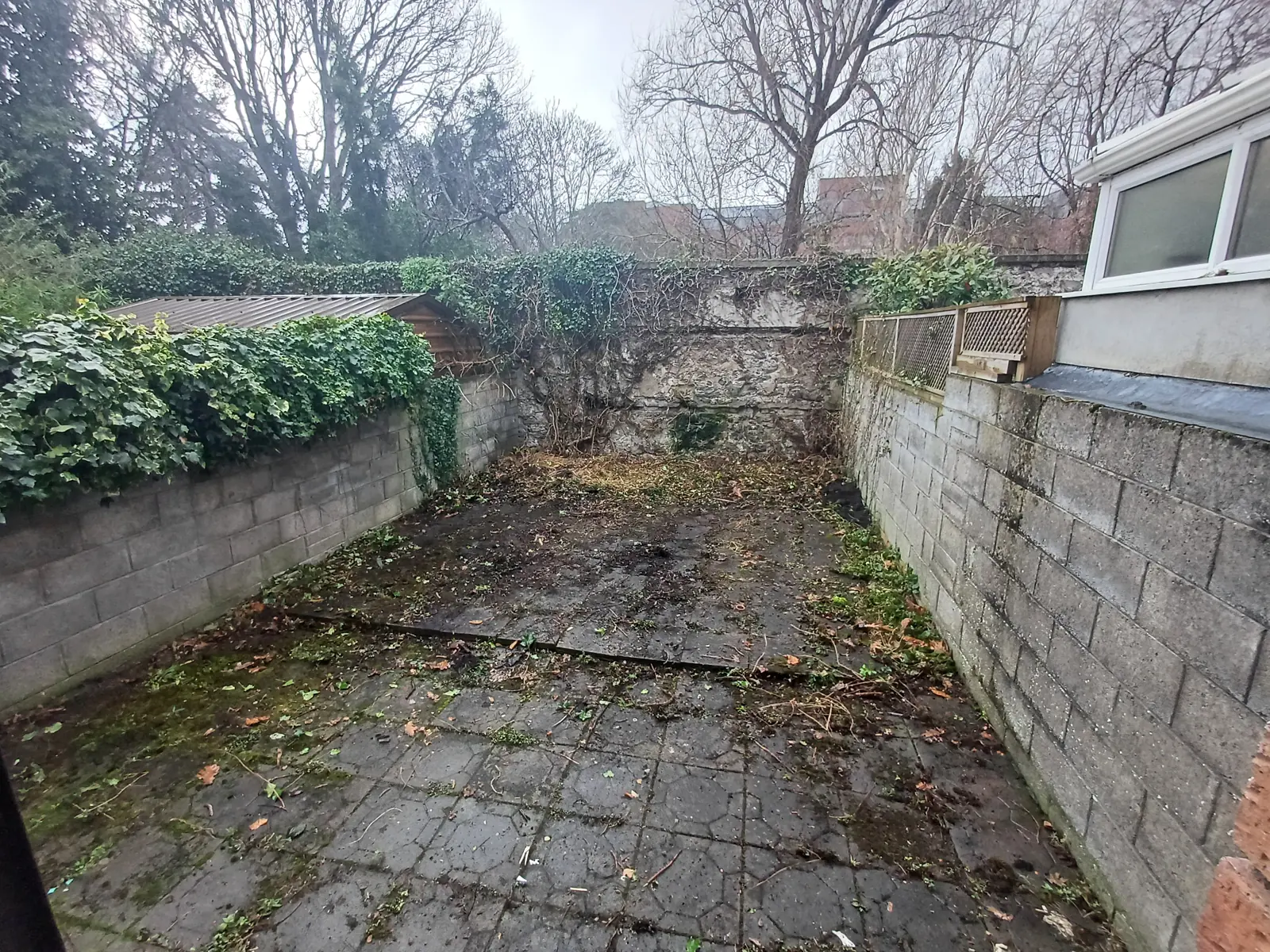
Beds, mattresses, wardrobes, sofas, armchairs, tables and chairs, kitchen units, carpets and underlay, fridges, freezers, washing machines, cookers, televisions, computers, books, clothes, crockery, toys, garden furniture, lawnmowers, tools, paint tins (a few, not a shed full), bikes, prams, and the bagged rubbish that comes with all of it. Attics, sheds, garages and back gardens are included if you want them cleared on the same visit.
We do not take asbestos, chemicals, gas cylinders, clinical waste or large quantities of builder’s rubble. Heavy rubble from a renovation is a job for a skip or a builder’s waste service rather than a clearance van.
Whole house or just the hard bits
A full clearance is the most common job, but plenty of customers ask us for one room, one floor, or just the awkward items: the piano nobody will buy, the three-piece suite that will not fit through the door it came in through, the contents of the attic or the shed. We price those jobs the same way, by what is there and how hard it is to get out.
How the clearance day runs
- Walk-through. A quick look at what is going and what is staying, and where anything personal or valuable should be put if we find it.
- Room by room. We clear from the top of the house down so the stairs and hall stay usable, and we keep reusable items separate from waste as we load.
- Attic, shed, garden. Usually last, once the van has space, unless you have asked for only those.
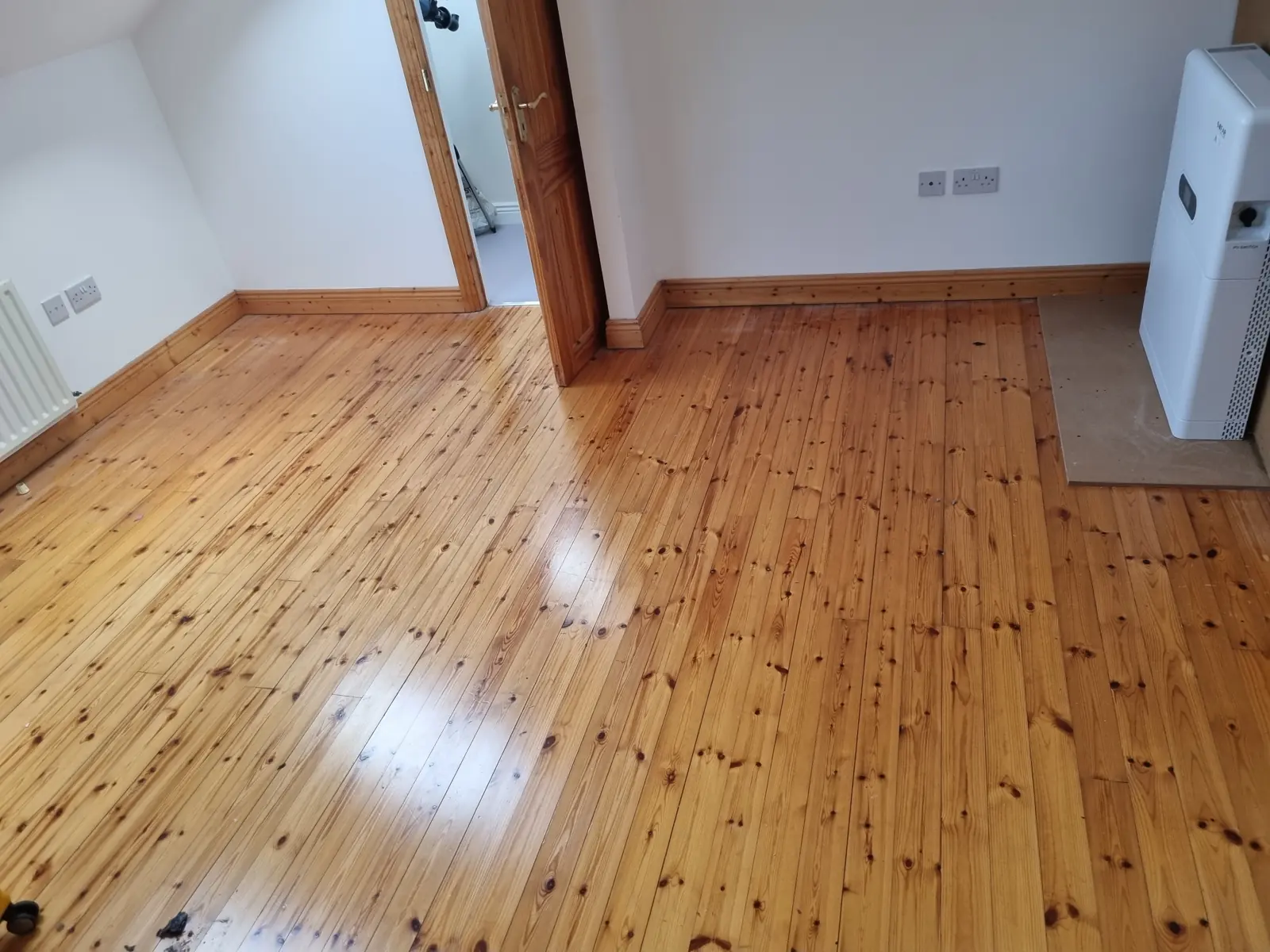
- Sweep and check. Floors swept, doors closed, and a last walk round with you or a photo set sent to you if you are not there.
What happens to everything afterwards
We separate as we load. Furniture, kitchenware and clothes in good condition are kept aside for reuse, donation or resale wherever we can arrange it. Metal, timber, cardboard and WEEE electricals go to the right recycling streams. What is genuinely waste goes to a licensed waste transfer station under our Waste Collection Permit, which is the part that matters if you have ever wondered where a cheap man-and-van actually tips the load. Our guide on what happens to your items after a clearance goes into the detail.
Why not just hire a skip?
You can, and for a long DIY renovation a skip is the right tool. For clearing a lived-in house it usually is not. An on-street skip in Dublin needs a permit from the council, you fill it yourself, many skip firms refuse or surcharge mattresses and electricals, and it sits outside for a week. A two-person crew with a van clears the house in one visit, sorts for reuse as it goes, and the price covers the loading and disposal that a skip leaves to you. We compare the two honestly in house clearance vs skip hire.
Preparing for the day
You do not need to do much. Put aside what you are keeping, pull out any paperwork, keys, jewellery and photographs, and tell us about parking. If the property is an apartment, let the management company know a van will be at the door. Our preparation checklist covers the rest.