
Clearing homes in Kilkenny
Kilkenny’s centre is the Medieval Mile from the castle gates on the Parade, along High Street past the Tholsel and Rothe House to St Canice’s Cathedral and its round tower, with John Street across the Nore and the old brewery site now being rebuilt as the Abbey Quarter. The housing nearest that spine is the oldest: Georgian and Victorian town houses on Parliament Street, Patrick Street and John Street, cottages in the lanes, and flats over the shops on High Street with a street door and a steep stairs.
The next ring is the terraces and council-built houses off the Castlecomer, Freshford, Kells and Johnswell roads, and beyond those the estates that housed the city’s growth from the 1970s to the 2000s: Loughboy on the Waterford Road with its own shopping centre, Newpark on the north side, and the roads of semis and bungalows out the Castlecomer Road and around the ring road. MacDonagh Junction by the station is where the newer apartments cluster.
Then the county: Castlecomer, Freshford, Thomastown, Bennettsbridge, Callan, Gowran, Inistioge and Graiguenamanagh, and between them farmhouses and one-off bungalows with a yard full of sheds, which is where the biggest clearances in Kilkenny tend to be.

What we clear in Kilkenny
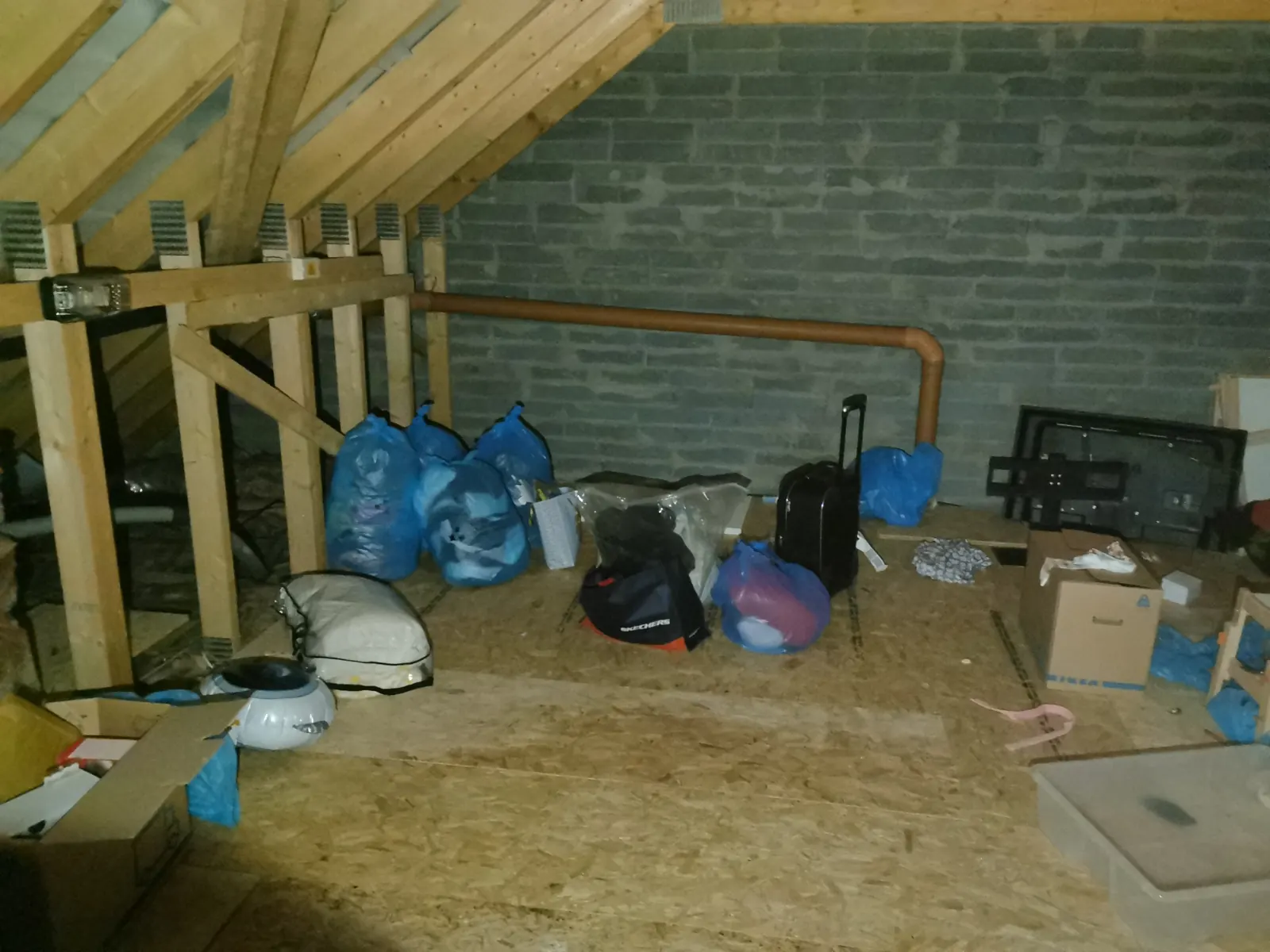
- Full house clearances in Loughboy, Newpark and the estates off the Castlecomer and Kells roads, with the attic and garage counted in from the start.
- Farmhouses and rural bungalows with outbuildings, where the shed clearance can run to more van loads than the house. Builder’s rubble, old fencing and heaps of garden waste on a rural site are a skip job rather than a van job, so leave those out of the clearance.
- City-centre town houses and flats over shops, carried out by hand down narrow stairs to a van that may be a street away.
- Hoarded houses, cleared quietly at a pace the owner or the family can manage. Our article on how to clear a hoarded house explains how we approach the first visit.
- Bereavement and executor clearances across the city and county, with documents, photographs and jewellery set aside before anything is loaded.
Access, parking and the practical bits
The medieval centre is the hard part: one-way streets, pay parking, delivery bays that are spoken for by mid-morning and lanes a van cannot enter. For anything on or near High Street, Parliament Street or Kieran Street we arrive early, find the nearest legal space and accept a longer carry. The arts festival in August, the comedy festival at the June bank holiday and a championship day at Nowlan Park are all dates we avoid for city jobs.
The estates are easy: driveway or kerb, side gate, wide roads. On a farm the questions are the gateway, the lane, soft ground and the walk from the hardstanding to the back shed, so describe the approach when you send photos.
From Dublin the route is the M50, the N7 and M7, then the M9 to Paulstown and the N10 into the city, roughly ninety minutes each way. There is a direct train from Heuston to MacDonagh Station if a family member wants to meet us without driving.
Why people in Kilkenny call us
We are Dublin-based and we travel to Kilkenny rather than operate from it, so we are honest about what that means. The distance is why we prioritise full-house and larger clearances here, why travel is built into the fixed quote rather than charged separately, and why we try to group Kilkenny jobs with each other or with Carlow in the same week. Our post on how far we travel for a clearance sets out when that still makes sense and when a local crew is the better answer.
Typically the call is from a family in Dublin or abroad with a parent’s house in the city or the county to empty for sale, an executor who wants a single crew with a verifiable permit for the whole estate, or someone facing a farmhouse and sheds that no skip will solve. A two-person crew and a box van do the lifting, sorting and loading in one visit for a standard house and two for a farm, and the price does not move once agreed.
What we load goes out under Waste Collection Permit NWCPO-25-13287-01: good furniture and household goods set aside for reuse or donation, metals, timber and cardboard separated for recycling, and the remainder to a licensed waste transfer station. Across the county line we also cover Carlow, with Portlaoise on the road home and Wexford to the south-east.