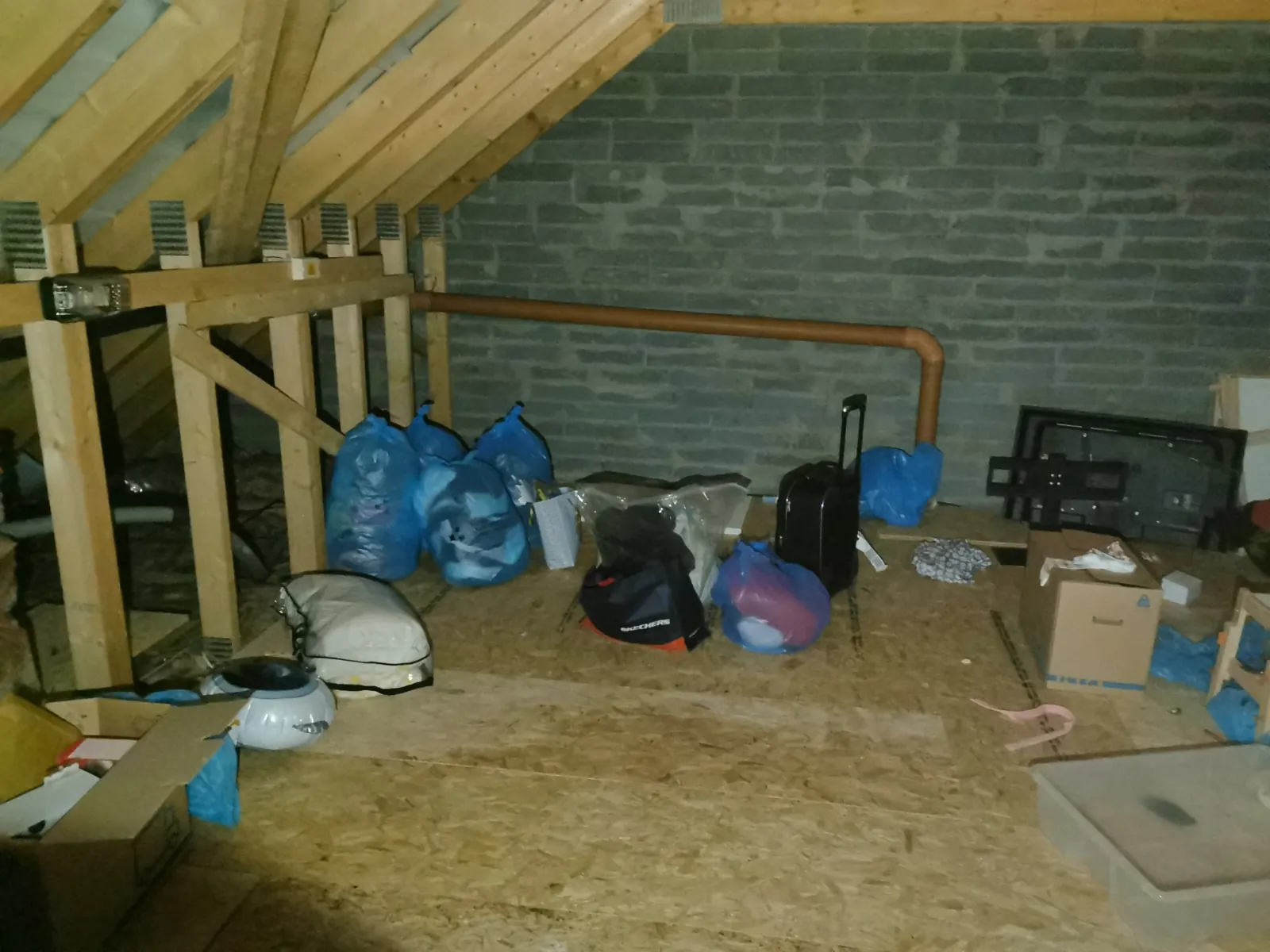
Attic clearance before an attic conversion in Dublin: emptying the roof space for the builders
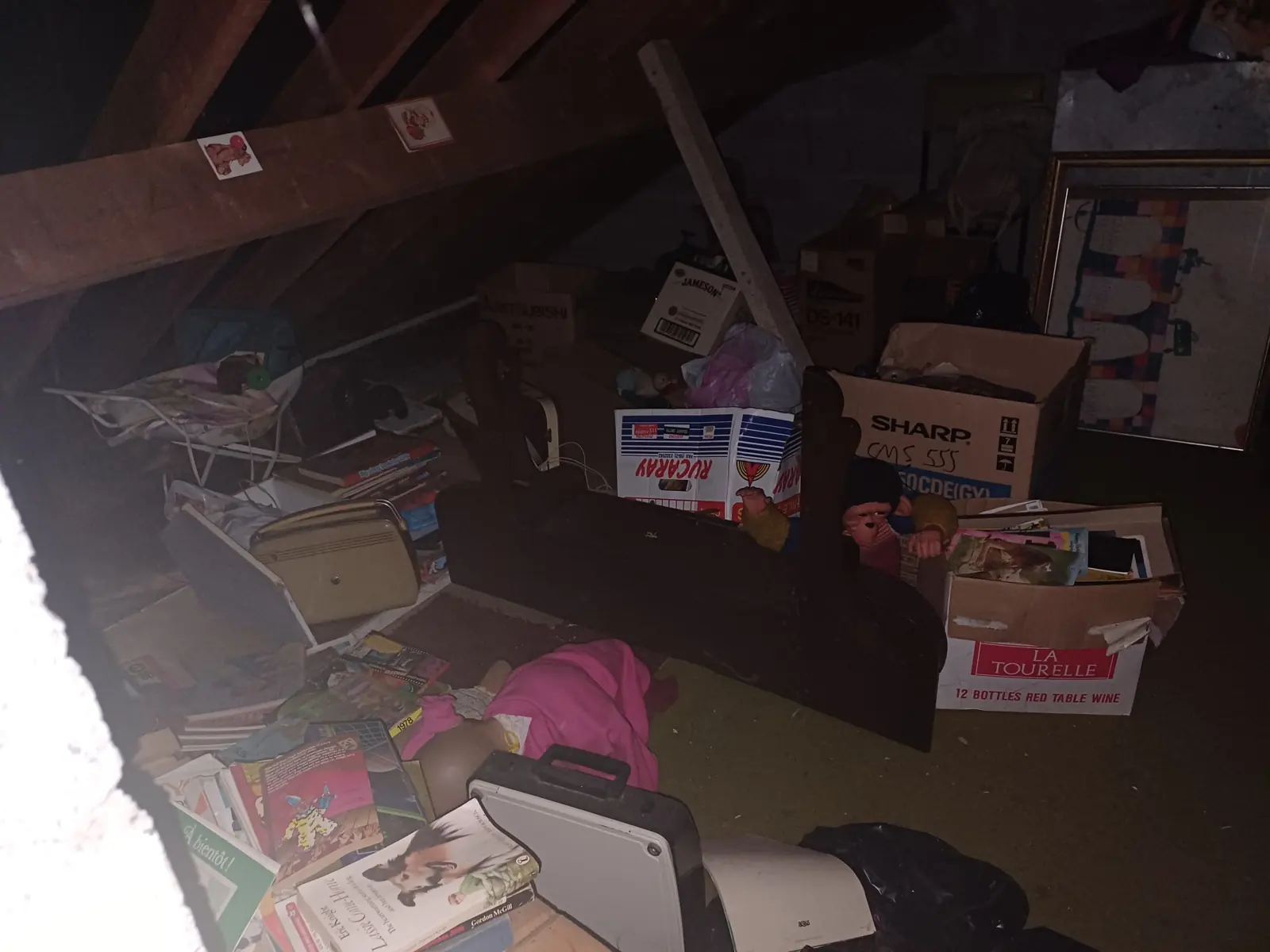
Before an attic conversion starts, the conversion company needs the roof space empty: nothing on the joists or the boards, nothing pushed into the eaves, the landing below clear, and the water tank, the wiring and the insulation left exactly as they are. That is a clearance job rather than a building job, and the time to do it is a week or two before the builders’ start date, once the family has decided what is coming down to keep.
Attic conversions are being done across Dublin in the semis and terraces built from the 1930s to the 1980s, and in most of those houses the attic has been the only store for thirty years. The builders quote for the room; getting the boxes out is yours to organise. This guide covers what the conversion company needs to find, how the contents come down through a hatch, the timing, the things we do not touch and what can be reused. For attics in general, including staying safe if you go up yourself, our attic clearance guide covers the ground, and our attic clearance page explains the service.
What the conversion company needs to find
Ask the builder for their list in writing, because it varies, and because some want the attic empty for the measuring visit as well as for the build. Most lists come to the same few things.
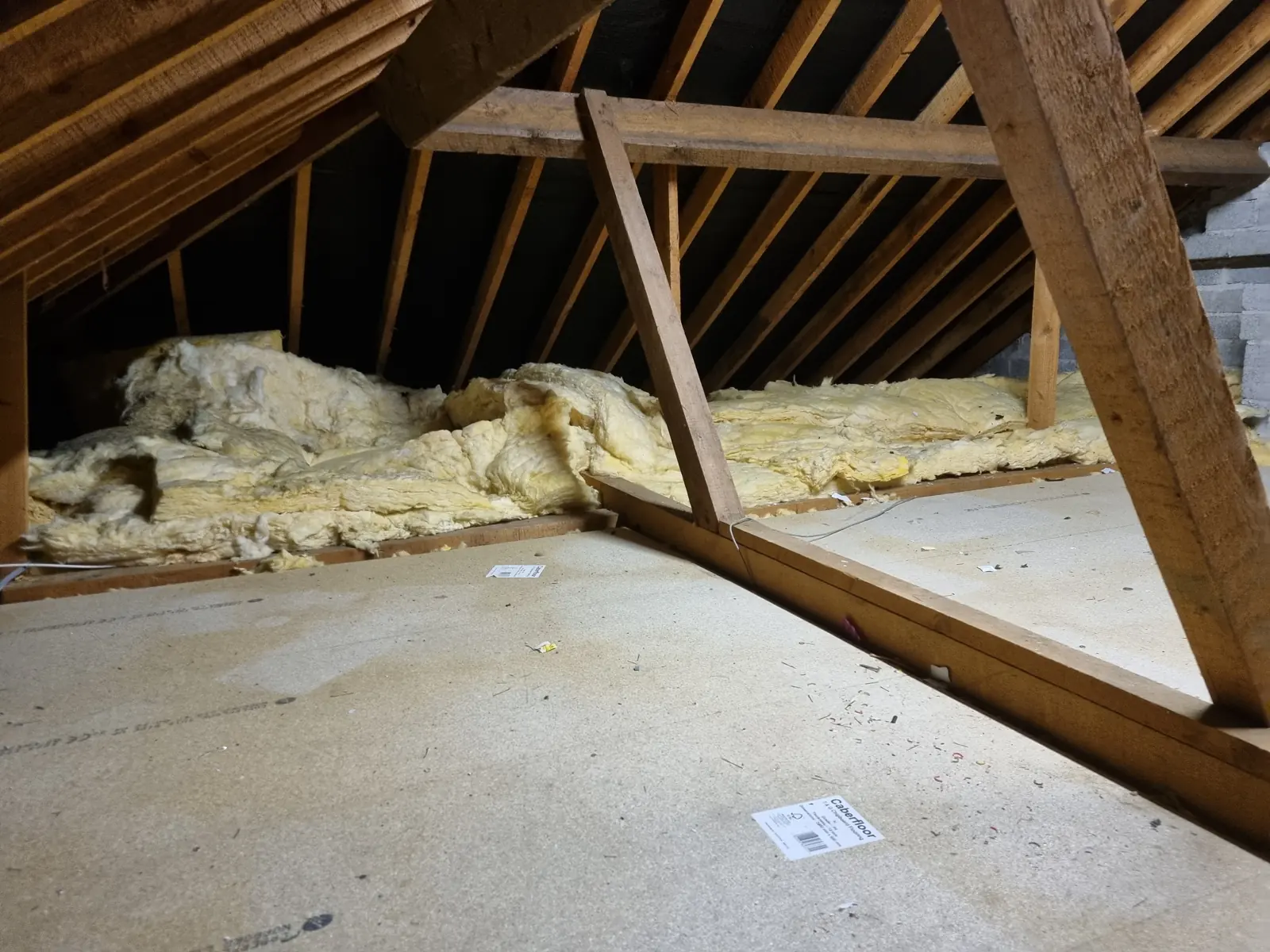
- An empty floor. Every box, bag, suitcase and piece of furniture down, including the things stored between the joists where there are no boards.
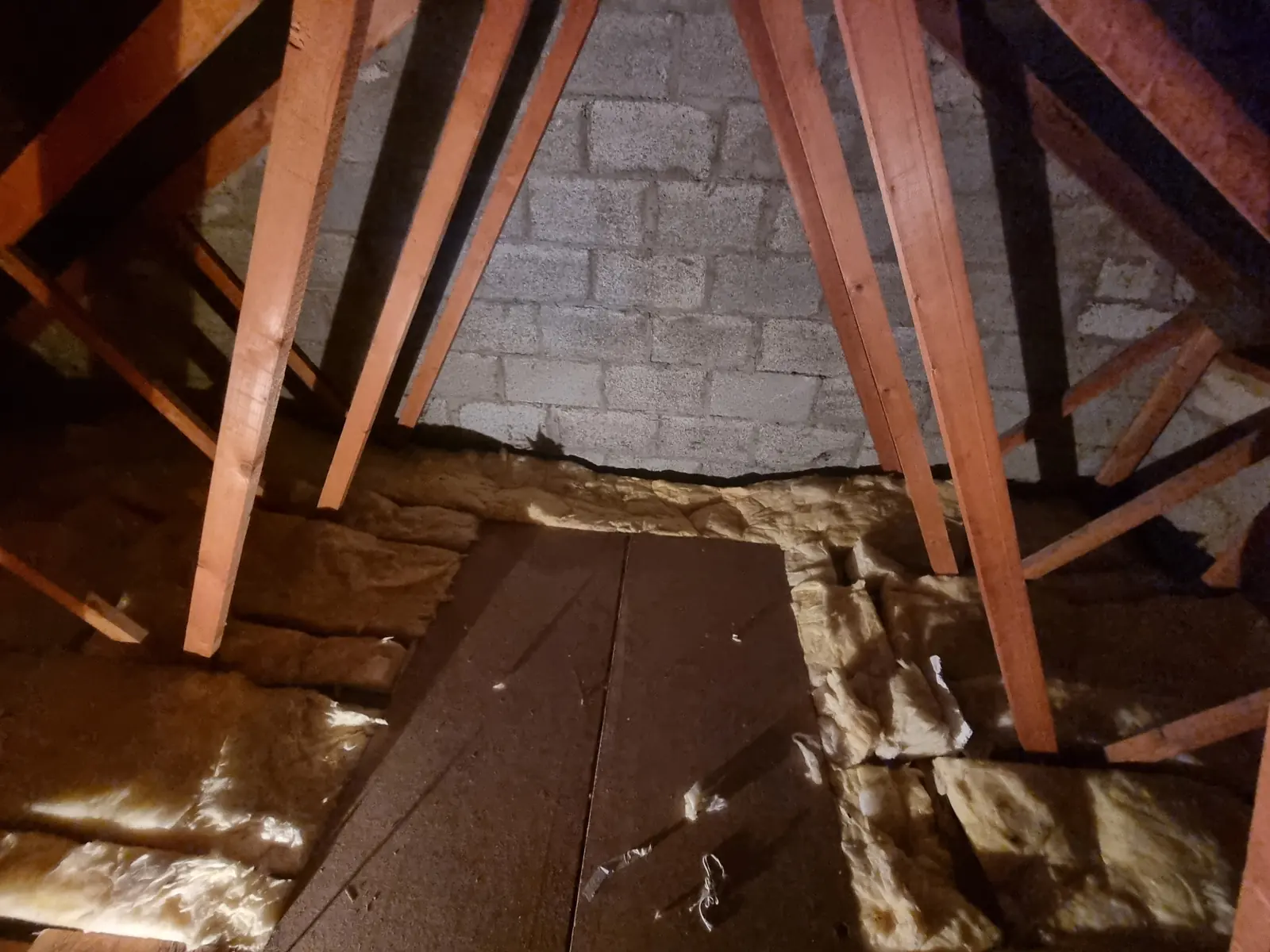
- The eaves cleared. The low triangle at the edges of the attic is where things get pushed over the years and forgotten, and it is where the new room’s storage and insulation will go.
- The landing and the box room clear. The new stairs has to land somewhere, usually on the landing or in the box room, and the builders need that space as much as the attic.
- The tank, pipework and wiring untouched. The builders’ plumber and electrician relocate or replace them as part of the conversion, and they want to find them as they were, not drained, cut or moved by anyone else.
- The insulation left in place unless they have said otherwise. It is theirs to deal with as part of the floor build-up.
- The boards left down. Loose storage boards can be taken away if the builder asks; otherwise they are left and the builders lift what they need.
- A swept floor, so they can see the timbers and the ceiling below.
The conversion company deals with the structure, the fire and planning questions and the services. A clearance crew only makes the space empty, so tell the builder the date it is booked for.
What is up there after thirty years
The attic guide lists what usually turns up; for a conversion, the useful way to think about it is by how it comes down.
- Light and bulky: Christmas decorations, empty boxes from appliances, bags of curtains and bedding, the artificial tree. Quick to move, slow to carry because of the number of trips.
- Heavy: boxes of books and papers, spare tiles, timber offcuts, the old carpet rolled up, a redundant steel water tank from a previous heating change, a cot and a disassembled bed.
- Awkward: anything that went up before the hatch was narrowed or the ladder fitted, and a mattress or a wardrobe panel that has to be turned on the landing.
- Forgotten: suitcases and biscuit tins of papers and photographs, school reports, the first child’s blanket. These are set aside and shown to you rather than removed whenever the crew finds them.
Decide what comes down to keep before the crew arrives
The real decision in a conversion clearance is not what to throw out. It is where the kept things live now, because the attic is about to become a bedroom.
Walk the attic, or have someone do it with a torch and a phone, and make a short list of what is coming down to stay: the decorations, the children’s boxes, the suitcases that are still used. Then decide where they go, the garage, the shed, under the beds or a cupboard in the new room, and clear that space first. If the garage is full, that is a job for the same visit, and our garage clearance guide covers sorting one.
Label the keep items while they are still in the attic if you can get to them, or describe them to the crew at the start. The keep items come down first and go straight to the place you have chosen, before anything that is going moves, so the two are never mixed on the landing.
How it comes down through the hatch, and what gets boxed first
One of the crew works in the attic, the other on the landing, and nothing is thrown or dropped through the hatch. The order is the same in almost every house.
- Dust sheets on the landing carpet and the stairs, and a sheet under the hatch.
- The keep items first, carried to where you have said.
- Loose items boxed or bagged in the attic before they move: a box of loose decorations or a bundle of papers comes down in one trip instead of ten, and nothing falls through the hatch.
- The light bulk next, from the far end back towards the hatch, so the person up there is never stepping over things already moved.
- The heavy items last, when the floor is clear enough to carry them safely: books in small boxes, the tank in sections if it is already disconnected, the cot and the bed frame in parts.
- The eaves, checked by torch along the full length of both sides.
- The sweep, the ladder folded, the landing cleared, the stairs sheets lifted.
Everything is sorted at the van into reuse, recycling and waste as it is loaded. A full attic in a three-bed semi is usually a half-day for two people; a floored attic that has been a large family’s store can be most of a day.
Booking: what to send and when
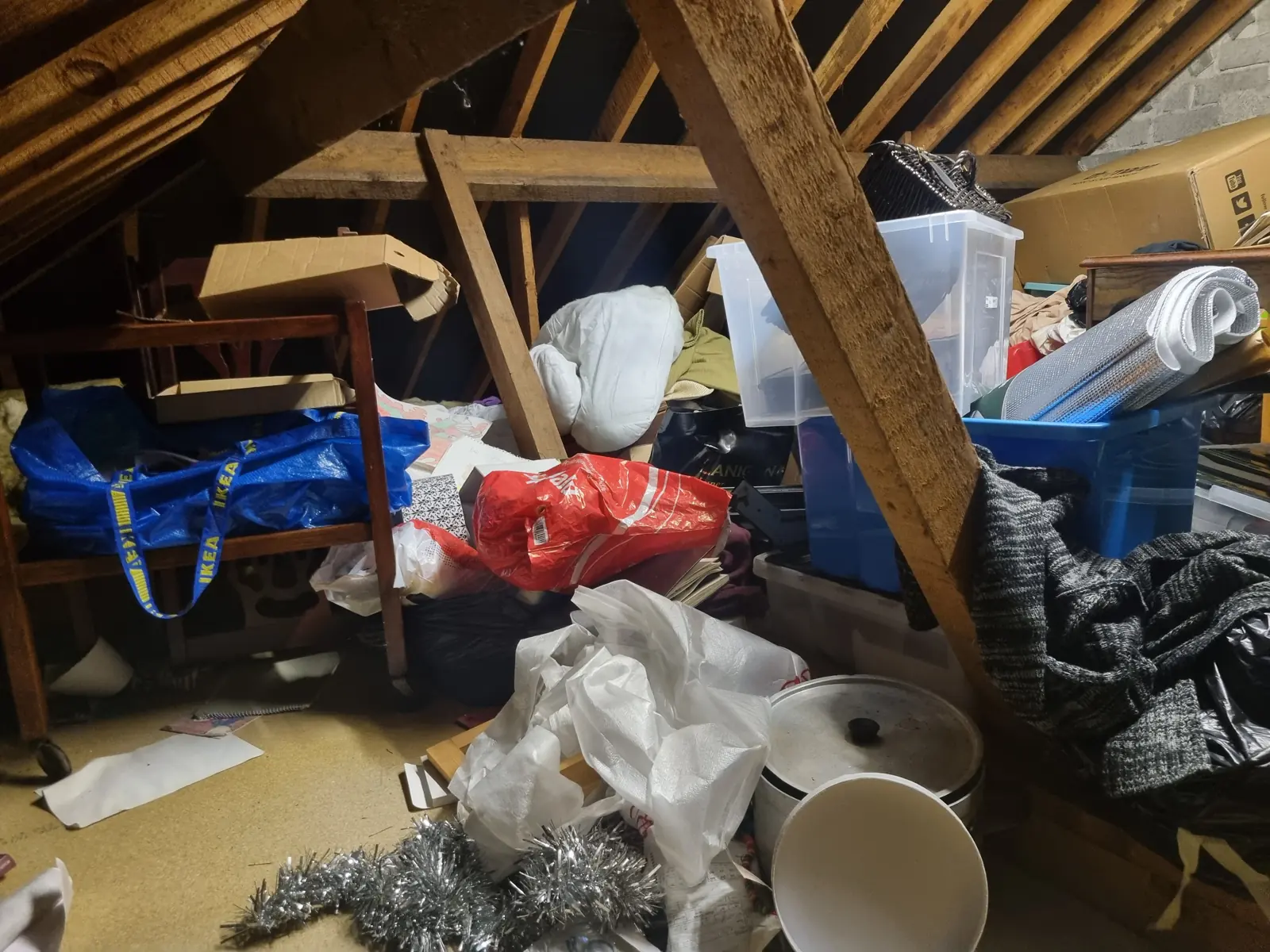
Send a photo up through the hatch with a torch or the flash on, one of the hatch and the ladder from the landing, one of the landing itself, and a photo of anything heavy or unusual up there, to 085 202 1222 on WhatsApp with the Eircode and the builders’ start date, or use the quote form. If the garage or the box room is part of the plan, add a photo of each. We come back with a fixed written price, and nothing is added on the day.
Timing before the builders’ start date
Book the clearance for a week or two before the start date, not the day before. The gap is for the surprises: a tank that turns out to be still connected, old lagging that might be asbestos, a wasps’ nest. Each needs a different trade before the builders arrive, and a week gives you time to arrange it.
Ask the builder whether they want the attic empty before their measuring visit. If they do, the clearance moves earlier again, and the kept items need their new home sooner. If the conversion involves taking out the existing hatch and ceiling, the clearance must come before that day, because once the hatch is gone the attic is a building site.
Send photos two to three weeks ahead of the date you want. We work Monday to Friday from 8am to 5pm and Saturdays until 2pm.
Tanks, wiring, boarding and insulation: what we do not touch
The crew lifts and carries. It does not do anything that belongs to a plumber, an electrician, a carpenter or an asbestos specialist, and in an attic that is about to be converted the line matters more than usual.
- A connected water tank stays where it is, with the water in it, even if the builder is moving it next week. Draining and disconnecting is the plumber’s job. A tank that has already been disconnected and emptied is scrap metal and can come down with the rest.
- Wiring, the attic light, junction boxes, alarm sensors and aerial cables are left alone. The crew works around them and does not unclip, cut or move a cable. Tell the builders’ electrician where the cables run.
- The boiler flue, if it passes through the attic, is not touched or leaned on.
- Insulation stays in place between the joists. Loose or damaged mineral wool can be bagged and removed if the builder asks, which they rarely do, because they deal with it in the floor build-up.
- Boards stay down. Loose sheets laid as storage boards can go if you want them gone; fixed boarding is the builders’ to lift.
- Anything that might be asbestos, such as old pipe lagging, insulation board around a tank or a flue, or old cement sheeting, is left exactly as it is. The crew stops, tells you and clears around it, and an asbestos specialist deals with it before the builders start. We do not carry asbestos on any job.
- The hatch and the ladder are left as they are. Taking out a loft ladder is a carpenter’s job, and the builders deal with the hatch as part of the stairs.
What can be reused
Toys, books, suitcases, decorations and furniture in good condition are set aside for reuse or donation where we can arrange it; cardboard and paper go for recycling; a disconnected steel tank goes for metal recycling; televisions, computers and anything electrical are kept separate for electrical recycling. Items that have gone damp or mouldy under the roof go for disposal, and what remains goes to a waste transfer station under our waste collection permit, NWCPO-25-13287-01. We do not quote figures for how much is reused, because it depends on what is up there and its condition. Our guide to what happens to items after a house clearance follows the load from the hatch onwards.
If the attic is already a converted room
Some conversions are second conversions: a 1980s attic room with a narrow stairs is being rebuilt, and the room has to be emptied like a bedroom rather than an attic. Beds and wardrobes come apart in the room and go down in pieces, and the eaves cupboards behind the knee walls are usually full. Our Knocklyon guide covers converted attics and their stairs.
What customers say
This is a review from a real customer, quoted exactly as it was written.
Ciprian and his team of two swiftly assessed the clearance based on provided photos, arrived punctually, and energetically tackled the task at hand. Despite my underestimation of the amount of junk to be cleared, they maintained the agreed price without any adjustments from their end. Their demeanor was friendly and their work highly efficient.
Anthony, City West
Frequently asked questions
The conversion company wants the attic empty before their survey, not just before the build. Why?
Because they need to see the timbers, the height to the ridge, the position of the tank and the chimney, and the state of the joists and the ceiling below to design and price the room. Boxes hide all of that. Clearing before the survey can mean a more accurate quote from them and fewer changes once work starts.
We are keeping the Christmas decorations and the children’s boxes. Where do they go if the attic is becoming a bedroom?
Decide before the day, because they cannot go back up. The garage, the shed, under the beds or a cupboard in the finished room are the usual answers, and the crew carries the keep boxes to whichever you choose. If the garage has to be cleared to make the room, we quote it on the same visit.
Should we lift the loose boards so the builders can see the joists?
No. Leave the boards to the builders, who lift what they need as part of the floor build-up and know which ones are carrying the tank or the walkway. The crew does not lift fixed boarding. Loose sheets that were only ever laid down as storage can come away with the clearance if the builder asks for it.
The builder is relocating the water tank anyway. Can you drain it or shift it out of the way for them?
No. A connected tank is the plumber’s, and the builders’ own plumber will drain and move it as part of the job. The crew leaves it, the pipework and the ballcock alone and works around it. A tank that is already disconnected and empty is different: it is scrap, and it comes down in one piece or in sections like anything else.
There is an aerial cable and the alarm wiring running across the attic floor. Will that stop you?
No. The crew works around cables and does not unclip, cut or move them, and boxes resting on a cable are lifted off it rather than dragged. Point out where the cables run at the start, and mention them to the builders’ electrician, who will reroute them for the new room.
How far ahead of the builders’ start date should the attic be cleared?
A week or two. That leaves time for anything the clearance turns up, such as a tank still connected, lagging that might be asbestos or a wasps’ nest, to be dealt with by the right trade before the builders arrive. The day before is too late if there is a surprise.
What happens if you find old pipe lagging or board that might be asbestos?
The crew stops, leaves it exactly as it is and tells you, then clears around it if that can be done without disturbing it. Asbestos is not carried on any of our jobs. An asbestos specialist assesses and removes it before the builders start, and the conversion company will want to know about it in any case.
The hatch is in the box room and the box room is where the new stairs is going. Can you clear both?
Yes. The box room is cleared as a bedroom, with the bed, the wardrobe and whatever has been stored there, and the attic through the hatch above it. Mention both when you send photos, with one of the box room from the door, so the quote and the time cover the two together.
Can you clear the attic once the builders have already started?
It is far better before. Once the builders are in, the attic is their site, the ladder may be gone and the landing is full of materials, so we do not work in the roof space alongside them. If the start has already happened, agree a day with the builder when nobody is working and clear it then.
Does the attic clearance include sweeping, or do the builders do that?
The crew sweeps the boards and the hatch area of loose debris and dust once the attic is empty, so the builders can see the floor. It is a sweep, not a clean, and nothing is done to the insulation between the joists. The builders will make their own dust from the first day.
What should we photograph for the quote if the attic has no light?
Stand on the ladder and take two or three photos into the attic with the flash on, or with a torch held up beside the phone, pointing in different directions. Add one of the hatch and the ladder from the landing and one of the landing itself. If you cannot get up safely, say so and tell us what you remember being up there, and we will ask the questions we need before fixing the price.
Next step
Send a photo up through the hatch, one of the hatch and ladder, and one of the landing, with the Eircode and the builders’ start date, to 085 202 1222 on WhatsApp, or request a free quote online. Our attic clearance page explains the service, and the house clearance page covers the rest of the house if more than the attic is going.