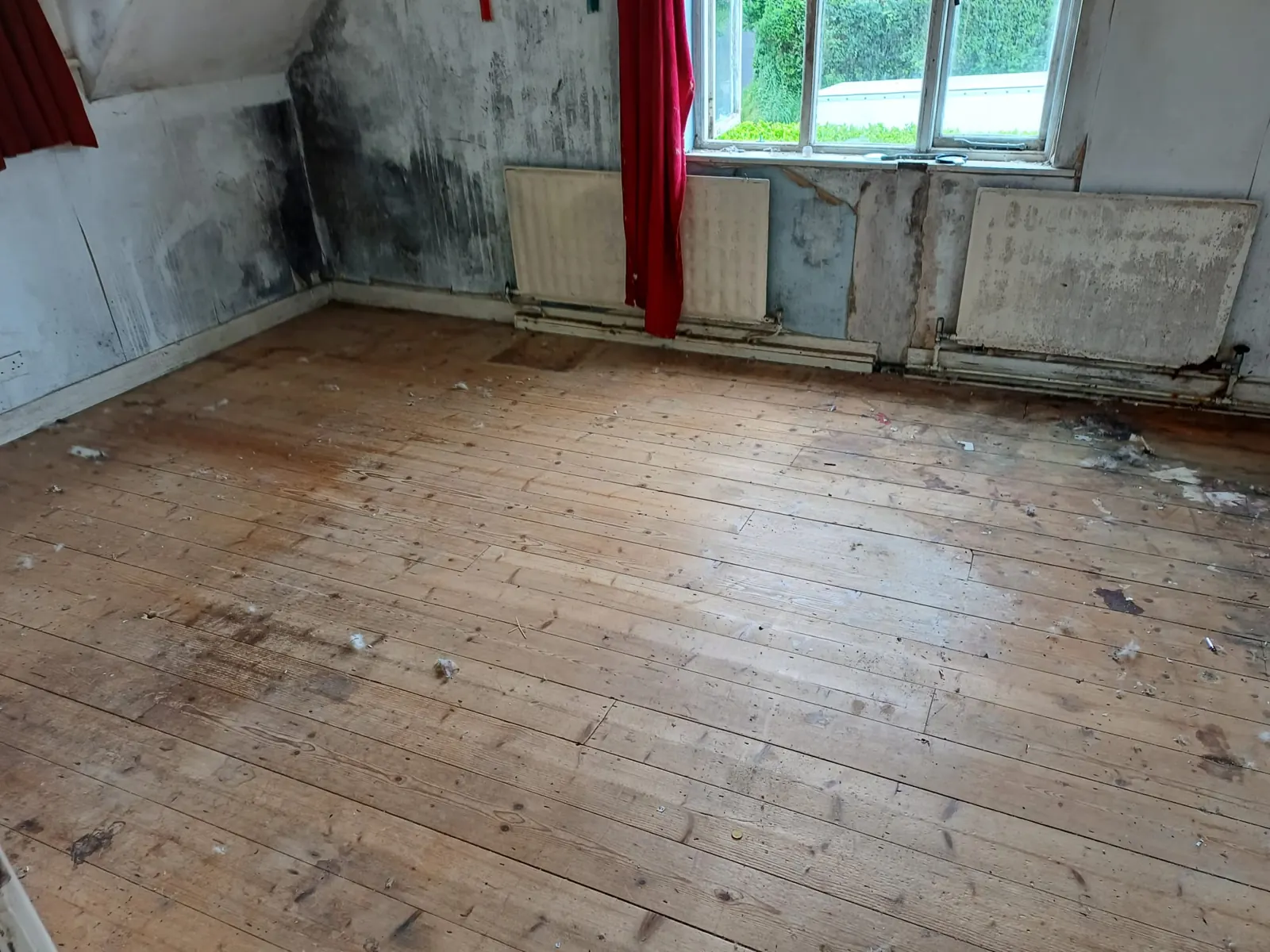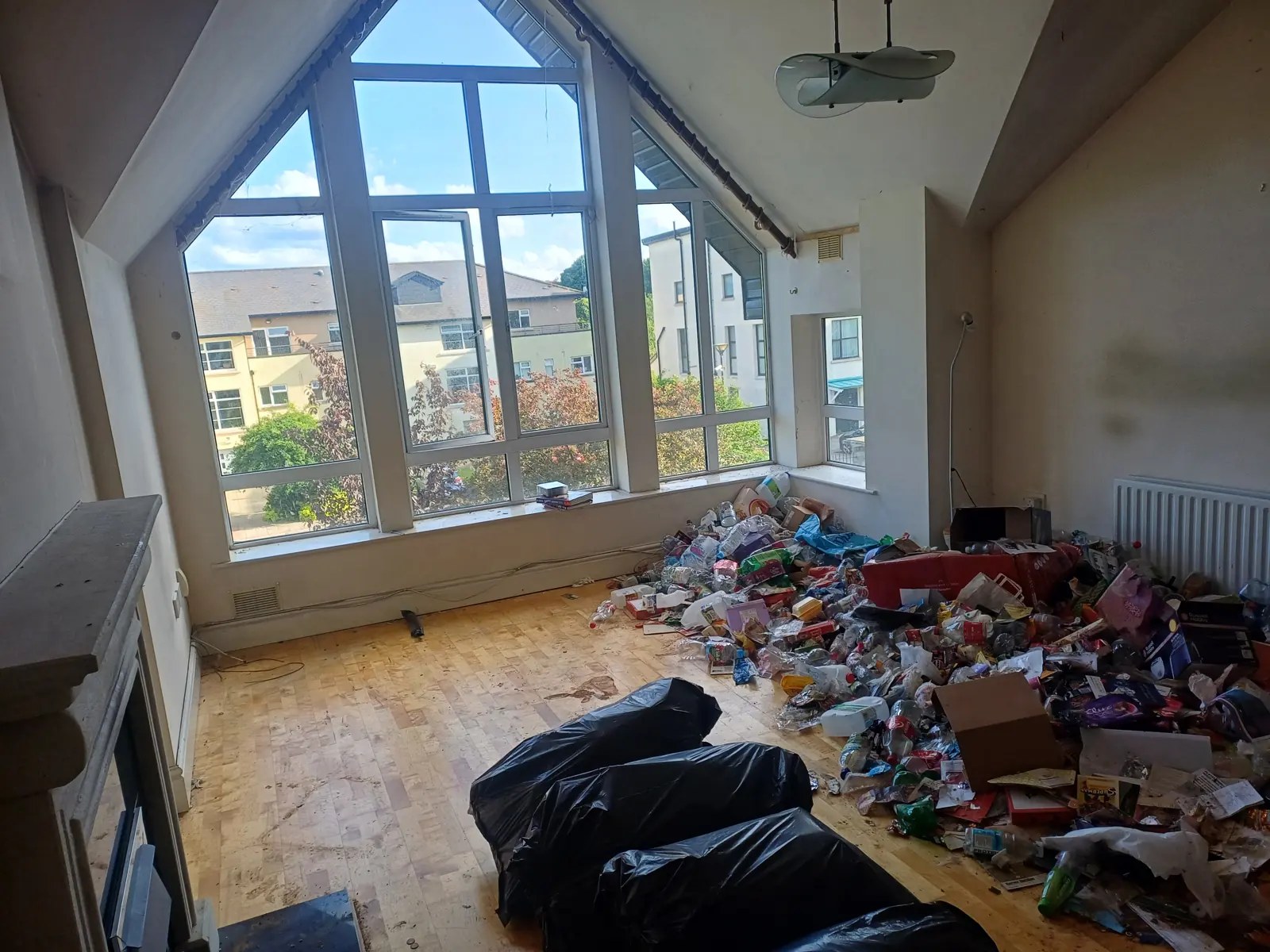
House clearance in Tallaght: clearing to a sale or handover deadline

A house clearance in Tallaght that has to be finished by a fixed date is easiest if you plan backwards from that date. Work out when the house must be empty, allow a few days of slack before it, settle what stays and what goes first, send photos for a fixed quote, and book the crew for a date well ahead of the deadline rather than on it. Most of the delays we hear about come from decisions that were left too late, not from the clearance itself.
Tallaght is the biggest suburb in the county, and most of it was built in a burst from the 1970s to the 1990s. The estates at Kilnamanagh, Old Bawn, Springfield, Aylesbury, Jobstown and Fettercairn are now reaching the point where the first owners are downsizing, going into care or passing on, and around The Square, Belgard and the village there are apartments that turn over between tenants. Both situations come with a clock. This guide is about managing that clock. For the access and parking side, our house clearance in Tallaght page covers it, and this guide is about the plan.
Who sets the deadline?
Almost every Tallaght clearance has someone else’s date attached to it. Knowing whose it is tells you how firm it is.
- A sale. The estate agent or solicitor wants the house empty for viewings, or the contract requires vacant possession on closing. Check with your solicitor exactly what the contract says about contents, because it varies.
- A tenancy ending. A landlord or letting agent needs the property back, often with a handover inspection.
- A care move. A parent is moving to a nursing home or sheltered housing and the house has to be dealt with, often with a bill running.
- A renovation. A builder starts on a set date and the house must be empty first.
- An estate. The solicitor administering the estate wants the house sold, and the family wants it done properly.
A closing date is the firmest, and a renovation start is usually movable at a cost. A care home bill is firm in its own way. Tell us what kind of deadline it is when you ask for a quote, because it changes how we plan.
Work backwards from the date
The simplest method is a countdown. Take the date the property must be empty and count back. The weeks below are a general guide, and they can be compressed, but each step that is skipped usually comes back as a delay.
Four to six weeks before. - Confirm with the solicitor or agent what the deadline actually is and what it requires. Does “empty” mean no furniture, or also no fixtures and no rubbish in the garden? - Make the keep list. Walk every room and decide what stays with the family. - Tell the home insurer if the house will be unoccupied. - Find the documents, valuables and keys.
Three to four weeks before. - Share out keepsakes between family members and arrange for them to be collected. - Ask an auctioneer or dealer to look at anything that might have value. - Take photographs of every room, the attic hatch, the garage and the shed. - Send them to 085 202 1222 on WhatsApp for a fixed quote.
Two weeks before. - Agree a date with us, with a few days of slack before the deadline. - Arrange who holds the keys. - Book the lift and tell the management company if it is an apartment. - Tell the neighbours.
One week before. - Move everything you are keeping into one room and close the door. - Check the hiding places one more time: pockets, tins, the hot press, the attic. - Take meter photographs if you can.
The day before. - Empty and defrost the fridge-freezer. - Move cars off the drive or the space outside. - Leave the electricity on.
The day. - Walk the house with the crew. Hand over the keys.
The day after. - Walk the empty house, take final meter readings, collect keys and tell the agent or solicitor it is empty.
The slack matters. If the deadline is the 30th, aim for the clearance on the 22nd, so that a bad-weather day, a missing key or an extra room does not become a crisis.
What does “empty” mean?
This is the question to settle with the solicitor or agent before anything is cleared, because the answer varies from contract to contract. Questions to ask:
- Fixtures and fittings. Fitted kitchens, bathroom suites, light fittings, curtain poles, blinds and sometimes the cooker are often meant to stay. Do not take them out and do not clear them away by mistake.
- Furniture the buyer asked for. Occasionally a buyer wants a piece, or the contract lists items left behind. Check the list.
- The garden and outbuildings. Does the shed stay? Does the garden furniture go?
- Condition. Is the property to be left swept, or does the agent expect it cleaned? We clear and sweep. We do not clean, so if the agent expects a cleaned property, book a cleaning company for after we finish.
- Rubbish. Bins, garden waste and anything left in the garage are all part of “empty”.
Write down the answers. If a question comes up on the day, you will want to be able to point to them.
Sizing the load in Tallaght
Our van load planner gives every item a share of a full box van, where a full van is 100. A 3-seater sofa is 10, a 2-seater 7, an armchair 4, a double bed with mattress 8, a single bed 5, a wardrobe 8, a chest of drawers 3, a table and chairs 7, a desk 3, a bookcase 3, a fridge-freezer 4, a washing machine 2, a cooker 3, a TV 1, a lawnmower or bike 2, a garden furniture set 6, and a bag or box 0.5.
The bands are a small load under 12, about a quarter from 12, about half from 38, about three-quarters from 63, and roughly a full van from 88 to 105. Above 105 the planner says more than one load.
A typical estate house. Two double beds, a single, three wardrobes, two chests of drawers, a 3-seater, an armchair, a table and chairs, a bookcase, a fridge-freezer, a washing machine, a cooker, two TVs, 25 bags and 25 boxes comes to 111. That is more than one van load, and we plan two loads or a bigger crew.
A garage used for storage. Two bikes, a lawnmower, a garden furniture set, a washing machine, a chest of drawers, a bookcase, ten bags and ten boxes comes to 30. That is a quarter-van job on its own.
A two-bed apartment. A double bed, a single bed, two wardrobes, a chest of drawers, a 3-seater, an armchair, a table and chairs, a fridge-freezer, a washing machine, a TV, ten bags and ten boxes comes to 70. That is three-quarters of a van.
Planner totals are a rough guide, and we confirm the price from photos. The reason sizing matters to a deadline is simple: a job under 105 is one load and a morning or a day, while a job over 105 is two loads or a bigger crew and needs a longer slot in the diary. Knowing which you have lets you book the right time. You can try the planner on our home page.
Estate house or apartment: the logistics differ
Estate houses. Access in the Tallaght estates is about as good as it gets. Nearly every house has a driveway or a front garden paved for parking, so the van pulls in off the road and we load from the garage door or the front step. The roads in Kilnamanagh, Old Bawn and Springfield are wide enough for a box van. The thing that slows a job is a car parked across a shared driveway, so move cars the day before.
Apartments. The blocks near The Square and Belgard have lifts and management companies that want a booked slot, and some have a loading bay with limited hours. Get the slot first, because it is the hardest thing to move. Ask for the management company’s number when you book. If the car park has a height barrier, a box van will not clear it, so we plan to load from the surface.
Traffic. The Square, the hospital and the Belgard Road are heavy at school and commuting times. For jobs in the village we aim for mid-morning starts, and further out we start earlier. We work Monday to Saturday and not on Sundays, so a Sunday handover means the clearance has to be done by the Saturday.
Keys and access when you live elsewhere
Many Tallaght families clearing a parent’s house have one or two siblings living away. That is fine. What matters is that someone can open the door.
- Name one key holder. A sibling, a neighbour, an agent or the solicitor.
- Agree who can give instructions. If two people tell the crew different things on the day, the day gets longer.
- Use WhatsApp for photos. We send photos as rooms empty, so people who are not there can see progress.
- Plan a final video. A walk-through video of the empty house is useful for the agent, the solicitor and the family.
Viewings and a half-cleared house
If the house is on the market while it is being cleared, think about the order. Clearing before viewings gives buyers a clear view of the rooms. Clearing during a sale process means the house may be empty for some viewings and not others. Ask the agent what they prefer.
If you are clearing in stages, do the garage, shed and attic first. They do not affect viewings, and they usually hold the volume that eats the most time. Then do the house itself closer to the date.
What affects the quote
We quote a fixed price from photos. The things that move it are the size of the load, access (stairs, lifts, a loading bay, distance from the van), parking, what the load is made of (mattresses, carpets and soft furnishings cost more to dispose of than timber furniture), and anything that needs dismantling. We do not publish prices. Send extra photos as soon as you find more, so the quote can be updated before the day.
If the date is tight, say so. We will tell you honestly what we can do, and we will not promise a date we cannot keep.
The day
The crew arrives at the agreed time and walks the house with you or whoever holds the keys. That takes a few minutes and is the moment to point out the keep room, any fixtures that must stay, and anything you have second thoughts about.
Then the crew works through the house room by room, carrying everything by hand. Items are sorted at the van into reuse, recycling and waste. Furniture and household goods that still have a life in them are set aside for reuse or donation, metal, cardboard and timber are separated, electricals go through the WEEE scheme, and the rest goes to a licensed waste transfer station under our waste collection permit, NWCPO-25-13287-01. At the end the crew sweeps the cleared rooms, checks every cupboard and the attic, and hands back the keys.
After the crew has gone: the handover checklist
- Walk every room, the attic, the garage and the shed.
- Take final meter readings for gas and electricity, and photograph them.
- Collect every key, including shed, window and meter-box keys, and label them.
- Check the heating and water as the agent or solicitor has asked.
- Sort the bins, so nothing is left in the wheelie bins.
- Redirect the post if you have not already.
- Tell the agent or solicitor that the property is empty, with the date and photographs.
- Cancel or transfer utilities and broadband, and return any provider equipment.
When the date slips
Sometimes the deadline moves. A sale is delayed, a probate step takes longer, a tenant leaves early. If the date moves, tell us as soon as you know, because it is easier to rebook early than at the last minute. If it moves earlier, send us the photos and we will say what is possible.
If a clearance cannot be finished in one go, it is better to clear the outbuildings and the attic now and leave the rooms the family still needs. A partial clearance on time beats a complete clearance late.
Mistakes that cost time
- Leaving the keep list until the day. Decisions made on the morning of the clearance are the ones that go wrong.
- Booking on the deadline. Book a few days before, not on the day.
- Forgetting the management company. A lift slot booked late can cost a week.
- Assuming “empty” means the same to everyone. Ask the solicitor.
- Underestimating the garage and attic. They hold more than they look.
- Not telling us about stairs, lifts or a long carry. It changes the time, and the time is what the deadline is about.
Three deadlines, three plans
The countdown above is the ideal. In practice the clock often starts later. These are three situations we see, and how to handle each.
You have three weeks to a closing date. Skip the long sorting phase and do it in two moves. In the first week, settle the keep list, secure the documents and send photos. In the second week, clear the garage, shed and attic, which hold the volume and are the easiest to decide. In the third week, book the house itself for a date at least three working days before closing, so a missing key or an extra room does not push you over. If the planner total passes 105, ask for two loads on the same visit rather than two separate visits.
A parent is moving to a nursing home next week. The house is not the priority this week. The priority is the room they are moving to, and the things that go with them. Once they have moved, you have time to deal with the house calmly, unless a bill is running. Put the keep list in writing, secure the documents, and book the clearance for the week after the move, not before. Clearing a house around a person who is still living in it is slow and upsetting for everyone.
A tenant has given short notice. For an apartment near The Square or Belgard, the management company’s lift slot is the bottleneck. Ring them on the day you hear. Send us photos as soon as the tenant has gone and the keys are back, and say how many days you have before the next move-in. We will tell you honestly what can be done, and we work Monday to Saturday.
In all three, the common thread is to decide who holds the keys, who gives instructions and what stays, before you ask for a date.
What the buyer or agent sees
If the house is going on the market, the way it is cleared affects the viewings. A few observations that apply to Tallaght estate houses and apartments alike:
- Empty rooms look bigger, and buyers can picture their own furniture. Many agents prefer a clear house.
- A half-cleared house looks neglected. If you cannot finish before photographs, tell the agent and pick rooms that are done.
- The garden and the front matter. Bins, bags and old furniture at the front of a house are the first thing a viewer sees. Clear the front garden and the side passage first.
- Smells and light. Open windows, leave the lights on and avoid piles of bags in the hall.
- The attic and the garage will be looked at. A buyer’s surveyor will open the hatch. An emptied attic is easier to inspect than a full one.
None of this is about making the house look staged. It is about avoiding the impression that nobody has looked after it, when the real reason is simply that a family is part-way through a clearance.
Items that slow a deadline job
Some things look small and cost a day. Raise them early.
- Fitted furniture and old kitchens. Taking out built-in units is a strip-out, not a clearance, and may need a builder.
- Gas appliances. A gas cooker or boiler needs a Registered Gas Installer to disconnect it. We lift and carry; we do not do gas, plumbing or electrical work.
- Very heavy pieces. Pianos, safes and large American-style fridges need a conversation about stairs and a lift.
- Items belonging to someone else. A neighbour’s ladder, a borrowed trailer, a lodger’s belongings. Sort them out before the day.
- Locked rooms and cupboards. If a key cannot be found, get a locksmith before the clearance, not during it.
- Perishables. A full freezer in a house that has been empty for a month is a job on its own. Empty it and defrost it the day before.
- Paint, solvents, oils, chemicals and gas bottles. We do not collect these. Take them to a civic amenity site or hazardous waste collection, and we clear the rest.
Apartment handovers: a rules checklist
If the property is an apartment, the building’s rules matter as much as the contents. Before you book, find out:
- Whether the management company needs written notice, and how much.
- Which lift can be used, and whether it needs padding or a key.
- What hours removals are allowed. Some blocks restrict them to weekday daytime.
- Where the van can stop, and for how long.
- Whether a deposit or a form is required for a removal.
- Who has the fob, the bin store key and the barrier remote.
- Where the waste goes. We take our load with us, so the building’s bins should not be used for the clearance.
Write the answers down and send them to us. We pass the details to the crew so there is no standing at a gate on the morning.
What customers say
These are reviews from real customers, quoted exactly as they were written.
Easily organized a complete clearance with Ciprian of an elderly relatives house , all done very quickly and efficiently without me even having to go there! All very stress free and Ciprian sent pictures of the cleared house afterwards as I don’t live nearby . Great service.
Mick, Bray
Frequently asked questions
How far ahead should I book a Tallaght clearance for a closing date?
As soon as you have photos and a rough date. A fortnight is comfortable, and longer is better if you need a lift slot or a weekday. If time is tight, tell us the date and we will say what is possible.
Can you work on a Saturday if the handover is on a Monday?
Yes. We work Monday to Saturday, not on Sundays, so a Saturday clearance ahead of a Monday handover is a common plan. Book early, because Saturdays are in demand.
What if the estate agent wants the house empty before photographs?
Send them the clearance date, and clear the outbuildings and attic first if you need to. Ask the agent what they need in the photographs. Some are happy with a half-cleared house if the main rooms are clear.
Do you clear apartments near The Square in Tallaght?
Yes. The key is the management company: get a lift slot and loading bay time first. We ask for the block name and the management company’s number when you book.
Does the box van fit in a Tallaght apartment car park?
Usually not. Height barriers are low for a box van, so we plan to park on the surface and agree the spot with the management company.
My parent is moving into a nursing home and the house must be cleared. Where do I start?
Make a keep list with your parent where you can, and move those items into one room. Then take out documents and valuables, send photos for a quote and agree a date. We go at the family’s pace.
Can the clearance happen before the solicitor has finished with the estate?
Check with the solicitor first. We take what you tell us can go and leave anything marked as staying. If in doubt, wait for the go-ahead.
How do I handle a house with a very full garage and attic?
Photograph them separately and count the big items using the planner. They are often a quarter to half of a van each. Doing them first can create space and clarify what is left.
What if there is more than I photographed?
Send extra photos when you find it. Updating the quote before the day is quick, while discovering extra halfway through slows the whole job.
Do you take fitted kitchens and wardrobes?
Built-in units are a strip-out rather than a clearance, so send a photo and ask. Check first whether the contract says they stay.
Can a neighbour hold the keys and let you in?
Yes, as long as you set it up beforehand. We need their number and a rough arrival time.
Is good furniture thrown away if the sale is in a hurry?
No. Usable pieces are still set aside for reuse, donation or resale where possible, even on a tight timetable.
Next step
Send photos of each room, the garage, the attic hatch and the shed to 085 202 1222 on WhatsApp, along with the Eircode and the date you need the property empty, or request a free quote online. Our house clearance page explains the service, and the apartment clearance page covers lifts and management companies.