House clearance in Clondalkin: a landlord's guide to turning a property around
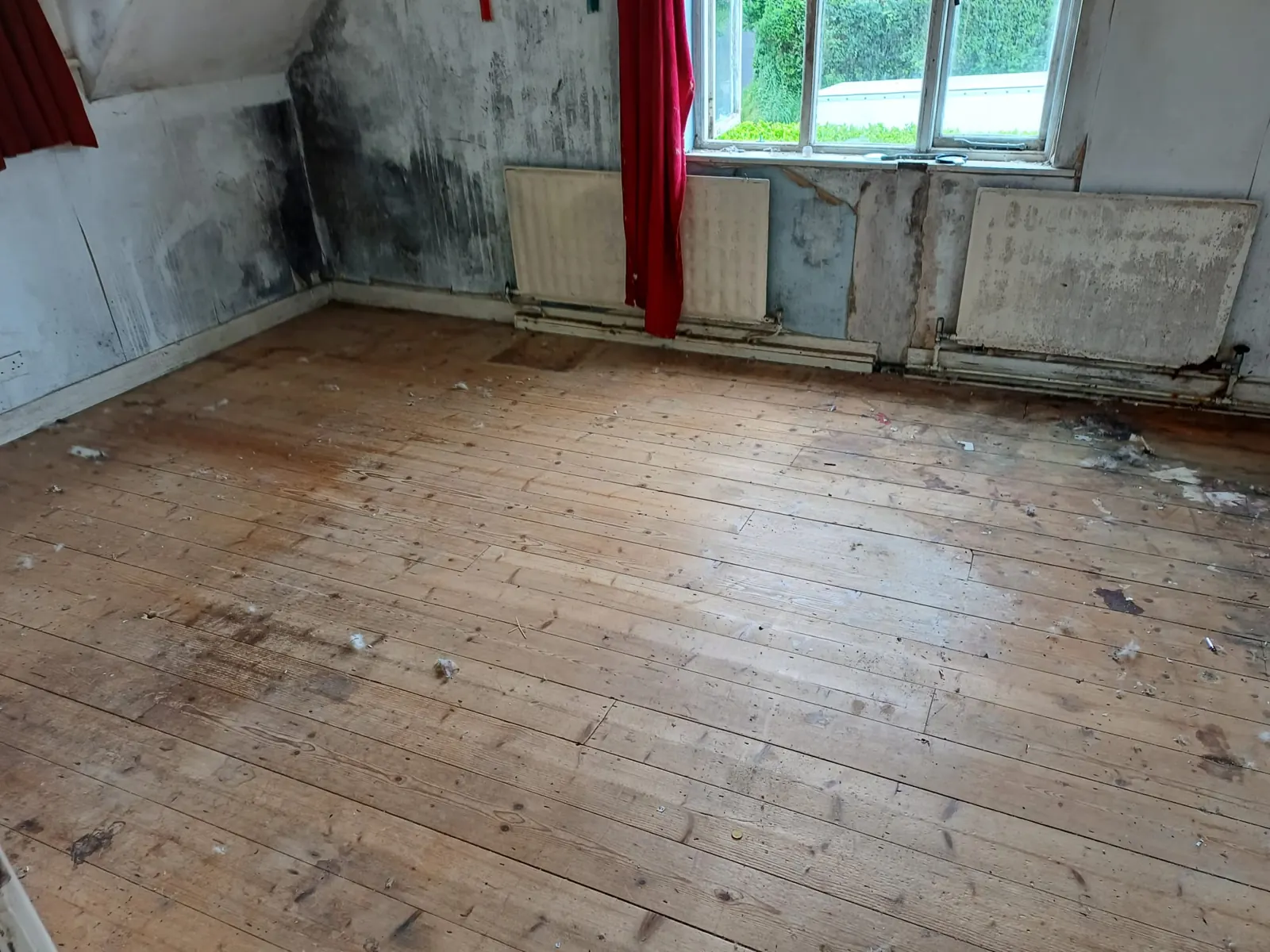
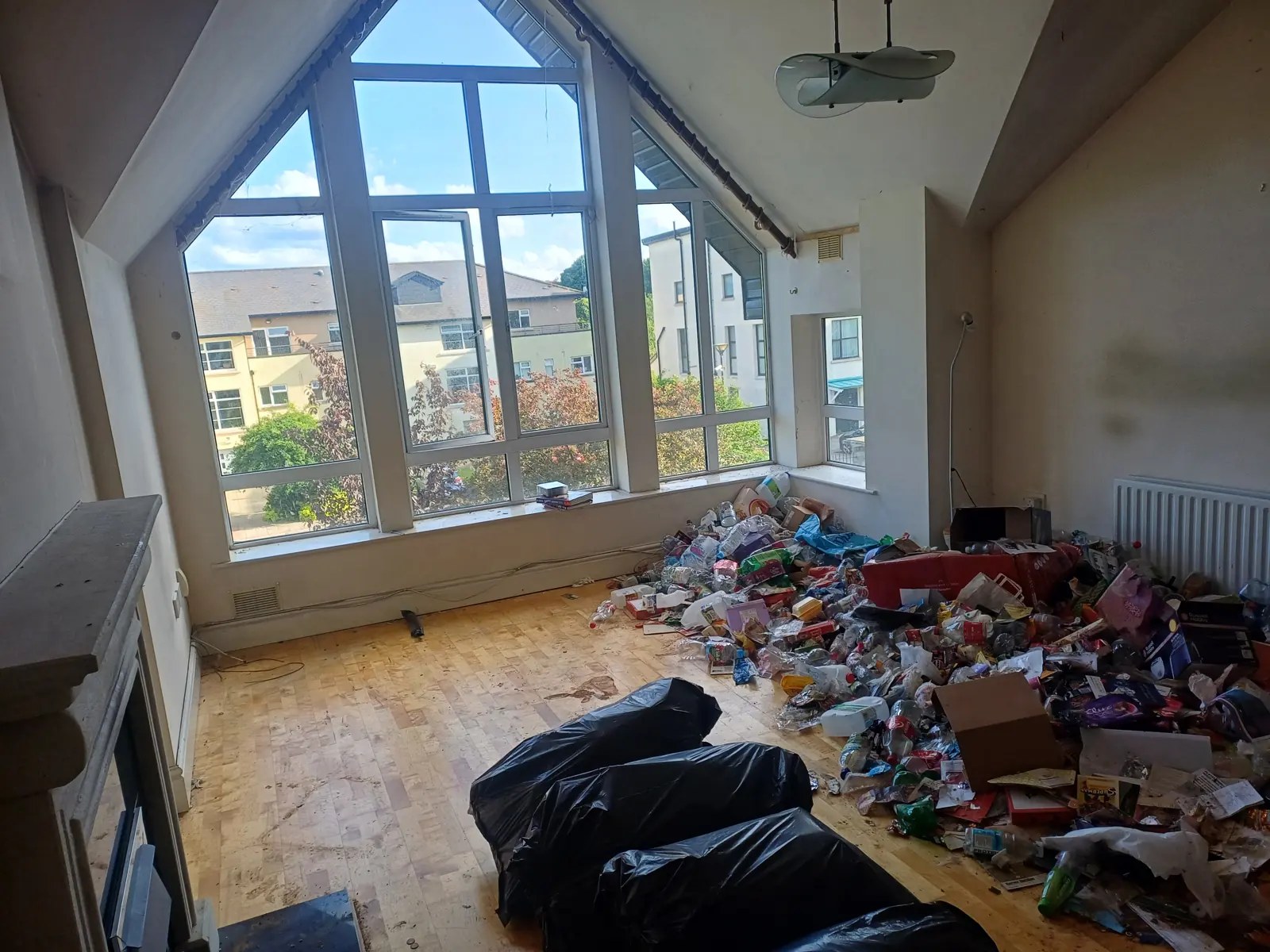
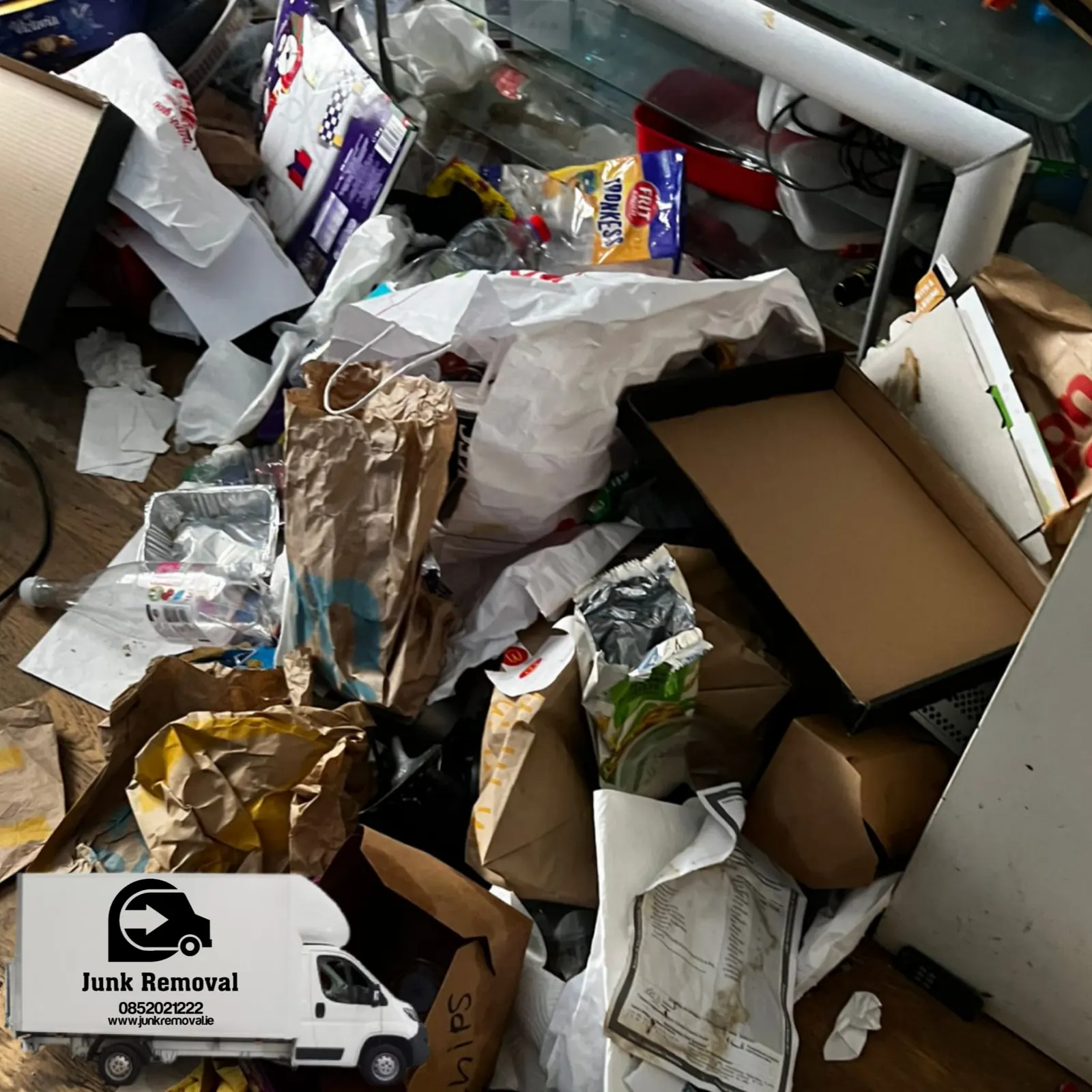
House clearance in Clondalkin for a landlord comes down to four things done in order: find out whose the belongings are, record the property before anything moves, size the load from photos, and book a crew who can work around the management company and the next tenant’s date. The clearance itself is the short part. What saves landlords time and money is the groundwork before it, and the paperwork after.
Clondalkin is an old village with a round tower, surrounded by estates from the 1970s to the 1990s, with newer apartments and townhouses along the Nangor Road and near the train station at Fonthill. That gives landlords and agents a very mixed set of properties: a two-bed former council house in Neilstown or Rowlagh, a four-bed detached in Monastery or Woodford, or a second-floor apartment that a tenant has just left. This guide is about turning one of those around. For the local access detail, see our house clearance in Clondalkin page, and for the general apartment angle see our apartment clearance page. This is not legal advice, and for anything to do with tenants’ rights or notice you should check the lease, the Residential Tenancies Board guidance or your solicitor.
What are you actually clearing?
Landlords call us in for several different situations, and each one has a different starting point.
- A tenant has left and left things behind. Furniture, white goods, bags and boxes remain in the property.
- A tenancy has ended and you want the property empty for refurbishment or sale.
- You are clearing your own furniture from a furnished property because you are changing it.
- A property has been inherited with a tenant’s belongings or a previous owner’s.
- A tenant has gone and cannot be reached. This one needs particular care, and you should take advice on what you are allowed to do with belongings.
In every case, the first question is the same: whose are the things in the property?
Whose are the belongings?
This is the question that causes most trouble, and it is better answered before the crew arrives than after.
- Check the inventory. If the property was let furnished, the landlord’s items should be on the inventory. Anything on the list is yours to keep or dispose of. Anything not on it is not necessarily yours.
- Check the lease and the exit arrangements. Many leases and exit agreements say what happens to items left behind. Follow them.
- Do not assume. Items a tenant has left may still belong to the tenant. Disposing of someone’s belongings without checking can create a dispute.
- Take advice where unsure. The Residential Tenancies Board publishes guidance for landlords, and a solicitor can advise on your situation.
- Put the agreement in writing. If the tenant has told you to dispose of what is left, get that by email or message before you act.
We take what you instruct us to take, and we leave what you mark as staying. We cannot judge ownership for you, so the instruction has to come from the person who has the authority to give it.
Record the property before anything moves
Photograph and record the property as it is, before the crew arrives. This protects you, and it helps us quote accurately.
- Every room, from the doorway, with the contents in place.
- The items left behind, including any damaged furniture, stains or breakages.
- Meter readings, gas and electricity, with the date.
- The keys and any fobs, with a note of who returned them.
- The garden, shed and bin area, if they are part of the let.
- Close-ups of any damage that might affect a deposit discussion.
Date everything. Keep the originals. If a deposit dispute arises, this is the evidence. After the clearance, photograph the empty property in the same order.
Sizing the load
Our van load planner gives every item a share of a full box van, where a full van is 100. A 3-seater sofa is 10, a 2-seater 7, an armchair 4, a double bed with mattress 8, a single bed 5, a mattress alone 3, a wardrobe 8, a chest of drawers 3, a table and chairs 7, a desk 3, a fridge-freezer 4, a washing machine 2, a cooker 3, a TV 1, and a bag or box 0.5.
Planner bands: under 12 is a small load, 12 to 37 about a quarter, 38 to 62 about half, 63 to 87 about three-quarters, and 88 to 105 roughly a full van. Anything higher is more than one load.
A studio or small one-bed left furnished. A single bed, a wardrobe, a chest of drawers, an armchair, a desk, a TV, eight bags and four boxes comes to 30. That is a quarter of a van.
A two-bed apartment where the tenant left some things. A double bed, a single bed, a wardrobe, two mattresses, a 2-seater sofa, a table and chairs, a TV, a fridge-freezer, a washing machine, 12 bags and four boxes comes to 56. That is half a van.
A house with a family’s belongings. Two double beds, two singles, three wardrobes, two chests of drawers, a 3-seater, an armchair, a table and chairs, a desk, a fridge-freezer, a washing machine, a cooker, a TV, 25 bags and ten boxes comes to 107.5. That is over a full van, and we plan two loads or a bigger crew.
These are rough guides only. The price is confirmed from photos. You can try the planner on our home page, and when you send your list to the quote form we see exactly what you counted.
Apartments in Clondalkin: the building sets the rules
Apartments around the Nangor Road, Fonthill and the village come with a routine.
- Find the management company. Get their name and a phone number or email. Most want notice before a clearance.
- Book the lift. Many blocks have a goods lift or require lift padding. Some allow removals only at certain times.
- Check the loading arrangements. There may be a loading bay, a set-down area or only the street. Ask about time limits.
- Check the car park. A box van is tall, and a basement or covered car park with a height barrier will not take it. We plan to load from the surface.
- Arrange a fob and a key. We will need access to the lift, the entrance and sometimes the bin store.
- Tell the neighbours if the corridor will be in use for some hours.
A clearance that is turned away at the door costs everyone a day. We ask for the management company’s details when you book, and we deal with them directly if you prefer.
Houses in Clondalkin: the estate shapes the job
Most Clondalkin houses have a driveway or a paved front garden, so the van pulls in and we load from the door. The exceptions are the older council-built terraces in Neilstown, Rowlagh and parts of Bawnogue, where parking is on the road and a side passage is the route for shed and garden contents. A mid-terrace means everything comes through the hall.
Rental houses often have a shed or garage that has become a store, and a back garden with a trampoline, a shed full of toys or broken furniture. Count those as well. If the shed is yours but the contents are the tenant’s, see the section on ownership above.
Choosing the right day
The dates in a turnover are tight, and they are usually fixed by someone else.
- The tenant’s last day. You cannot clear until they have left and returned the keys.
- The inspection. Some landlords and agents inspect before clearing, to record condition.
- The next tenant’s move-in date. This is the deadline.
- Trades. A painter, a plumber or a cleaner may be booked for after the clearance.
Work backwards from the move-in date, leaving a few days of slack. A plausible order is: tenant leaves, inspection and photographs, clearance, repairs and painting, cleaning, final inspection, new tenant. We clear and sweep but we do not clean, so a cleaning company should be booked for after we finish.
We work Monday to Saturday and not on Sundays. If a tenant leaves on a Friday and the next tenant arrives on a Monday, a Saturday clearance is possible but needs booking early.
Working with letting agents
If an agent manages the property, a few points make the process smoother:
- Agree who gives instructions. Agents often act for the landlord, but make sure it is clear who can authorise the clearance and pay.
- Send the agent the quote and the date, so the diary lines up.
- Ask the agent to hold the keys and let the crew in, or arrange a lockbox.
- Get photographs from the agent after the clearance for your records.
- Be clear about what stays. An agent may know what the landlord wants to keep, but tell us directly.
Furnished lets: what should stay for the next tenant?
If you let furnished, a turnover is a chance to replace tired items rather than just remove them. Mark the items that stay, and we take the rest. Common choices:
- Beds and mattresses are often replaced between tenants for hygiene and comfort.
- Sofas and armchairs with wear or stains.
- White goods that are old or unreliable.
- Tables, chairs and bookcases that are in good order can stay.
Take the opportunity to check what is covered by the inventory. If you are replacing items, the delivery of the new furniture should come after we have cleared, not before.
What we do not take
We do not collect paint, solvents, oils or chemicals, and we do not carry asbestos, gas cylinders or clinical waste. Tenants sometimes leave a mixture of cleaning products, paint and DIY materials, and landlords sometimes find a gas bottle in a garage. Take paint and chemicals to a civic amenity site or hazardous waste collection, and we clear the rest. Ask us first about anything else unusual.
Gas appliances must be disconnected by a Registered Gas Installer before the day. We lift and carry, and we do not do gas, plumbing or electrical work.
What affects the quote
We quote a fixed price from photos. The things that move it are the size of the load, access (floors, lifts, stairs, a loading bay), parking, what the load is made of (mattresses and soft furnishings cost more to dispose of than timber furniture), and anything that needs dismantling. We do not publish prices. Send extra photos if more turns up, so the quote can be updated before the day.
What happens to what we take
Furniture and household goods that still have a life in them are set aside for reuse or donation. Metal, cardboard and timber are separated for recycling, electricals go through the WEEE scheme, and the rest goes to a licensed waste transfer station under our waste collection permit, NWCPO-25-13287-01. We recycle, donate or reuse as much as we can. Our guide to what happens to items after a house clearance explains the journey.
A turnover checklist for landlords
Before the tenant leaves
- Confirm the leaving date and the arrangements for keys and fobs.
- Ask the tenant what they will take, and what they want you to dispose of, in writing.
- Arrange the exit inspection.
After the tenant leaves
- Photograph every room, dated, with the contents in place.
- Take meter readings.
- Check the inventory against what is there.
- Confirm in writing what is to be cleared.
Before the crew comes
- Send us photos for a fixed quote.
- Book the lift and tell the management company.
- Arrange who holds the keys.
- Mark any items that stay.
After the clearance
- Photograph the empty property, in the same order.
- Collect all keys and fobs.
- Book the cleaner and any repairs.
- Update the inventory for the next tenant.
Situations landlords ask about
The tenant has left and cannot be contacted. This is the one that needs care. Do not assume you can dispose of everything. Check the lease and the Residential Tenancies Board guidance, and take advice on what you are allowed to do with the belongings and for how long you must hold them. Photograph the contents in place, keep the dates, and write down every attempt to make contact. Once you have the authority to clear, give us the instruction in writing.
A shared house with several rooms. Each room may have a different occupant, and some may have left while others stay. Make a plan room by room. Mark the rooms that are cleared and the rooms that are not. Tell us which doors we do not open.
A furnished let that is being changed to unfurnished. Put the inventory beside the photographs. Everything on the inventory is yours to move. We take it away in one visit, and you can see from the planner whether it is a half-van or more.
A property with a lot left behind. If the previous tenant left a house full, the same rules about ownership apply, and the load is often bigger than the photographs suggest. Send photos of every room, the attic, the shed and the garden, and count the big items with the planner.
A property being sold. Landlords selling a rental often need it empty for viewings. Coordinate with the agent, and clear the garden and outbuildings as well as the house.
A portfolio. If you have several units, grouping the clearances saves time. Send photos of each, and we plan the visits in sequence. Each property is quoted separately so you can see the cost of each.
Keys, access and security after the tenant leaves
Once a tenant has gone, the property is empty of people but not of belongings, and it is worth thinking about security.
- Change or confirm the locks according to your agreement and your own policy.
- Get all the keys back, including shed, window, meter-box and fob.
- Record who has a copy. Agents, caretakers, neighbours and family members may all have one.
- Tell the insurer if the property will be empty for a period.
- Keep the heating and water on as your insurance requires, or follow its instructions about draining down in winter.
- Arrange who is on site on the day. The crew needs the door open and someone to hand back the keys to.
If you use a key safe or lockbox, tell us the code in a message rather than leaving it where others can see.
Working a clearance around trades
A turnover often includes a painter, a plumber, an electrician or a floor fitter. The order matters.
- Inspection and photographs.
- Clearance. Everything out, so the trades can work.
- Repairs and decoration. Plastering, painting, plumbing, electrics.
- Flooring, if it is being replaced.
- Cleaning. A cleaning company comes last, once the dust has settled.
- Final inspection and inventory.
- New tenant.
We clear and sweep but we do not clean. If the trades start before the clearance, they work around furniture and bags, which slows them and risks damage. A clear property is faster for everyone, and Clondalkin landlords who book the clearance first tend to get the rest of the sequence moving sooner.
Keeping a record that holds up
If a deposit dispute or an insurance claim arises, the paper trail matters more than memory. Keep:
- The lease and any exit agreement.
- The inventory, with dates.
- Dated photographs from before and after.
- Messages with the tenant about what they were leaving.
- The quote and the invoice for the clearance.
- Photographs from the day, which we can send.
- Meter readings.
Store them together, in the cloud or on a drive, and label them by property and date.
What customers say
These are reviews from real customers, quoted exactly as they were written.
We recently used junk removal for a house clearance and were very happy with the service. The team was professional, friendly, and arrived on time. They handled the removal of furniture, household items, and unwanted belongings quickly and carefully. The whole process was easy from start to finish, with great communication and responsible disposal of items. We would highly recommend junk removal to anyone looking for a reliable house clearance service in Dublin.
Vivian, Dublin
Frequently asked questions
Can you clear a flat in Fonthill if the tenant has left things behind?
Yes, if you have the authority to give the instruction. Check the lease and the inventory first, and tell us in writing what is to go and what is to stay.
Does the landlord have to be on site for the clearance?
Someone has to let the crew in and take the keys back, but that can be an agent, a caretaker or a neighbour. The landlord can follow progress through photos on WhatsApp.
The management company won’t allow weekend removals. What do I do?
Book a weekday slot with them and tell us the time window. We work Monday to Saturday, so a weekday booking is straightforward.
Can the van get into the car park at a Nangor Road apartment block?
Probably not, since covered car parks tend to have low barriers. Tell us the block name and we will plan to load at street level with the management company’s agreement.
What if the tenant’s things are still in the shed?
Photograph them and tell us. Whether we take them depends on whose they are and what you instruct. Do not assume the contents are yours.
Can you remove only the furniture and leave the white goods?
Yes. Mark what stays. We take everything you list and leave what you mark.
How long should I allow for a flat on an upper floor?
Budget for a morning in most cases, with the lift booking and the carry from the door to the van taking up much of it. The quote states what we expect once we have seen photos.
Will you take a mattress and bed base?
Yes. Mattresses and bases are carried whole. They cost more to dispose of than timber furniture, which is reflected in the quote.
Is a deposit dispute my responsibility to document?
Yes. Photograph the property before and after, take dated meter readings and keep the inventory. We can send photographs of the empty property on the day if that helps.
What if the tenant left a cupboard or loft I had not seen?
Photograph it and send it over before the day. We revise the quote, so the extra load is agreed rather than a surprise at the door.
Who cleans the flat once it is cleared?
A cleaning company, booked separately. Our part ends with the property cleared and swept, so time the cleaner for after we leave and before the next tenant arrives.
Do you work on Sundays?
No. We work Monday to Saturday. Plan any Sunday move-in around a Saturday clearance.
Next step
Send photos of each room, the shed and the entrance, along with the Eircode, the management company’s contact if it is an apartment, and the date the property needs to be empty, to 085 202 1222 on WhatsApp, or request a free quote online. Our apartment clearance page explains lifts and management companies, and the house clearance page covers houses.