House clearance in Dundrum: what can and cannot go in the load

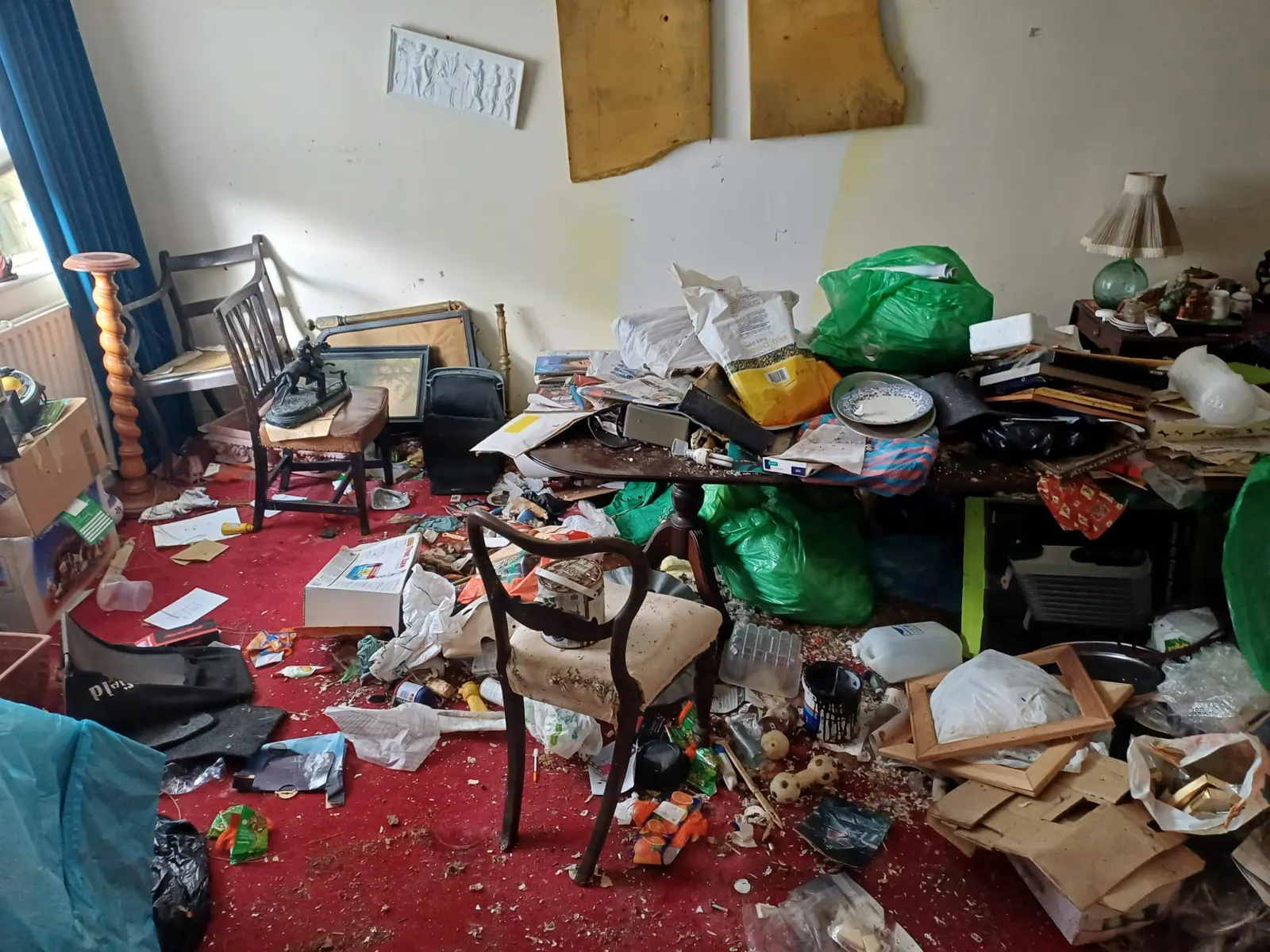
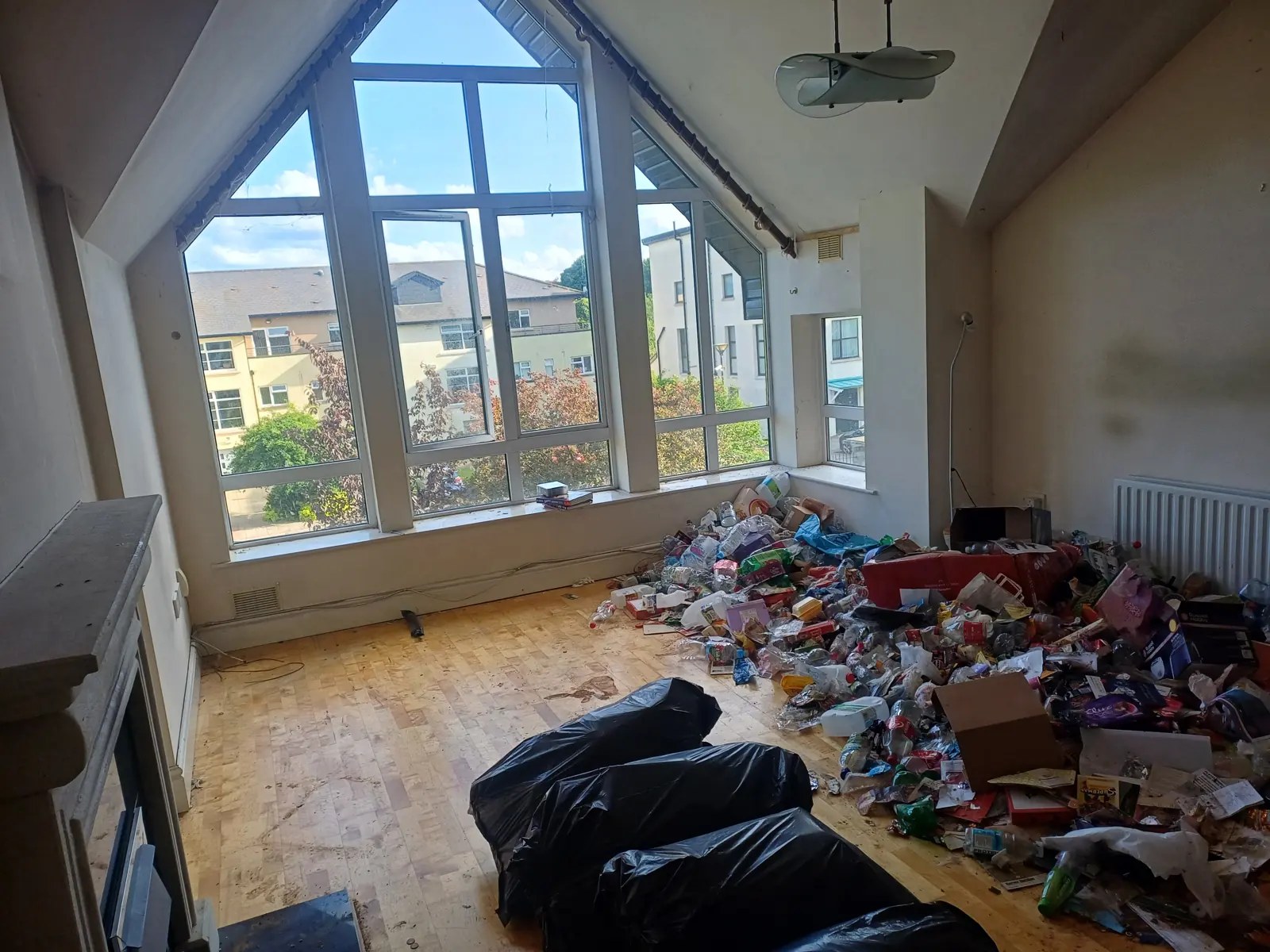
A house clearance in Dundrum will take almost everything inside a home: furniture, mattresses, carpets, white goods, electricals, books, clothes, garden items and bags of general rubbish. It will not take hazardous materials such as asbestos, chemicals, gas bottles, clinical waste or paint in quantity. What differs is the building: an apartment near the Luas is about lifts, loading bays and management companies, while a Ballinteer or Taney semi is about volume, the attic and the garage.
Dundrum is two places at once. Around the Town Centre and the Luas, with stops at Dundrum and Balally, there are newer apartment blocks, including the Wyckham development on the Ballinteer side. Behind them, the roads through Ballinteer, Taney and towards Churchtown are largely semi-detached houses from the 1950s to the 1970s. This guide covers what goes in the van in each, what needs a conversation first, and where the things we cannot carry should go. For the local access detail, see our house clearance in Dundrum page.
What a clearance van takes without any fuss
The everyday contents of a home. In both an apartment and a family house, that is:
- Furniture: beds, wardrobes, chests of drawers, sofas, armchairs, dining tables and chairs, desks, bookcases, sideboards and coffee tables.
- Mattresses and bedding: mattresses, bed bases, duvets, pillows, curtains, cushions and rugs.
- Floor coverings: carpet and underlay that has been lifted, and rugs.
- White goods: fridge-freezers, freezers, washing machines, tumble dryers, dishwashers, cookers and microwaves.
- Electricals: TVs, computers, printers, lamps, kettles, toasters, hoovers and the drawer of tangled cables.
- Household contents: books, clothes, shoes, crockery, pots, ornaments, toys, Christmas decorations and the contents of the hot press.
- Garden and garage items: bikes, lawnmowers, garden furniture, plant pots, tools and broken barbecues.
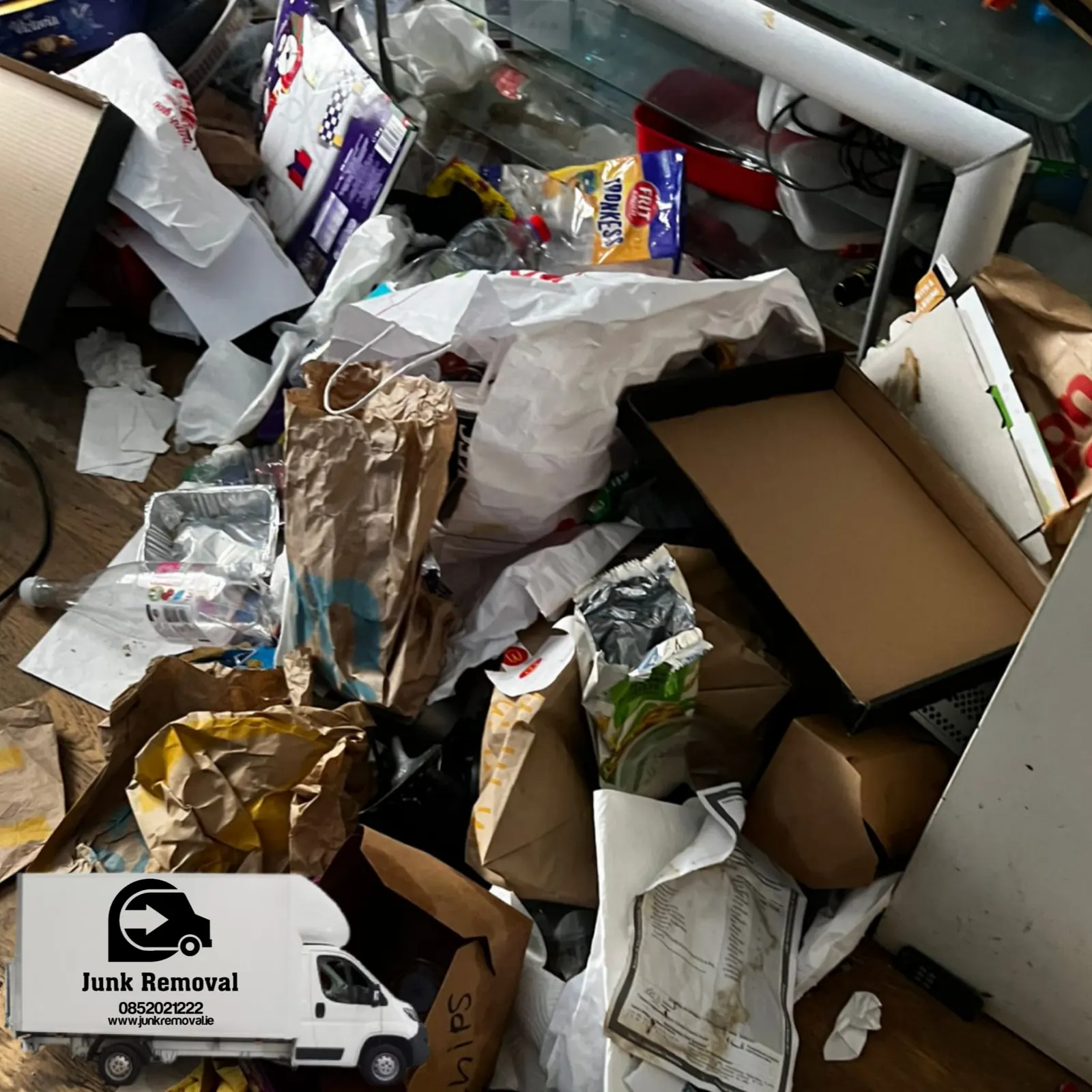
- Bags and boxes of general household waste.
None of it needs to be bagged, boxed or dismantled first. The one request is that you set aside anything you want to keep. Our guide to what a house clearance service removes has the longer list.
What needs a conversation before the day
Some items are not refused, but they change the job, so mention them in your photos and message.
Heavy or awkward pieces. Pianos, safes, American-style fridges, exercise equipment, snooker tables and wardrobes that will not come apart. They need more hands and more time than the volume suggests, and in an apartment they also need a lift or stairs plan.
Fitted furniture. Built-in wardrobes and fitted kitchens are a strip-out, not a clearance. Send a photo and ask.
Items attached to the building. Light fittings, blinds, curtain poles and cookers may be part of a sale or a lease. Check with the agent or landlord before anything is taken.
Gas appliances. A gas cooker or heater must be disconnected by a Registered Gas Installer before the day. We lift and carry; we do not disconnect gas, plumbing or electrical work.
Fridges and freezers. They should be emptied and ideally defrosted the day before, so they are not dripping in a lift or down a stair.
Large amounts of garden waste. A few bags are fine. Trailer loads of hedge cuttings or fencing fill a van quickly and are often better with a skip.
What cannot go in the van
We do not carry hazardous waste. That means:
- Asbestos, including old roof sheeting and some ceiling coatings found in older houses.
- Chemicals, pesticides, solvents and oil.
- Gas cylinders and fire extinguishers.
- Paint in any real quantity. A tin or two is worth asking about, and twenty tins is not a clearance item.
- Clinical or medical waste.
- Soil, rubble and builders’ waste in volume.
Anything unusual, send a photo and ask first. “Ask us first” is always the right answer.
Where should the things we cannot take go?
For hazardous household items, your local authority’s recycling centre or a licensed hazardous waste contractor. Check with the council what each site accepts before you drive there. Prescription medicine goes back to a pharmacy. Soil, rubble and builders’ waste are for a skip hire company or a contractor with the right permit. A skip on a public road generally needs a permit from the local authority, which is one reason a skip is rarely practical outside an apartment.
Batteries, light bulbs and fluorescent tubes are best kept out of the general waste. Put them in a box and ask us, or take them to a shop that sells them or a recycling centre that accepts them under the WEEE scheme.
Our guide to house clearance versus skip hire explains when a skip or a specialist is the better choice.
Apartment clearance in Dundrum: the building decides the job
A flat is cleared in the same way as a house, but the building adds rules. These are the questions to settle before the day.
- Is there a lift, and can it carry furniture? Many newer blocks have a service lift or a lift that works for goods. Tell us the size of the lift if you know it, and if a sofa or wardrobe will not fit, tell us that too.
- Does the management company need notice? Most do. A booked slot, and sometimes protective covers in the lift, are common. We ask for the block name and the management company’s number when you book, and we deal with them directly if you prefer.
- Where does the van go? In a loading bay or set-down area, on the road, or sometimes in the basement car park if the height allows. A box van is tall, and basement barriers are often too low, so we normally plan to load from the surface.
- Is there a time window? Some blocks restrict removals to certain hours or days. Tell us early so we can book around them.
- Who holds the keys and fob? A lift fob, a barrier remote and a bin store key may all be needed.
- Is the flat rented? If it is being handed back to a landlord, check what the lease says about items left behind, and photograph the empty flat.
Our apartment clearance page and apartment clearance guide go into lifts, loading bays and management company rules in more detail.
A clearance that is turned away at the door costs everyone a day, so settling these points first is the single most useful thing you can do.
House clearance in Ballinteer and Taney: the volume decides the job
A family house in Ballinteer, Taney or towards Churchtown is a different problem. Roads are wide, nearly every house has a driveway, and the garage door is often the easiest route out for bulky items. The questions are about quantity.
- How long has the family been there? Many of these houses are only coming on the market as the original owners pass on or move to something smaller. Fifty years of belongings fill a van.
- Is there an attic? In houses of this era the attic often holds a lifetime of boxes and a water tank to work around.
- Is the garage used for storage? It often holds bikes, tools, timber and boxes, sometimes a second fridge.
- Is there a shed? Garden furniture, a mower and the plant pots.
- Are there steep or narrow stairs? Beds and wardrobes may need to come apart.
- Is anyone downsizing? If a removal company is moving the household to the new home, we take whatever it is not taking. Agree the list with them first.
How big is the load?
Our van load planner gives every item a share of a full box van, where a full van is 100. A 3-seater sofa is 10, a 2-seater 7, an armchair 4, a double bed with mattress 8, a single bed 5, a wardrobe 8, a chest of drawers 3, a table and chairs 7, a desk 3, a bookcase 3, a fridge-freezer 4, a washing machine 2, a cooker 3, a TV 1, and a bag or box 0.5.
A one-bed apartment with a double bed, a wardrobe, a chest of drawers, a 2-seater sofa, a table and chairs, a TV, a fridge-freezer, a washing machine, eight bags and eight boxes comes to 48. That is just under the planner’s half-van band, and the time goes on the lift and the loading bay, not the volume.
A three-bed semi with two double beds and a single, three wardrobes, three chests of drawers, a 3-seater and a 2-seater sofa, two armchairs, a table and chairs, a desk, two bookcases, a fridge-freezer, a washing machine, a cooker, two TVs, 20 bags and 30 boxes comes to 131. The planner calls anything above 105 more than one van load, and we plan two loads or a bigger crew.
The bands are: a small load under 12, about a quarter from 12, about half from 38, about three-quarters from 63, and roughly a full van from 88 to 105. This is a rough guide only, and we confirm the price from photos. You can try the planner on our home page.
Photos to send for a Dundrum quote
For an apartment:
- The building and the entrance, and the loading bay or set-down area.
- The lift, with the door open and something in it for scale if you can.
- The corridor from the lift to the flat door.
- Each room from the doorway.
- Anything large: a corner sofa, a big wardrobe, a bed with a heavy base.
- The block name, floor and management company’s contact.
For a house:
- The front of the house, the driveway and the road.
- Each room from the doorway.
- The attic hatch and, if possible, inside.
- The garage and shed.
- The stairs and landing.
- Anything very heavy.
Send them with the Eircode to 085 202 1222 on WhatsApp, or use the quote form.
What affects the quote
We quote a fixed price from photos. The things that move it are the size of the load, access (floors, lifts, stairs), parking, what the load is made of (mattresses, carpets and soft furnishings cost more to dispose of than timber furniture) and anything that needs dismantling. We do not publish prices.
Timing in Dundrum
The Town Centre and the Dundrum bypass get heavy on Saturdays and in the run-up to Christmas, so for a job in the village itself we lean towards weekday mornings. We cover Dundrum six days a week, and an early start helps in a block with a restricted window.
If you need the work done to a deadline, such as a closing date or a tenancy ending, tell us the date when you send the photos. A few days’ notice is helpful, and we confirm what we can do.
Item by item: what happens to the things in a typical Dundrum home
Knowing where things end up helps you decide what to keep, what to sell and what to let go. This is what usually happens, and what you can do first.
Furniture in good condition. Set aside for reuse, donation or resale where possible. If you want to sell a good piece yourself, do it before the clearance date, because once it is in the van it is on its way.
Worn or broken furniture. Goes to a licensed waste transfer station. Nothing needs to be taken apart first.
Mattresses and bed bases. Among the dearer items to dispose of, which is one reason a house of soft furnishings costs more to clear than a house of timber furniture. They are carried whole, on their edge.
Carpets and underlay. Can be lifted and taken. If you are lifting them yourself, roll and tape them and bundle the gripper strips, so nobody catches a hand on the nails.
Fridges, freezers and washing machines. Separated for WEEE recycling. If you are replacing one, the retailer delivering the new appliance will generally collect the old one, so check at the time of purchase whether that is an option for you.
TVs, computers and small electricals. Also WEEE. Remove or wipe any personal data from computers, phones and tablets, because we cannot do that for you.
Books and clothes. Those in good condition are set aside for donation where possible. The rest goes with general waste. Bagging them is part of the job.
Paperwork. Shred or keep anything with names, account numbers or medical details rather than letting it go in a general waste bag. Personal paperwork is yours to deal with before the day.
Kitchenware and crockery. Anything usable goes for donation or reuse, and broken items go with the general waste.
Bikes, mowers and garden furniture. Reused if they are in working order, recycled as scrap metal if not.
Scrap metal, cardboard and timber. Separated for recycling.
If you are downsizing from Dundrum
A large share of the houses in Ballinteer and Taney are coming up because the owners are moving to something smaller. The sequence matters, and getting it wrong means paying for the same item twice.
- Decide what is moving with you and measure the new home. Furniture that will not fit is better let go now than carried and stored.
- Agree the removal company’s list in writing, so everyone knows what it is taking.
- Move the keep items first. The removal company takes what is going to the new home, and the clearance comes after.
- Book the clearance for after the removal, so we are taking only what is left. Tell us what has already gone.
- Leave a clear route and a final walk-through, as the house may be handed over to a buyer straight afterwards.
A clearance works best after the removal van, not alongside it. If both are in a narrow road at the same time, the loading is slower for both. If the dates are close together, tell us and we plan around it.
Handing a flat back at the end of a tenancy
Dundrum has a lot of rental apartments, and an end-of-tenancy clear-out has its own rhythm. A few points that save arguments:
- Photograph the flat before and after, including each room, the appliances and the cupboards, for your own records.
- Check the inventory. Furniture provided by the landlord is not yours to dispose of. Make sure you only clear what is yours.
- Return keys, fobs and remotes to the right person, and keep proof that you did.
- Take the meter readings on the day and note them.
- Arrange the bin and recycling collections so there is nothing left in the bin store.
- Allow time for the lift booking. A booking that is a week away is a week of rent.
- Cleaning is separate. We clear and sweep but we do not clean. If the landlord or agent expects the flat to be cleaned, book a cleaning company for after we finish.
If you are a landlord clearing between tenants, tell us what is staying for the next tenant, such as a bed, a table or white goods, and mark them. Everything else goes.
Questions people ask before booking
How far ahead should I book? A few days is helpful, and longer if you need a lift slot or a weekday morning. Tell us your date when you send the photos and we confirm what we can do.
Do I need to be there? Not for the whole thing. We need someone at the start for the walk-through and keys, and someone to collect them at the end, but that can be a neighbour, a relative, an agent or the management company’s concierge.
Can I get a price without a visit? Yes. Photos are how we price a job without a visit, and the quote is fixed from them.
What if the photos are not enough? We will ask for more, or for a short video walking through the rooms.
Where the items go
Furniture and household goods that still have a life in them are set aside for reuse or donation. Metal, cardboard and timber are separated for recycling, electricals go through the WEEE scheme, and what is left goes to a licensed waste transfer station under our waste collection permit, NWCPO-25-13287-01. Our guide to what happens to items after a house clearance explains the journey.
A checklist before the crew comes
One to two weeks before
- Decide what stays, and move it into one room.
- Take out documents, keys, jewellery and valuables.
- Take medication to a pharmacy.
- Book the lift and tell the management company, if it is a flat.
- Send photos for a quote.
The day before
- Empty and defrost the fridge and freezer.
- Charge or collect the lift fob, barrier remote and bin store key.
- Tell the neighbours.
- Leave the electricity on.
On the day
- Walk the apartment or house with the crew.
- Photograph the meters.
- Hand over the keys and the fob.
After
- Walk every room and cupboard.
- Check and label the keys.
- Book a cleaning company if the property needs cleaning. We sweep but do not clean.
Frequently asked questions
Do you take a sofa out of a third-floor apartment with no lift?
Yes. It is carried down the stairs by hand, and the extra effort is built into the quote. Tell us how many flights and whether the stairs turn.
Will the van fit in an apartment block’s basement car park?
Almost certainly not. A box van is much taller than a typical height barrier, so we load from the surface or set-down area. Tell us where the lift comes out at ground level and we agree a loading spot with the management company.
Can I leave the management company to organise the lift booking?
Yes. Give us their number and we will agree the details with them, or you can handle it yourself and tell us the slot.
Do you take old paint left by the previous tenant?
Not in quantity. A tin or two is worth asking about, and larger amounts go to a recycling centre that accepts them. Ask before the day.
Are fitted wardrobes taken?
Built-in wardrobes are a strip-out rather than a clearance, so send a photo and ask. Freestanding wardrobes are straightforward.
Can you clear a house in Ballinteer when the garage is full to the roof?
Yes. Send a photo from the doorway and count the big items, and we will tell you whether it is a half-van or more. The garage door is often the easiest route out.
What if a family member wants something after the date is set?
Tell us as soon as you know. Anything in a closed keep room is left alone, and if something is still near the door it can come back out.
Do you take TVs and computers?
Yes, they are handled as WEEE. Wipe or remove any data first, as we cannot do that for you.
How long does a one-bed apartment take?
A load of about half a van is often a morning, with most of the time spent on the lift and loading. We say what we expect when we quote.
Can you clear a flat that is being handed back to a landlord?
Yes. We clear and sweep, but we do not clean. Check the lease and photograph the empty flat for your own records.
Is there a minimum job size?
No. A handful of bags and a broken chair is a normal collection, though adding other items to the same visit costs less overall than booking twice.
What customers say
These are reviews from real customers, quoted exactly as they were written.
We recently used junk removal for a house clearance and were very happy with the service. The team was professional, friendly, and arrived on time. They handled the removal of furniture, household items, and unwanted belongings quickly and carefully. The whole process was easy from start to finish, with great communication and responsible disposal of items. We would highly recommend junk removal to anyone looking for a reliable house clearance service in Dublin.
Vivian, Dublin
Next step
Send photos to 085 202 1222 on WhatsApp, or request a free quote online. Our house clearance page explains the service, and the apartment clearance page covers lifts, loading bays and management companies.