House clearance in Templeogue: helping a parent downsize from the family home
A house clearance in Templeogue when a parent is downsizing works best in stages and with the parent in charge of the decisions. Start with the garage, shed and attic, which nobody has strong feelings about, then move into the house with the parent choosing what goes to the new home, what is shared out and what goes. The crew comes last, once the choices are made, and the clearance itself is the easy part.
Templeogue is suburban Dublin at its most settled. The estates at Springfield, Orwell Park, Templeville, Cypress Grove, Glendown and Rossmore, and the roads off Templeogue Road and Wellington Lane, are mainly three and four-bed semis with a garage at the side, a driveway in front and a long garden behind. Many were bought new by couples starting out and have never changed hands. They are now at the stage where the first owners are moving to something smaller or into care, and the family is left with a house that holds fifty years. This guide is about doing that kindly and practically. Our house clearance in Templeogue page covers access, and this guide covers the process.
Why this is not a bereavement clearance
When a parent has died, the family decides everything, often at speed, and often with grief. When a parent is moving, they are alive, they have views, and they are living through a loss of their own. They are leaving a home they may have lived in for fifty years, and every object is attached to something.
That changes the job in four ways:
- The parent decides. The aim is for them to feel in charge, not managed.
- Pace matters more than speed. A parent can only make so many decisions in a day.
- Some things must stay until the move. They are still living there, or the new place needs furnishing.
- The order is different. You clear what is not needed first and the rooms in use last.
If your situation is a bereavement, see our guide to clearing a house after a bereavement instead.
Start with a conversation, not a skip
Before any bag is filled, sit down with your parent and talk. Practical questions help more than emotional ones.
- Where are they going? The size of the new place decides how much furniture can go. Get the floor plan or measurements.
- When? Is there a date for the move, or a bed becoming available? A date turns an open-ended project into a plan.
- What do they want to take? Not what they should take. Ask them to walk round the house and name the things.
- What do they not want to leave to strangers? Photographs, letters, tools, a particular chair.
- Who else should be involved? Siblings, grandchildren, a friend who helped in the garden.
Resist the urge to start clearing while they are out. Seeing a room emptied without being asked is distressing, and it can undo goodwill that takes a long time to rebuild.
Measure the new place first
The single most useful task is measuring. Furniture that does not fit the new home is better let go now than carried and stored.
- Get a floor plan of the new room or flat, with the sizes of the rooms, the doors and the windows.
- Measure the existing furniture that the parent wants to keep: bed, chair, table, wardrobe, chest of drawers.
- Check what the new place provides. Nursing homes and sheltered housing often supply a bed, wardrobe and chair.
- Plan the layout on paper with the parent. It makes the decisions concrete.
- Ask about storage. There may be very little, so a few special items must be chosen carefully.
This is where a removal company comes in, to move the chosen items to the new place. A clearance comes after, for everything that is left.
A staged plan
The staging below is a general pattern. It can be compressed, but each stage reduces the load on the next.
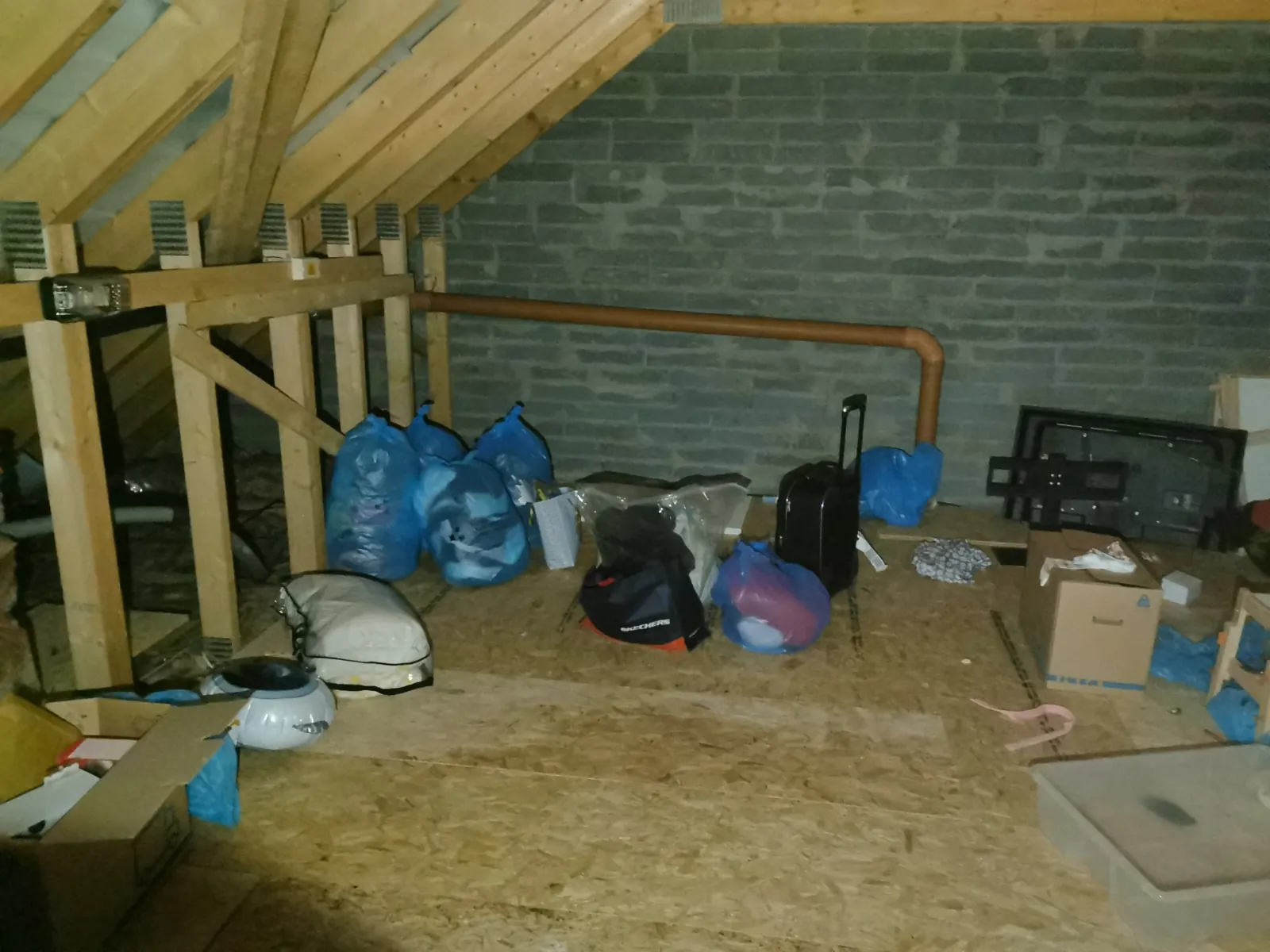
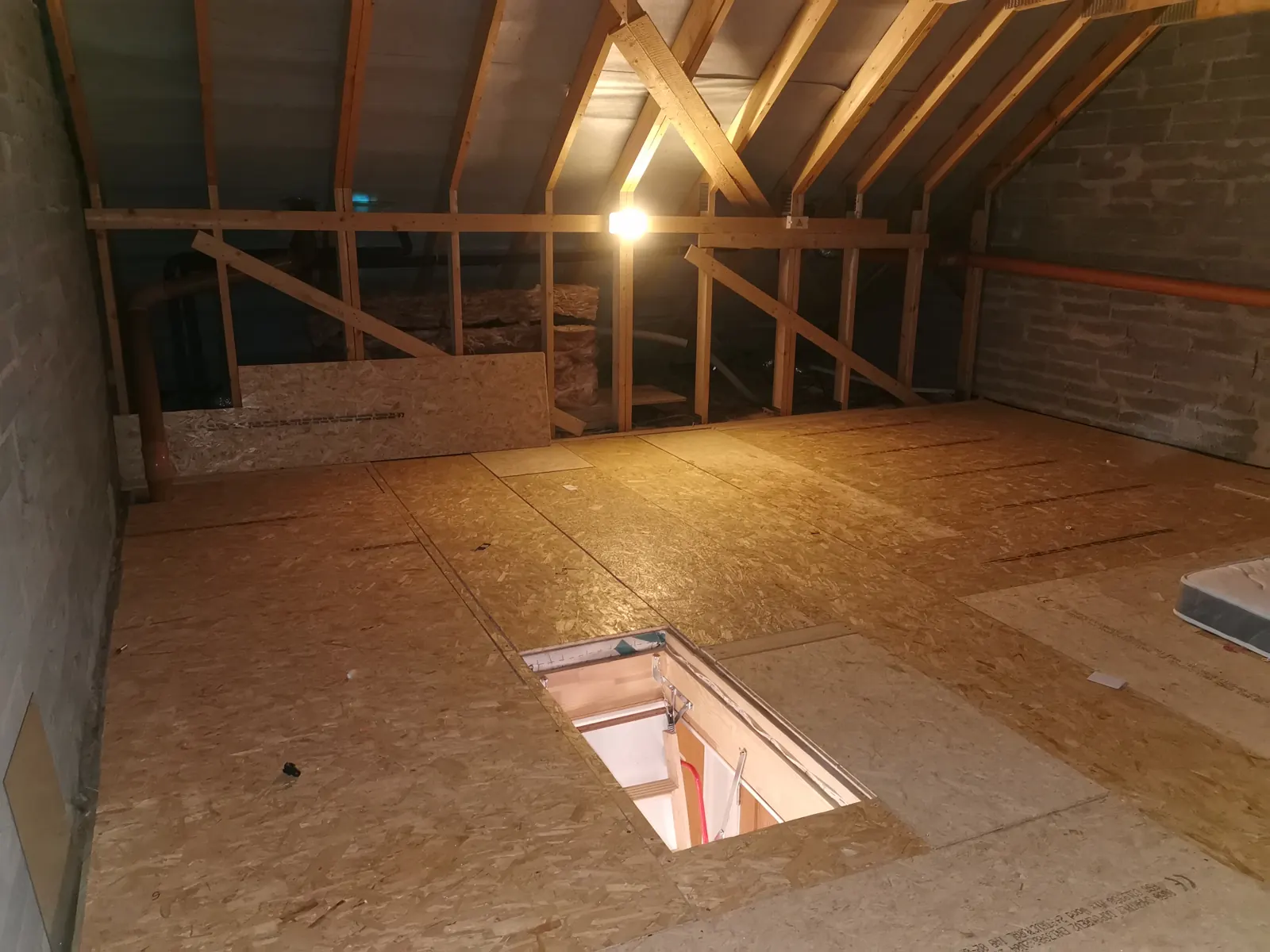
Stage one: the outbuildings and attic. The garage, shed and attic hold the volume, and they rarely hold the emotion. In Templeogue the garages have often been a workshop and a store for fifty years, the attic is large and accessible, and the shed has the garden furniture and tools. Clearing them first creates space and shows what is left. Our garage clearance guide and attic clearance guide explain what turns up.
Stage two: the spare rooms. Bedrooms nobody sleeps in, the box room and the dining room. They hold furniture, boxes and things set aside for later.
Stage three: the family and the keepsakes. A weekend where the family goes through photographs, letters, ornaments and heirlooms with the parent, deciding who has what.
Stage four: the move. A removal company or the family takes the chosen furniture and belongings to the new place.
Stage five: the final clearance. Everything left in the house goes.
It is possible to do stages one and five together if time is short, but each gap between stages gives the parent time to adjust.
How big are the loads?
Each item on our van load planner is scored against a full box van, which counts as 100. A 3-seater sofa scores 10, a 2-seater 7, an armchair 4, a double bed with mattress 8, a single bed 5, a wardrobe 8, a chest of drawers 3, a table and chairs 7, a desk 3, a bookcase 3, a fridge-freezer 4, a washing machine 2, a cooker 3, a TV 1, a lawnmower or bike 2, a garden furniture set 6, and a bag or box 0.5.
In planner terms, a total under 12 is a small load, and the bands then step up through a quarter, half and three-quarters to a full van at 88 to 105. Past 105 it is more than one load.
A long-used garage. Three bikes, a lawnmower, a fridge-freezer, two bookcases, a desk, a chest of drawers, a table and chairs, ten bags and 20 boxes comes to 46. That is half a van.
A large attic. 40 boxes, 20 bags, a single bed and a chest of drawers comes to 38. That is also half a van.
A garden shed. A garden furniture set, a lawnmower, a bike, eight bags and four boxes comes to 16. That is a quarter of a van.
Those three together come to 100, which is a full van before a single room of the house is counted.
A three-bed semi. Two double beds, a single, three wardrobes, three chests of drawers, a 3-seater and a 2-seater sofa, two armchairs, a table and chairs, a desk, two bookcases, a fridge-freezer, a washing machine, a cooker, two TVs, 30 bags and 40 boxes comes to 141. That is well over a van, and a clearance of the house alone needs two loads.
The totals are rough guides only. The price is confirmed from photos. If you stage the work, the outbuildings can be one visit and the house another, and you can see how the planner compares with what is really there. You can try it on our home page.
Involving your parent on the day
If your parent wants to be present for the final clearance, plan it carefully.
- Pick a calm time. Not the day the keys are due back.
- Arrange somewhere to sit away from the work, with a cup of tea and someone to talk to.
- Tell the crew your parent is there. They can be sensitive, but they do not know the history.
- Agree a signal. If the parent wants something put back, they can say so.
- Consider whether to stay at all. Some parents prefer not to see the house emptied. A sibling or friend can be there instead, and we send photos.
On the day, the crew walks the house with you, confirms what stays and what goes, and works room by room. We do not comment on belongings, and anything that looks personal is set aside rather than loaded. At the end we sweep the cleared rooms and hand back the keys.
Sorting, selling and giving
Not everything has to go to a transfer station. Before the final clearance, consider:
- Family. Offer items to children, grandchildren and siblings.
- Selling. Good furniture, tools and garden equipment sell online. Set a deadline so it does not drag on.
- Charity shops. Most take clothes, books, ornaments and small household goods. Check what they accept.
- Auctioneers. Antiques, paintings and collections may be worth valuing first.
- Neighbours. In an estate like Templeogue, neighbours often welcome garden tools or furniture.
Whatever is left, we take. Furniture and household goods that still have a life in them are set aside for reuse or donation, and we recycle, donate or reuse as much as we can. Our guide to what happens to items after a house clearance explains the rest.
The paper side
Moving a parent involves a lot of paperwork, and a clearance is the moment it is most likely to get lost.
- Documents. Wills, deeds, bank books, pension papers, insurance policies, passports and medical records. Take them out yourself and keep them together.
- Utilities and bills. Arrange to close or transfer accounts, and take the final meter readings.
- Post. Arrange redirection to the new address.
- Insurance. Tell the home insurer if the house will be empty, and check the conditions.
- Medication. Take it to a pharmacy for disposal if it is not coming with them.
- Personal papers. We do not offer shredding or data destruction, so deal with papers that carry names, account numbers or medical details yourself before the day, rather than leaving them for the van.
Logistics in Templeogue
Templeogue is one of the easier parts of Dublin for a van. Driveways are the norm, the estate roads are wide and parking is not an issue, so we usually reverse up to the garage or the front door and load directly. A side passage to the back garden means the shed and garden items come out without going through the house.
The two things that slow a Templeogue job are the attic and the volume. Attic hatches are standard-sized, so wardrobes that were assembled up there come down in pieces. A house lived in since the 1960s holds more than it looks like from the hall. Templeogue Road is busy at school times and around the village, so for a house on the main road we start a little later.
We work Monday to Saturday and not on Sundays.
What affects the quote
We quote a fixed price from photos. The things that move it are the size of the load, access (stairs, an attic hatch, the distance from the van), parking, what the load is made of (mattresses, carpets and soft furnishings cost more to dispose of than timber furniture) and anything that needs dismantling. We do not publish prices. Send photos of each stage, so the quote matches the visit.
When the parent is reluctant
Sometimes a parent does not want to move, or does not want help. You cannot force the pace, and you should not try to. A few approaches:
- Start with something small. A single shelf or a single cupboard.
- Ask for help rather than offering it. “Could you show me what is in the attic?”
- Acknowledge the loss. It is a home, not a house.
- Involve a trusted third party, such as a GP, a friend or a family member they respect, if the situation is about their care.
- Do not clear without agreement. If your parent cannot make decisions, the position is a legal one, and you should take advice.
A realistic six-month plan
Moving a parent is rarely a single weekend. If you have the luxury of time, a longer plan is kinder. This is one way to spread it out, adjusted to the date of the move.
Six months before. Have the first conversation. Visit the new place if you can, get the measurements, and ask the parent what matters most. Do not start clearing. Collect the documents and put them somewhere safe.
Four months before. Clear the garage, shed and attic, ideally with the parent present for the decisions, or with their permission. Offer good tools, furniture and garden equipment to family and friends. Book us for these loads, using the planner to estimate them.
Two months before. Go through the spare rooms. Sort photographs and letters with the family. Decide on the furniture that goes to the new place.
One month before. Confirm the removal company. Label what is going. Close the accounts that can be closed, and arrange for the post to be redirected.
The week of the move. Move the parent first, then the belongings. Keep the first night calm. Do not clear the house that week.
After the move. Give everyone a rest. Then deal with the rest of the house, the final clearance and the handover to an agent or buyer.
If the move date is sooner, shorten the stages but keep the order.
Tools, workshops and the garage
In many Templeogue families the garage is the parent’s own space, and the tools and workshop equipment are especially personal. A few suggestions:
- Ask the parent first. What do they want to keep? Who should have the rest?
- Offer tools to family, a men’s shed, a community group or a local trades school, in case they are wanted. Check first, because not everyone can take them.
- Photograph the workbench as it was, before it is emptied.
- Check the shelves, tins and jars for anything that cannot go in the van: paint, solvents, adhesives, oil, gas bottles. We do not collect any of these; take them to a civic amenity site or hazardous waste collection, and we clear the rest.
- Heavy machinery such as a bench saw, a lathe or a compressor needs a plan for lifting.
- Timber and offcuts take a lot of space. Count them in the load.
Our garage clearance page covers the service in more detail.
The garden and the long back garden
Templeogue gardens are long. Sheds, greenhouses, garden furniture, a compost bin and a washing line all need thinking about.
- A greenhouse is a different job from a shed. Glass needs care, and taking one down is more than a clearance.
- Plants and pots. Offer them to neighbours or the family, or take them to the new place if there is a garden.
- Garden furniture counts as 6 on the planner for a set.
- Hedge cuttings, soil and fencing are skip-type waste rather than a van job in any volume. A few bags alongside a house are fine.
- The shed itself. Emptying a shed is a clearance. Taking it down is a bigger job.
If a parent loves the garden, it may be worth leaving it to last. Seeing the garden emptied can feel like the final goodbye.
What to say, and what to avoid
Conversations about downsizing can go wrong without anyone meaning them to. A few practical points.
- Say “we” rather than “you should”. “What shall we do about the attic?” lands better than “You need to clear the attic.”
- Ask permission to look. “Can I go through the wardrobe with you?” rather than doing it unasked.
- Avoid “rubbish”. What is rubbish to you may be a memory to them. Say “things we are letting go”.
- Do not hurry the decisions. One room at a time.
- Acknowledge feelings. It is fine to say it is hard.
- Avoid arguments between siblings in front of the parent. Agree between yourselves first.
- Remember the move itself is the big thing. The clearance is only the aftermath.
Clothes and labelling for a care home
If the new place is a nursing home or similar, there may be practical requirements, and many homes ask that clothes and belongings are labelled. Check with the home about what it asks for, what it supplies, what size of room it has and what a resident may bring. Take what the parent actually wears and uses, and leave the rest. The clothes, bedding and household goods that are not going can be donated or cleared, and we set clothes and books in good condition aside for donation where possible.
What customers say
These are reviews from real customers, quoted exactly as they were written.
Junk Removal and their team were exceptional. Not only were they incredibly accommodating to our schedule, but they also provided friendly and supportive assistance throughout the entire process. As I reside abroad, it was reassuring to know that the team was managing everything efficiently and providing assistance to my parents on-site.
Mark, Ballsbridge
Frequently asked questions
Can you clear the garage and attic while my parent is still living in the house?
Yes. The outbuildings and attic can be done on their own, and it often helps. Tell us which rooms are off-limits, and we leave those alone.
My parent wants to be there on the day. Is that all right?
Yes. Let us know in advance, so the crew can be considerate. Arrange somewhere for your parent to sit, and agree that they can ask for anything to be put back.
How do we handle a large house with many rooms?
Stage it. Outbuildings first, spare rooms next, then the family rooms. The final clearance takes what is left.
Do you move furniture to the new home?
No. We clear and dispose. Furniture going to the new place needs a removal company or the family, and our clearance comes after.
What if the removal company and the clearance are close together?
Tell us both dates. The removal should go first, and we clear after. Two vans in a narrow road at once slows both.
Do you take the old beds once a parent has moved?
Yes, from the house. Beds are dismantled where needed and mattresses go whole, once the removal has taken what is moving to the new place.
How will I know whether it needs two loads?
Add up the big items with the planner and send photos of each space. If the total passes 105 the house is more than one van, and the quote will say so.
Can I keep a few items in the house until the sale?
Yes. Mark them or put them in one room. We do not touch anything marked as staying.
What if my parent changes their mind about something?
Say so at any time. Nothing is final until it is in the van, and the crew would rather stop and check than take something wanted.
Can you shred my parent’s old papers?
No, shredding and data destruction are not something we offer. Sort the sensitive papers yourself before the day and keep what is needed.
Does anything go to a new owner instead of the tip?
Anything usable is set aside for reuse, donation or resale where possible, and that includes the good tools and furniture from a long-lived Templeogue house.
Do you work weekends?
We work Monday to Saturday and not on Sundays. Saturdays suit families who work during the week, and they book up early.
Next step
Send photos of each room, the garage, the attic hatch and the shed to 085 202 1222 on WhatsApp, or request a free quote online. Our house clearance page explains the service, and the attic clearance page covers lofts.