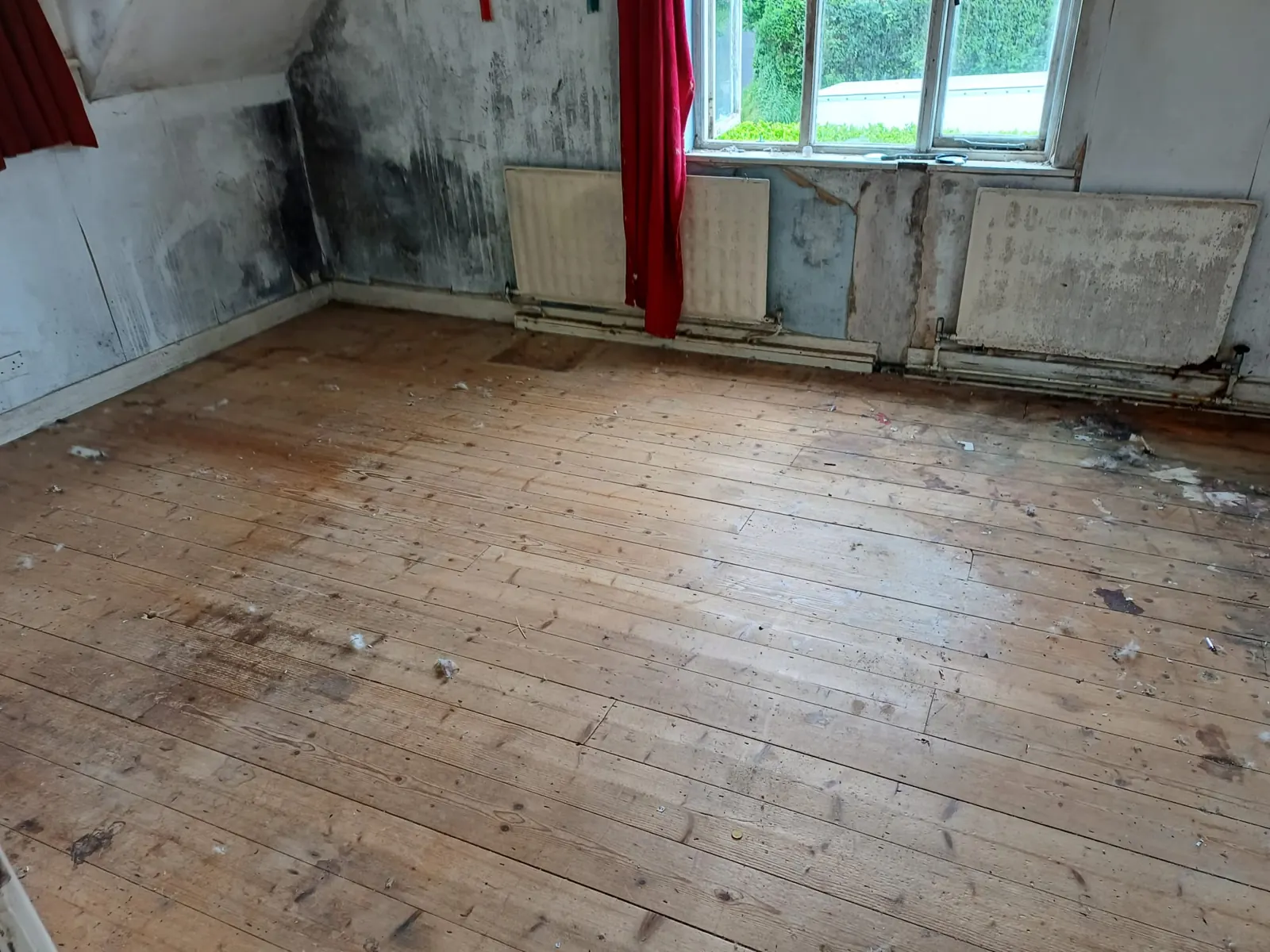
Apartment clearance in Tallaght: new-build complexes, car parks and bin stores
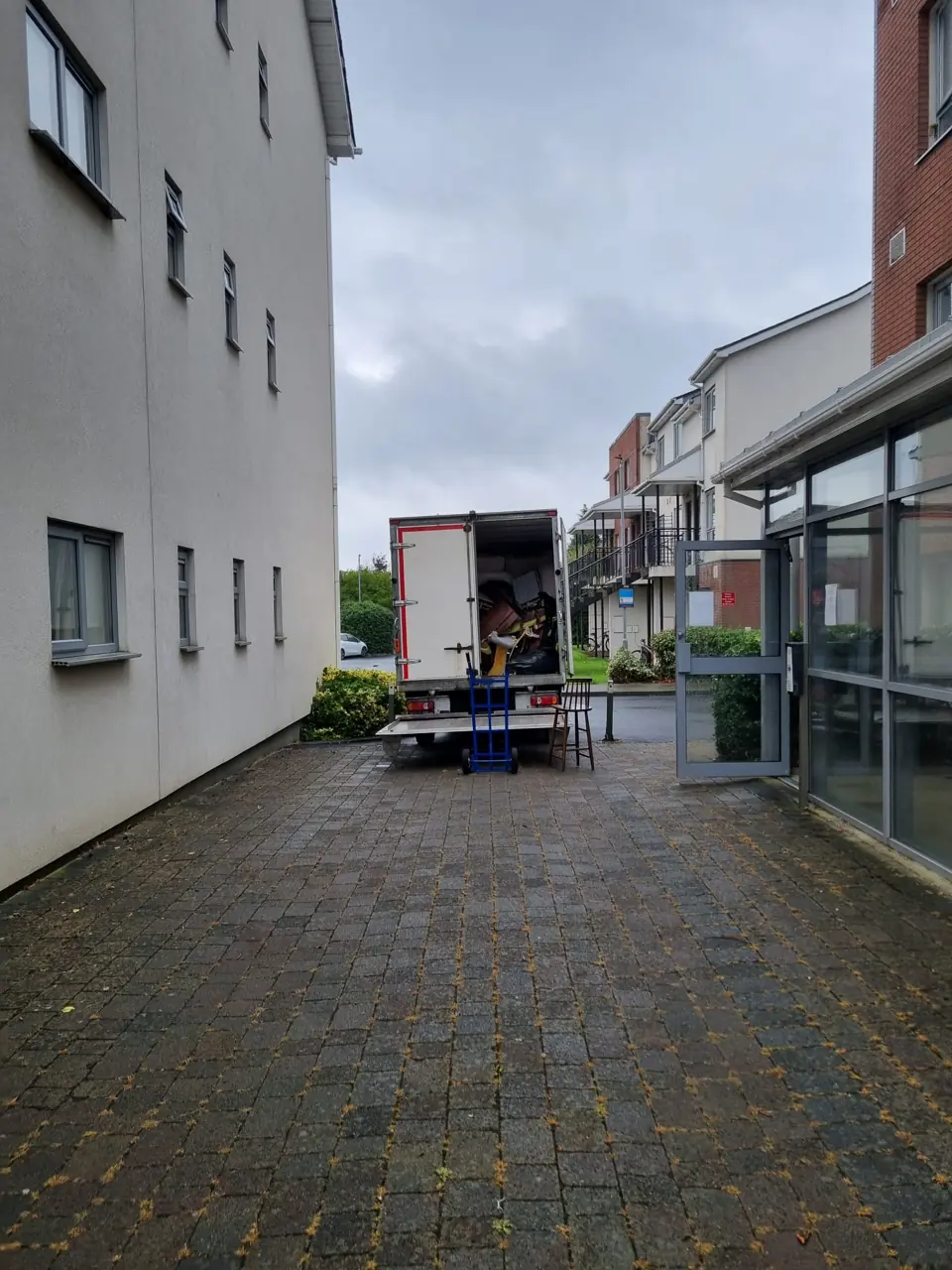
An apartment clearance in Tallaght is mostly about the building rather than the furniture. Find out how a crew gets through the gate, where a box van can stand for a few hours, whether the lift has to be booked, and how far the carry is from your door to that van. Settle those four things and a two-bed apartment is a half-day. Leave them to the morning and the van sits at a height barrier while someone hunts for the management company’s number.
Tallaght’s apartments came after The Square, around the village, Belgard and Tallaght Cross, and most are in large modern complexes: several blocks around a courtyard or a podium, a gated entrance, a car park underneath or behind, a lift in each core and a bin store at ground level. That is a different job from a flat in a converted house, and it is what this guide is about. For the timetable side of a sale or handover, see our guide to clearing a Tallaght house to a sale deadline. For the rules that apply in any Dublin block, see the apartment clearance guide. Our house clearance in Tallaght page covers the estate houses.
What a large complex adds to the job
A house has a front door and a driveway. A complex in Tallaght puts six things between your sofa and our van.
- A gate, pedestrian and vehicle, on a fob or a code.
- A car park, underground or podium, with a height barrier a box van will not clear.
- A lift, often one per core, shared with every resident on the stairwell.
- A carry: corridors, fire doors, a courtyard and a path to wherever the van can stop.
- A bin store, for household bins only.
- A management company, which wants notice and sometimes a booked slot and insurance details.
None of this troubles a crew that does it every week, as long as the questions have been asked before the day.
Getting in: gates, fobs and who holds them
A clearance is dozens of journeys between the apartment and the van, and a gate that locks behind us each time slows everything, so the first question is how we get in and back in on the twentieth trip.
If you have one fob, decide who holds it. A tenant usually stays near the lobby door for the first hour and then hands the fob to the crew. A landlord who has already taken the fobs back should bring them, or arrange for the agent to be there. If the fobs have been deactivated, ask the management company how trades normally get in.
Count the fobs and keys before the end of a tenancy, and tell us who collects them afterwards. On an estate clearance, where the fobs may be in a drawer somewhere in the apartment, look for them on your first visit.
Where the van stops: car parks, barriers and set-down
A box van does not fit under the height barrier of an underground car park, so we plan to load from the surface. The options, in order of preference, are a set-down area inside the gate, a visitor space at ground level, a loading bay if the complex has one, and the road outside. Ask the management company which they allow for a van for a few hours. We cannot stand in the fire route or across the vehicle gate, and we do not use a resident’s space without permission.
The road outside is the last resort. Around the village and The Square, kerb space is scarce and the roads are busy from mid-morning, so a van on the street is often further from the block door than you expect.
Send us a photo of the vehicle entrance and the barrier, and one of the route from your block door to the place a van can stand. Those two photos change the quote more than the photos of the furniture do.
The lift: booking it, fitting things in it
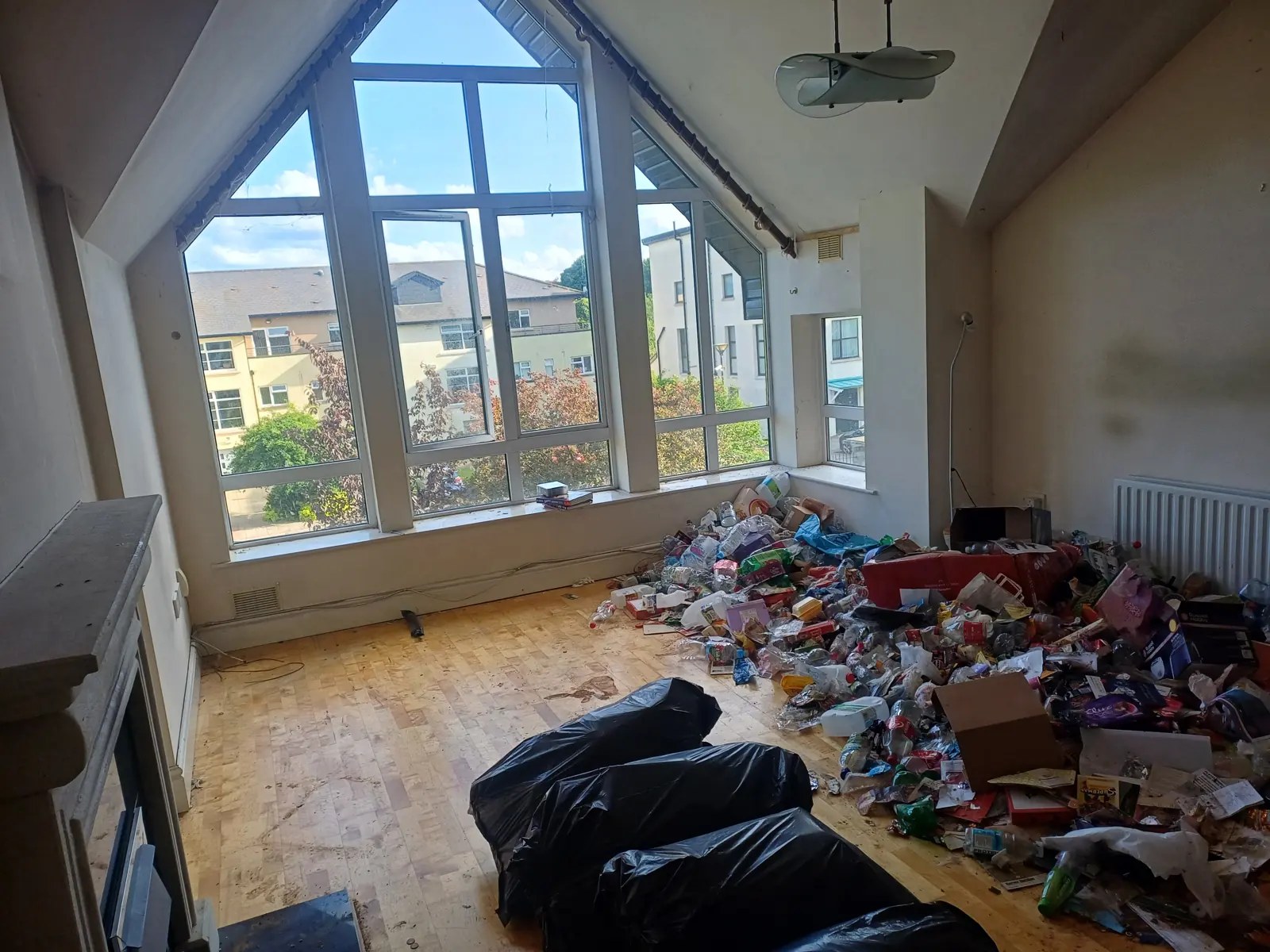
Most complexes ask residents to book the lift for a removal, and some limit removals to weekday daytime hours. The booking has to come from a resident or an owner, because managing agents rarely take instructions from a contractor. Make the call, ask about padded covers, and tell us what they said.
Then think about what will fit. A sofa, a double mattress and a wardrobe carcass are the three things that most often will not go into a lift standing up, and anything that does not fit comes down the stairs, which we price for. A photo of the open lift with a chair in it for scale is enough for us to judge.
If your booked slot is short, say two hours, the crew stages the apartment first: everything is brought to the door and sorted in the hall before the lift is touched, so the slot is spent moving things down rather than deciding. When the slot runs out, the rest waits in the apartment, never in the corridor.
The carry: from your door to the van
In a complex, distance matters more than floor. Third floor with a lift at the end of your corridor and a van at the lobby door is a short job. Second floor with two fire doors, a courtyard and a van outside the vehicle gate is a long one, even though the stairs are fewer.
We use a sack truck and a two-person carry, and we quote for the route we can see in your photos. Tell us the block and the core, because large developments have several entrances and the one nearest a parking place is not always yours. If the apartment is a duplex, say so, because its internal stairs are a second set of stairs for us.
The bin store is not for bulky waste
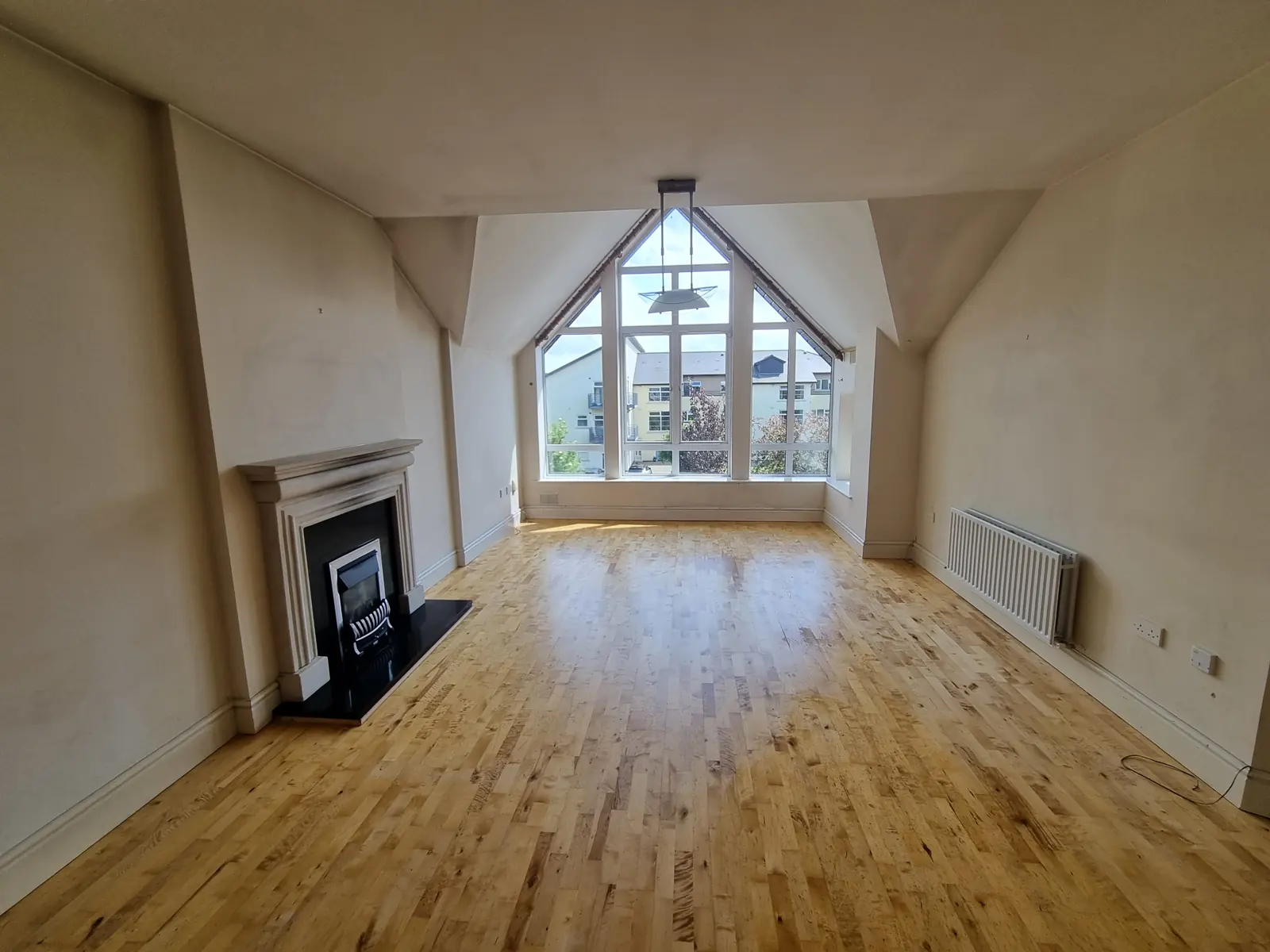
The bin store is the biggest cause of friction between apartment owners and management companies. Mattresses, sofas, flat-pack carcasses and bags of a tenant’s leftovers do not belong there, and management companies generally treat them as dumping, with the cost of removing them landing on the owner of the apartment they came from.
Everything we clear goes on our van and away under our waste collection permit, NWCPO-25-13287-01. We do not use the building’s bins, and we do not leave items in the bin store, the corridor or at the gate to collect later. If a previous tenant has already left furniture in the bin store, photograph it and tell us, and it can be added to the job.
Telling the management company
A short message a few days ahead avoids a long one afterwards. Tell them the date, that a two-person crew with a box van will be loading, where you propose the van will stand, and that the lift is booked if that applies. Some want an insurance certificate, which we can send to the managing agent before the day, and some want a name for the security desk.
Write down what they say and pass it to us, so the crew arrives knowing which gate, which lift and which space.
Three reasons to clear, three different jobs
The building rules are the same whoever you are, but what you are clearing, and who decides what goes, depends on why.
End of tenancy. You are a tenant leaving, and the job is to remove everything that is yours and nothing that is the landlord’s. Walk the apartment with the check-in inventory, mark the landlord’s furniture with tape, and point the marked items out in your photos. Photograph every room once it is empty, before you hand back the fobs. If you are the landlord dealing with what a tenant left behind, our Clondalkin landlord’s guide covers recording the property and turning it around.
Sale. You are the owner and the apartment is going on the market or has sold. The question is what stays. Integrated appliances, blinds, light fittings and fitted wardrobes are usually part of the sale, so check the contract or ask the agent before anything is cleared. Agents generally prefer photographs of an empty apartment, so the clearance comes before the photographer. Remember the storage cage in the car park, if there is one.
Estate. You are clearing the apartment of a parent or relative who has died. Check with the solicitor that the contents can be cleared, agree who gives the crew instructions, and look through the apartment before the day, including the hot press, the wardrobe tops and the storage cage. Our bereavement clearance page explains how we work with families. This is general practical guidance rather than legal advice; the solicitor or executor is the person to ask about the estate.

Photos that let us quote an apartment in a complex
Send these to 085 202 1222 on WhatsApp with the Eircode, the block and the floor, or use the quote form:
- The vehicle entrance and the barrier.
- The route from your block door to where a van can stand.
- The lift, door open, with something in it for scale.
- Each room from the doorway, including the balcony.
- Anything large: a corner sofa, a king-size bed, an American-style fridge.
- The storage cage, if there is one.
We come back with a fixed written price for the whole job. If the management company later changes the plan, send it on and we adjust before the day, not during it.
How the day runs
The crew meets you, or the key holder, at the gate at the agreed time, walks the apartment to confirm what stays, and then stages it: items brought to the hall, sorted into reuse, recycling and waste as they come, and taken down in runs that use the lift slot well.
At the van, furniture and household goods with a life left in them are set aside for reuse or donation where we can arrange it, recyclables are separated and the rest goes to a licensed waste transfer station. Our guide to what happens to items after a house clearance follows a load from the door onwards.
At the end the crew sweeps the floors, checks the hot press and the balcony, photographs each empty room for you and hands the fobs and keys to whoever you named. A sweep is not a clean; if the apartment needs cleaning before an inspection or a viewing, that is a separate job for a cleaning company, booked for after we leave.
What customers say
This is a review from a real customer, quoted exactly as it was written.
Junk Removal could not have been more helpful during what was a challenging period, simplifying the task of clearing my late father’s flat to the fullest extent. Junk Removal comes highly recommended by us.
Anne, Sandymount
Frequently asked questions
The complex has one fob and I have to return it at noon. Can the clearance be finished by then?
Tell us the cut-off when you send photos and we will say honestly whether the volume fits the time. For a smaller apartment an early start usually does it. If it does not, ask the management company how trades get in and out after the fob is returned, because most have a routine for it.
Who books the lift in a Tallaght complex if I am a tenant who has already moved out?
Lift bookings have to come from a resident or the owner, so ask the landlord or letting agent to make the booking and to tell the management company a removal is happening. Send us the slot once it is confirmed and we plan the staging around it.
Where does the van stop if the complex has no loading bay and the street outside is a bus route?
We ask the management company for a set-down area or a visitor space at surface level inside the gate. If nothing is available, the van parks on the nearest side road and the carry gets longer, which we price from your photos of the route rather than on the day.
Does a long carry from the block to the van change the price even on the ground floor?
Yes. Distance and doors matter as much as stairs. A ground-floor apartment at the far end of a courtyard, through two fire doors and a gate, takes longer than a second-floor apartment beside the lift and the lobby. The route photo is what lets us quote it accurately.
Will the crew put covers in the lift and on the corridor floors?
Yes, where the management company asks for it or the finishes need it. Some complexes keep padded lift covers at the office or concierge desk, so ask when you book the lift. We bring floor protection for the hall of the apartment and the corridor outside it.
Can you clear a duplex apartment with its own internal stairs?
Yes. The internal stairs of a duplex are usually narrower than a house stairs, so beds and wardrobes from the upper floor come apart before they come down. Mention that the apartment is a duplex when you send photos so the time is allowed for.
What happens if the lift slot runs out before everything is down?
The remaining items wait inside the apartment, never in the corridor or the bin store. We either extend the slot with the management company on the day or carry the last items down the stairs if there are only a few. Staging everything at the door first makes this rare.
My father’s apartment in Tallaght is part of his estate. Who should give you the instruction, me or the solicitor?
Whoever the solicitor confirms has authority, which is usually the executor or a named family member. Ask the solicitor for the go-ahead in writing, tell us the name of the one person who will instruct the crew, and we work from that person’s list on the day. This is practical guidance, not legal advice.
Which photos matter most for quoting an apartment in a complex: the rooms or the building?
Both, but the building photos are the ones people leave out. The vehicle entrance, the barrier, the lift and the route from your door to a parking place tell us how long the carrying will take, and the carrying is most of an apartment job. Then one photo of each room from the doorway.
Can you take a tenant’s leftovers from the storage cage as well as the apartment?
Yes, if you have access to the car park and the cage key. Cages are usually in the underground car park, which the van cannot enter, so the contents are carried up the ramp or brought up in the lift. Photograph the cage from the door so it is included in the quote.
Will the management company be told what is being cleared or why?
No. We tell them only what they need for access: the date, the van and the lift. Whether the apartment is a tenancy ending, a sale or an estate is your business, and nothing about the way the crew works on the day announces it.
Next step
Send photos of the gate, the lift, the route to the van and each room to 085 202 1222 on WhatsApp, with the Eircode, the block and the floor, or request a free quote online. Our apartment clearance page explains the service, and the furniture removal page covers a single sofa or bed if that is all that has to go.