
Bereavement clearance in Ballinteer: finishing a house the family has half cleared
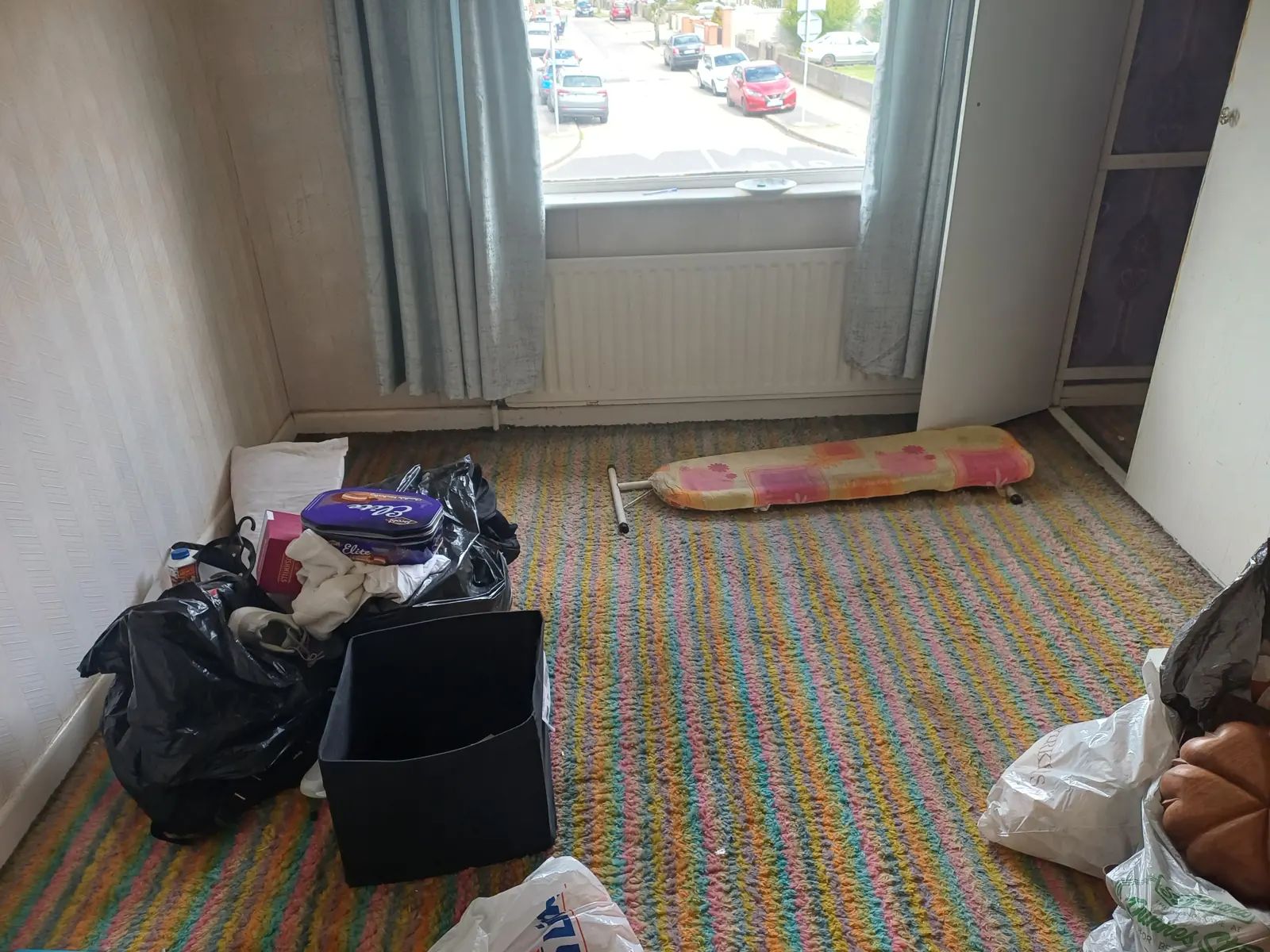
Most families clearing a parent’s house do a great deal before they call anyone. The clothes are bagged, the papers and photographs have gone home with a daughter, the kitchen presses are half empty and the easy rooms are done. What is left is the heavy and awkward remainder, and the way to hand it over is to tell the crew three things plainly: what is finished, what is going, and what must not be touched. The crew does the rest, usually in a day, and sweeps the house behind them.
This guide is for families at that point in Ballinteer, where the houses are mostly three- and four-bed semis built from the 1950s to the 1970s, many of them lived in by the same family since they were new, with a driveway, a garage, an attic and a shed. It is general practical guidance, not legal advice; the solicitor or executor is the person to ask about the estate itself. Our Rathfarnham bereavement guide covers the first weeks after a death and the Churchtown guide covers deciding what to keep. Our bereavement clearance page explains how we work with families, and the Dundrum and Ballinteer page covers the area.
What a half-cleared house usually looks like
There is a pattern to it, and nothing in it to apologise for. Over several weekends the family has done the work that can be done by hand and by car, and stopped where the furniture starts.
- Bags of clothes and bedding lined up in the hall, some tied, some not.
- Boxes in the front room labelled with names, waiting for a brother to come over or a sister to find space.
- The kitchen half done: the good delph gone, the presses of tins and jars still full.
- The wardrobes, the beds, the dressing tables and the suite exactly where they have always been.
- The attic never opened, or opened once and closed again.
- The shed and the garage as they were, because nobody knew what to do with the mower and the tins.
The family has done the sorting, which is the part only they could do. What remains is lifting, carrying, dismantling and disposal, which is the part a crew does.
Stop before anyone gets hurt or the house gets marked
The temptation at this stage is to push on: hire a trailer, take the beds apart, get a wardrobe down the stairs between two brothers on a Saturday. It is the point where backs go, bannisters crack and walls get gouged.
- Do not carry the heavy furniture yourselves. Wardrobes, beds, the suite and the appliances are two-person lifts with the right grips and a sack truck, down a stairs that was not built for them.
- Do not use the car for dump runs. A hatchback moves a fraction of a house in an afternoon, and the sofa and the wardrobes will not fit in it anyway.
- Do not take apart anything fitted. Fitted wardrobes, the kitchen and the shed itself are a strip-out, and whether they are going at all is a question for the solicitor or the agent first.
- Do not fill the wheelie bins or leave bags in the garden to be dealt with later.
- Do not move things into the garage or the attic to deal with later; the crew carries them out of there at the same price as from the room they were in.
- Do not bag anything more for us. We empty wardrobes and drawers as we go.
Spend the time you have left on the drawers, the papers, the photographs and anything personal, which only the family can do.
How to brief the crew on what is finished and what is not
The crew walks the house with you, or with whoever holds the keys, at the start of the day. In a half-cleared house that walk is the most important ten minutes of the job, so make it simple: a sheet of paper on every door with one of three words on it.
- Finished. The family has cleared the room. The crew checks the presses and the wardrobe tops and leaves it.
- Going. Everything in the room goes, including the half-filled bags, the open boxes and whatever is in the drawers.
- Keep. The door is closed and nothing inside it is touched. Boxes labelled for relatives go in here.
Then say what the bags are. A tied black sack by the front door might be rubbish, clothes for a charity shop or a bag of the kitchen that was never finished, and the crew cannot tell. A note on the pile is enough: “all going” or “sorting, leave”.
Anything that looks personal and turns up in the remainder, a bundle of letters in a wardrobe drawer, photographs in a suitcase on top of the press, is set aside and shown to you rather than removed. In a house the family has already been through, that still happens, because the heavy furniture is where the forgotten things are.
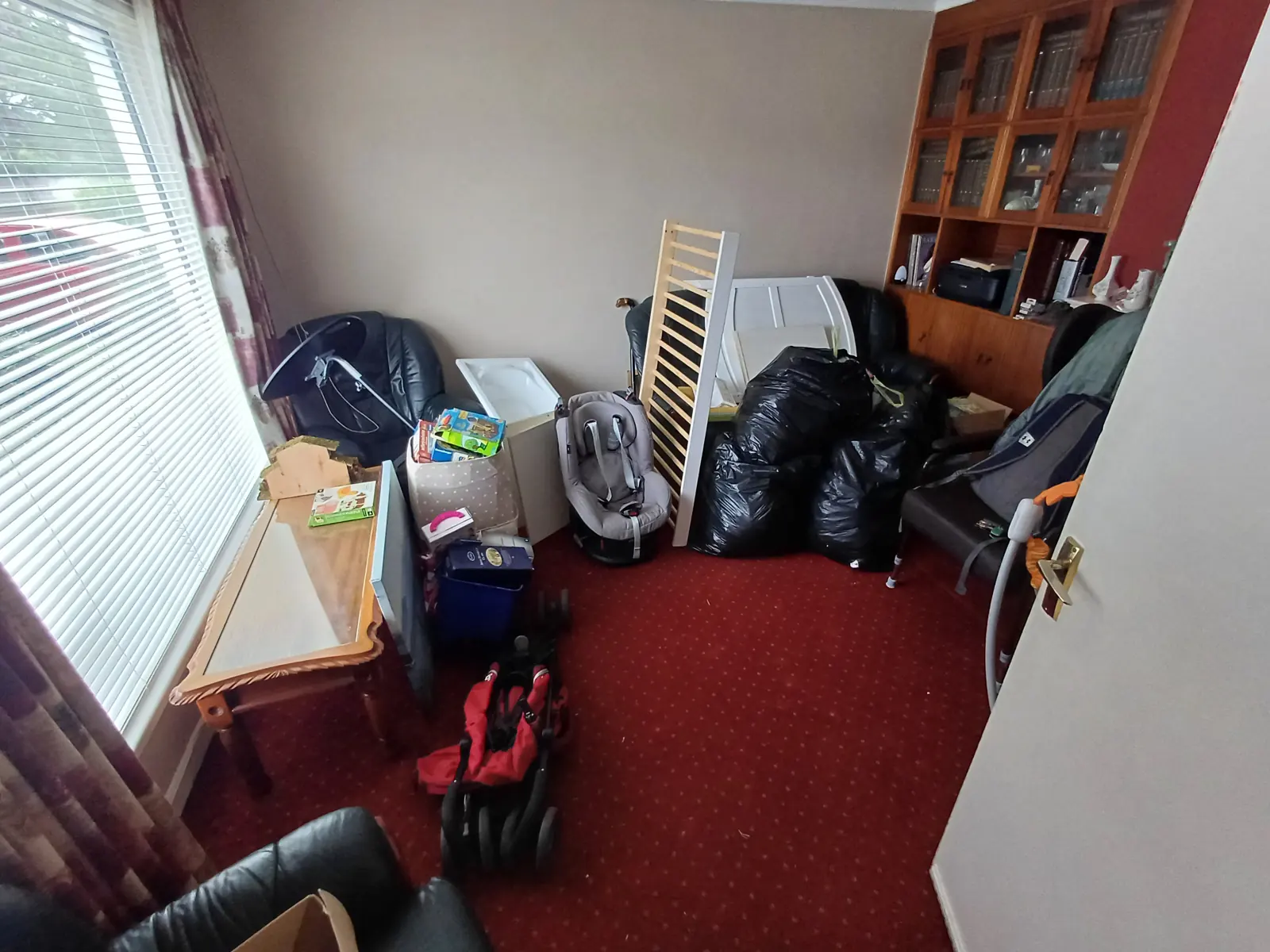
The heavy remainder, room by room
Wardrobes, beds and the suite
Beds and wardrobes that will not turn on the landing are taken apart in the bedroom and carried down in pieces. Freestanding wardrobes are emptied first, however much the family has already taken from them, because there is always a shelf at the top. Fitted wardrobes are a different question: screw-fixed carcasses the crew may be able to take down, built-in units are a job for a builder, and our Knocklyon guide explains how to tell from a photo.
The kitchen
Presses of tins, jars and crockery are emptied into boxes by the crew, and usable crockery and pans are set aside for reuse where possible. The fridge-freezer should be emptied and switched off the day before, with the door open, and the food bagged with the rubbish. A gas cooker is disconnected by a Registered Gas Installer before the day and an electric one by an electrician; we lift and carry, we do not disconnect.
The attic
One of the crew goes up, the other stacks on the landing and carries down, with the stairs sheeted. In a 1960s or 70s semi the attic is usually a hatch and a folding ladder over a space that has taken fifty years of boxes, cots and suitcases, and it is where papers and photographs are most often found late. Tell us if the family has not been up, so the time is allowed. Our attic clearance guide covers what tends to be up there.
The shed, the garage and the garden
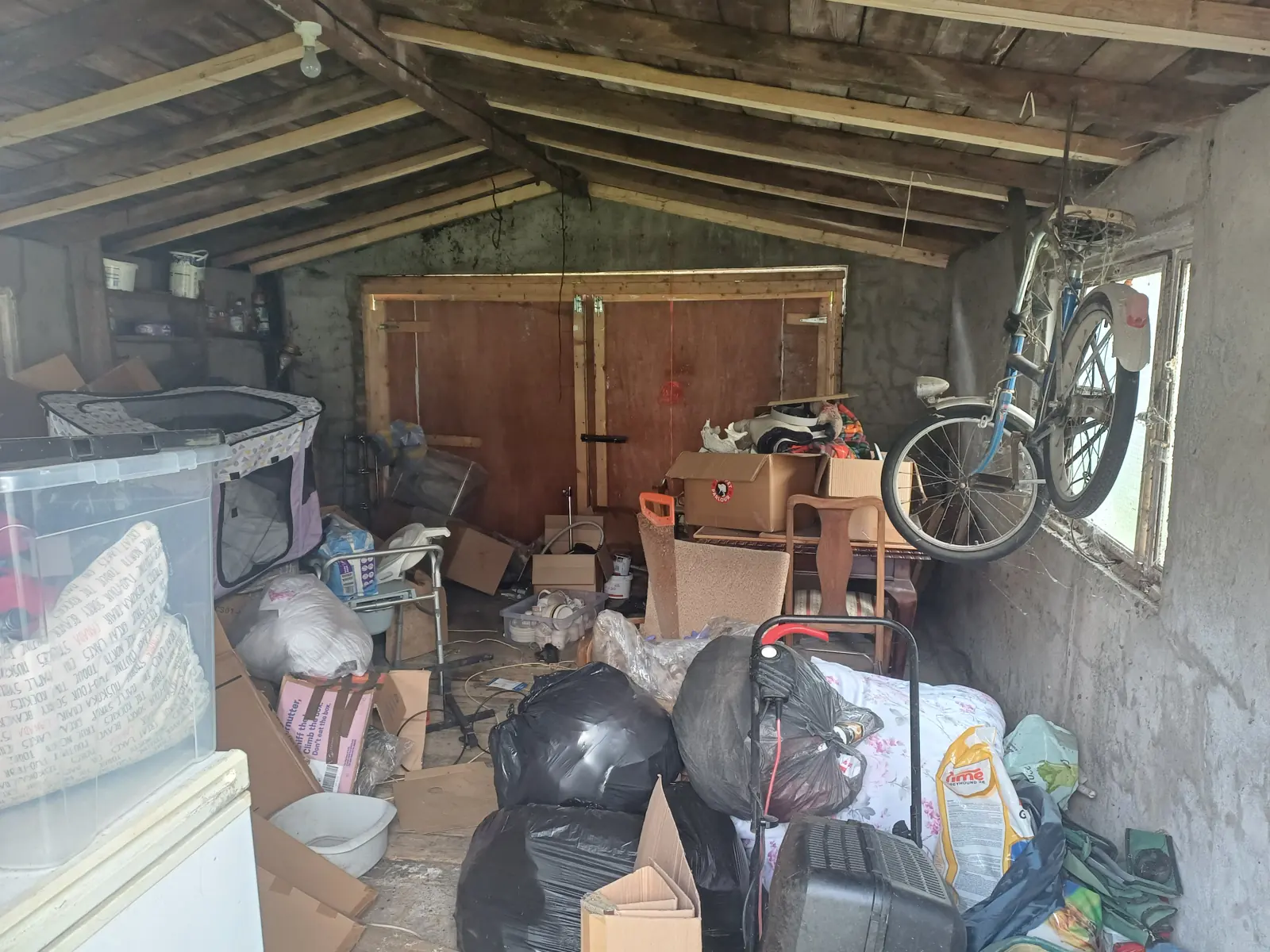
Mowers, garden furniture, timber, pots and tools come round by the side passage and straight onto the van from the driveway. Paint, solvents, oils, fuel, chemicals, batteries and gas cylinders are not carried on any of our jobs, so take the tins to a civic amenity site or a hazardous waste collection beforehand. If the shed itself is to go, say so, because taking it down is a separate line in the quote.
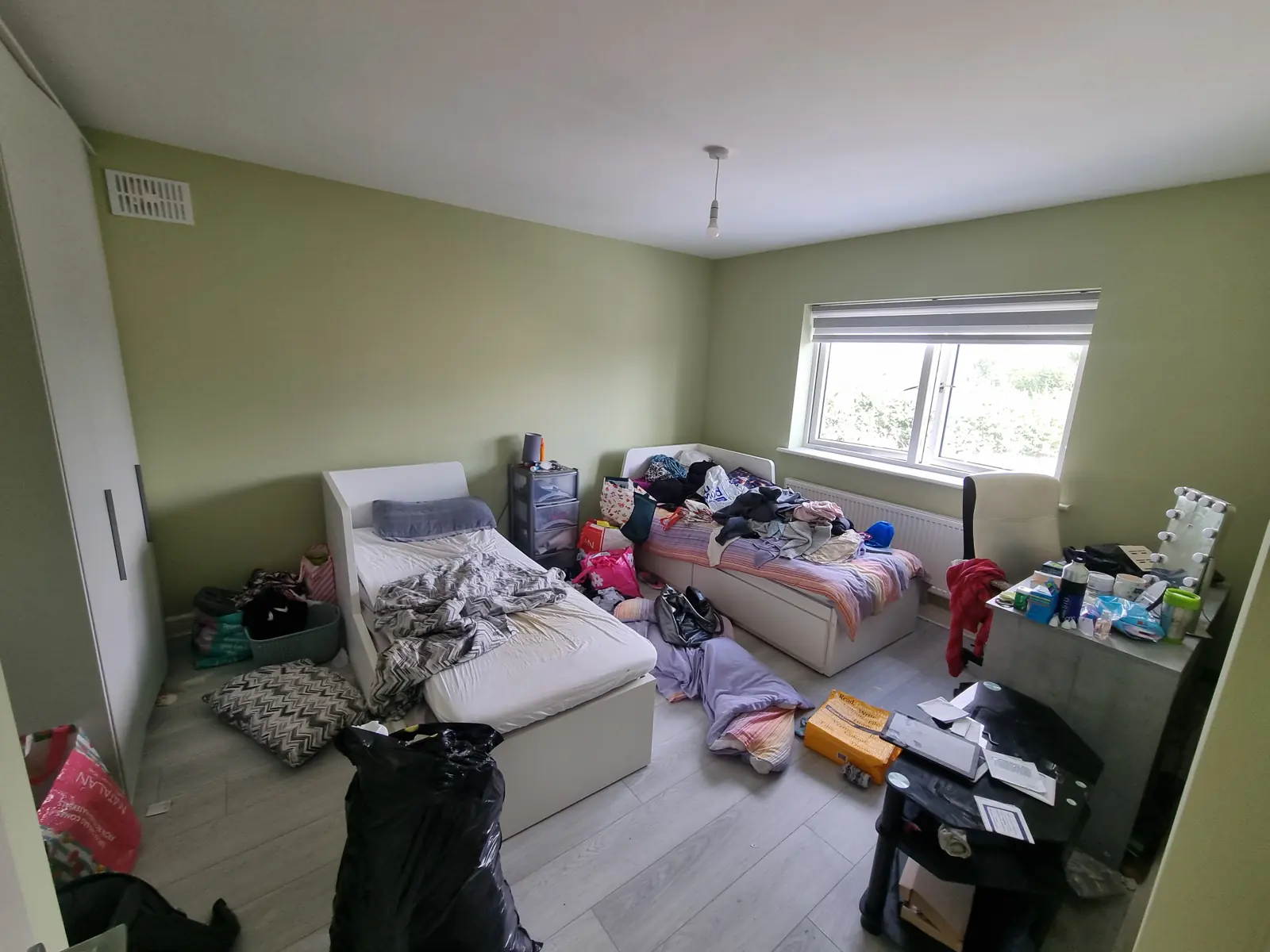
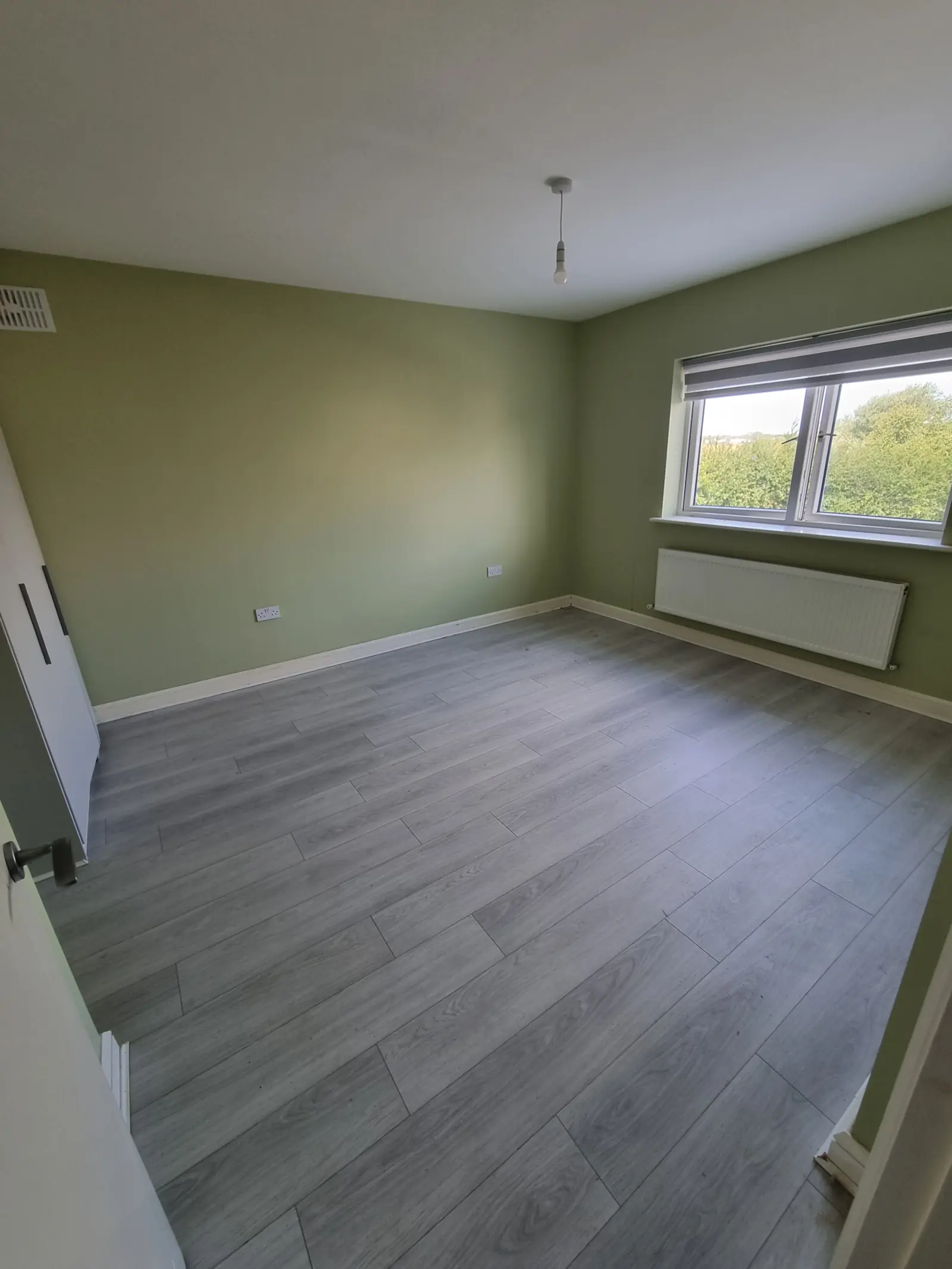
Send photos of what is left, not what is gone
The quote comes from photos, so send one of each room from the doorway as it is now, with the bags and boxes in shot, a photo up through the attic hatch with a torch, and one each of the garage and the shed. Add the Eircode and the words on each door, and send it to 085 202 1222 on WhatsApp or through the quote form. We come back with a fixed written price for the whole job, and nothing is added on the day.
How the quote changes for a partial job
The price is for what leaves the house, not for the size of the house, so the work the family has done counts, though not always as much as people hope.
Volume is the main thing. The planner on our home page gives each item a share of a full van, and our Lucan guide to sizing the load walks through the figures. Clothes, books and kitchenware taken away by the family reduce the load, but the wardrobes, beds, suite and appliances that remain are the bulk of any house, so a half-cleared three-bed is often still most of a van.
Weight and access come next: books and paper are heavy, and a narrow stairs adds time. Bagging does not change the price much, because we bag anyway. Sorting does, because a crew that is told “everything in this room goes” moves faster than one that is asked to judge.
Two visits cost more than one, because the crew and van travel twice. If the family needs another fortnight for one room, keep that room behind a Keep sign and let the rest go now; a short second visit for the last items is quoted at the same time.
The day itself and the final sweep
The crew arrives at the agreed time, walks the house against the words on the doors, and starts at the top: bedrooms and attic first while the stairs are clear, then the ground floor, then the garage and shed from the driveway. Everything is sorted at the van into reuse, recycling and waste as it is loaded, and what cannot be reused or recycled goes to a waste transfer station under our waste collection permit, NWCPO-25-13287-01.
At the end comes the sweep, which in a half-cleared house matters more than usual. Every press, the hot press, under the stairs, the wardrobe tops, the attic hatch and the shed are checked, because a family working in short bursts leaves things in the places it meant to come back to. Anything found that looks personal is put in a box by the front door for you. A sweep is not a clean; if the house needs cleaning before it is sold or let, that is a separate job for a cleaning company.
If you cannot be there, a neighbour or a sibling opens up, the walk-through happens on a video call, and photographs of every empty room are sent before the keys are handed back.
Ballinteer in brief
The roads are wide and nearly every house has a driveway, so the van pulls in off the road and loads from the front step or the garage door, with shed and garden contents brought round by the side passage. The Luas green line at Dundrum and Balally and the M50 make the house easy to reach for family coming from across the city. We work Monday to Friday from 8am to 5pm and Saturdays until 2pm, and many families choose a Saturday morning.
What customers say
This is a review from a real customer, quoted exactly as it was written.
Junk Removal could not have been more helpful during what was a challenging period, simplifying the task of clearing my late father’s flat to the fullest extent. Junk Removal comes highly recommended by us.
Anne, Sandymount
Frequently asked questions
We have taken bags of clothes to the charity shop and they cannot take any more. Will you take the rest of the clothes?
Yes. Leave the bags where they are, tied or not, and tell us they are going. Clothes and linen in good condition are set aside for reuse where we can arrange it, and the rest goes for textile recycling or disposal. Charity shops take a few bags at a time, and a house holds far more than that.
There are boxes in the front room labelled for my brother abroad. Can they stay in the house during the clearance?
Yes. Put them together in one room with a Keep sign on the door, or leave the labels on them and point them out at the walk-through. Nothing in a Keep room is touched, and the boxes can wait there for a courier or a visit as long as the house is secure and insured in the meantime.
We filled twenty bags but never got them out of the house. Do we need to move them before you come?
No. Leave them where they are and tell us which ones are going; a note on the pile is enough. Bags are the quickest part of any load, and the crew carries them out with everything else. If a bag has not been looked through, say so and we set it aside rather than load it.
My father’s wardrobe will not fit down the stairs in one piece. Do we need to take it apart first?
No, and it is better that you do not. The crew takes it apart in the bedroom, carries the pieces down with sheeting on the stairs and puts the panels on the van. Send a photo of the wardrobe and of the stairs and landing from the top so the time is allowed for.
Is it cheaper if we clear more ourselves before you come?
A little, because the price is for what leaves, by volume, weight and access. The heavy furniture, mattresses and appliances that families leave to the end are most of the load, so the saving from a few more bags going to the charity shop is small. Your time is better spent on the drawers, the papers and the photographs than on the carrying.
The shed has fuel in the mower and tins of paint on the shelves. What should we do with them before the day?
Take the paint, solvents, oils and chemicals to a civic amenity site or a hazardous waste collection, because they are not carried on our van. A mower with fuel in it cannot come either; once the fuel is out, the mower goes with the rest of the shed. Everything else in the shed, from timber to broken chairs, is cleared as normal.
Can you clear the rest of the house while my mother’s things in one bedroom are still being gone through?
Yes. Close the door, put a Keep sign on it and the crew clears every other room around it. When the family has finished with that room, a short second visit takes what is left, quoted with the main job. Many families clear the house this way and keep one room for longer.
We started on the attic and found suitcases of letters and photographs. Should we stop?
Keep what you found together in one box and stop going up, because the ladder and the joists are the risky part. The crew brings everything else down to the landing, and any papers, photographs or personal items found among it are set aside and shown to you rather than loaded. You go through them in daylight at your own pace.
The house has been empty for months and the fridge smells. Will you take it?
Yes. Empty it, switch it off and leave the door open the day before if you can, and bag the contents with the rubbish for us to take. If you cannot face it, tell us and the crew empties it on the day. Fridges and freezers are kept separate on the van for electrical recycling.
Can you do the heavy furniture one week and the shed and attic another?
Yes, but two visits cost more than one because the crew and van travel twice, so it is worth doing only when there is a reason, such as a family member coming over to go through the attic. If the attic and shed are simply unopened, tell us that and we clear them on the same visit, allowing the extra time.
Nobody in the family can be at the house. How do we tell you what is finished and what is not?
Put the Finished, Going and Keep sheets on the doors, leave a note on any bags or boxes that are not going, and send us photos of each door and each pile beforehand. On the morning the crew calls you on WhatsApp from the hall and walks the house with the camera, and you confirm room by room. Photographs of every empty room are sent before the keys go back to the neighbour.
Next step
Send a photo of each room as it is now, the attic hatch, the garage and the shed, with the Eircode and a note of what is finished, going and kept, to 085 202 1222 on WhatsApp, or request a free quote online. Our bereavement clearance page explains how we work with families, and the house clearance page covers the service in full.