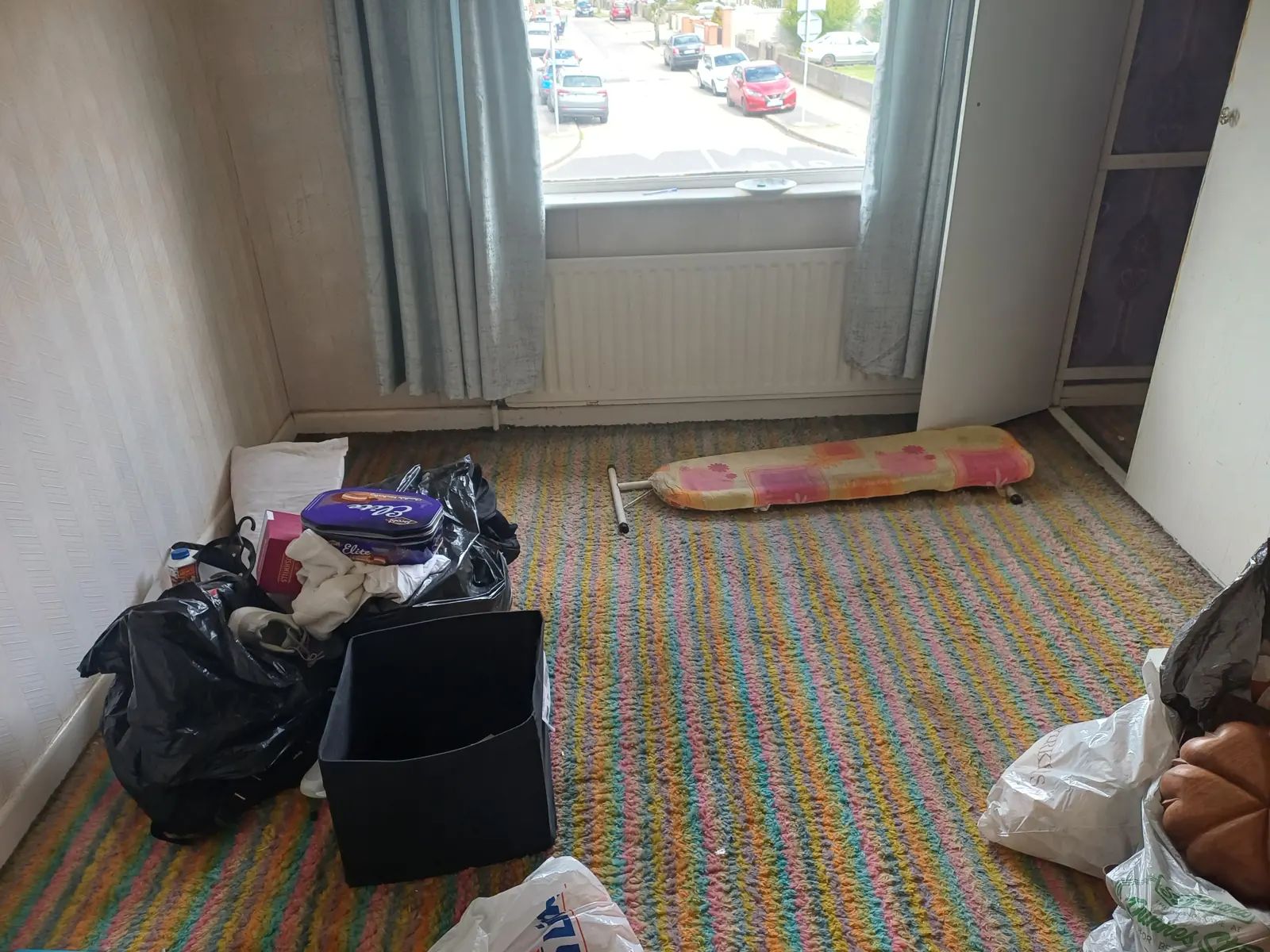
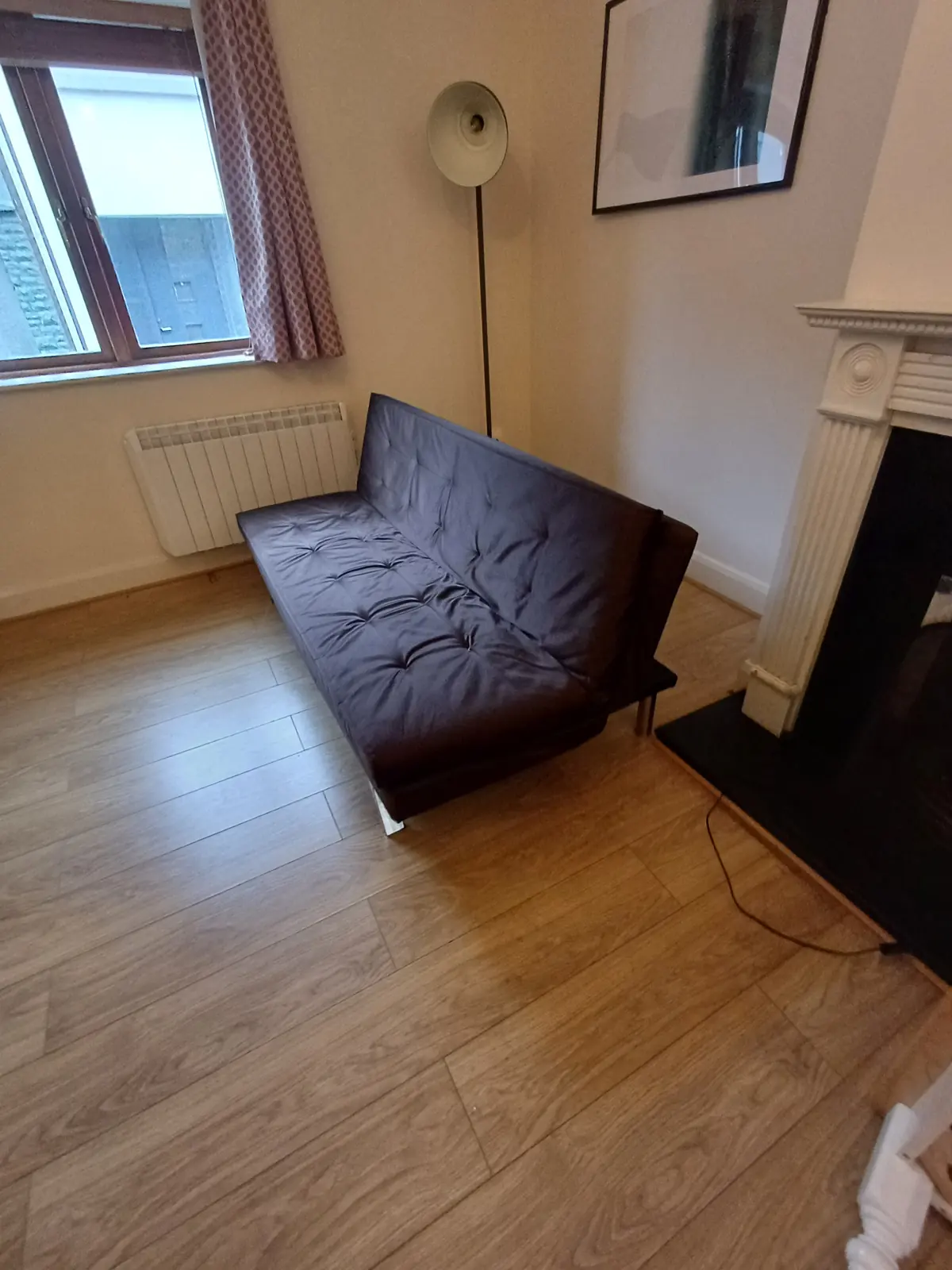






A bereavement clearance is usually described as emptying a house: the family arrives, the rooms are sorted, a van comes and the keys go to an estate agent. That is one kind, and our bereavement clearance page and the guide to clearing a house after a bereavement cover it.
This page is about the other kind. One parent has died and the other is staying in the house. Nothing is being sold. What is there to deal with is one person’s belongings inside a home that is still very much lived in, and the work is smaller, slower and done entirely on the terms of the person who lives there.

A clearance that leaves the house lived in
The difference is simple to state. In an estate clearance everything goes unless it is marked to stay. In a part clearance everything stays unless it is marked to go.
That one rule shapes the whole job. The crew does not sort, open cupboards or make decisions. They take what is on the list and leave. The kitchen, the sitting room and the bedroom are the same when your mother or father walks back in as they were that morning, apart from the things that were agreed.
It also means there is no deadline. There is no sale closing and no estate agent’s photographer. If the wardrobe is not opened for a year, that is a decision, not a delay.
Who decides, and how to keep it gentle
The parent who lives there decides. Sons and daughters often want to help by getting it done, and the kindest version of that help is to do the lifting and leave the choosing.
A few things make it easier:
- One area at a time. A whole house of decisions is exhausting. One shed is a morning.
- Start where it is easiest. For most people that is the garage or the shed, not the bedroom.
- Allow a “not yet” box. Anything that causes a pause goes in it and stays in the house.
- Do not clear while they are out, unless they have asked for that. Coming home to an emptied room is not the same as agreeing to it.
- Offer things to the family first. A grandchild may want the toolbox or the records.
This is practical guidance, not legal advice. If the will leaves particular items to particular people, or if the estate is still being administered, ask the executor or the solicitor before anything that might be part of it leaves the house.
Where one person’s belongings actually are
The list usually falls into the same few places.
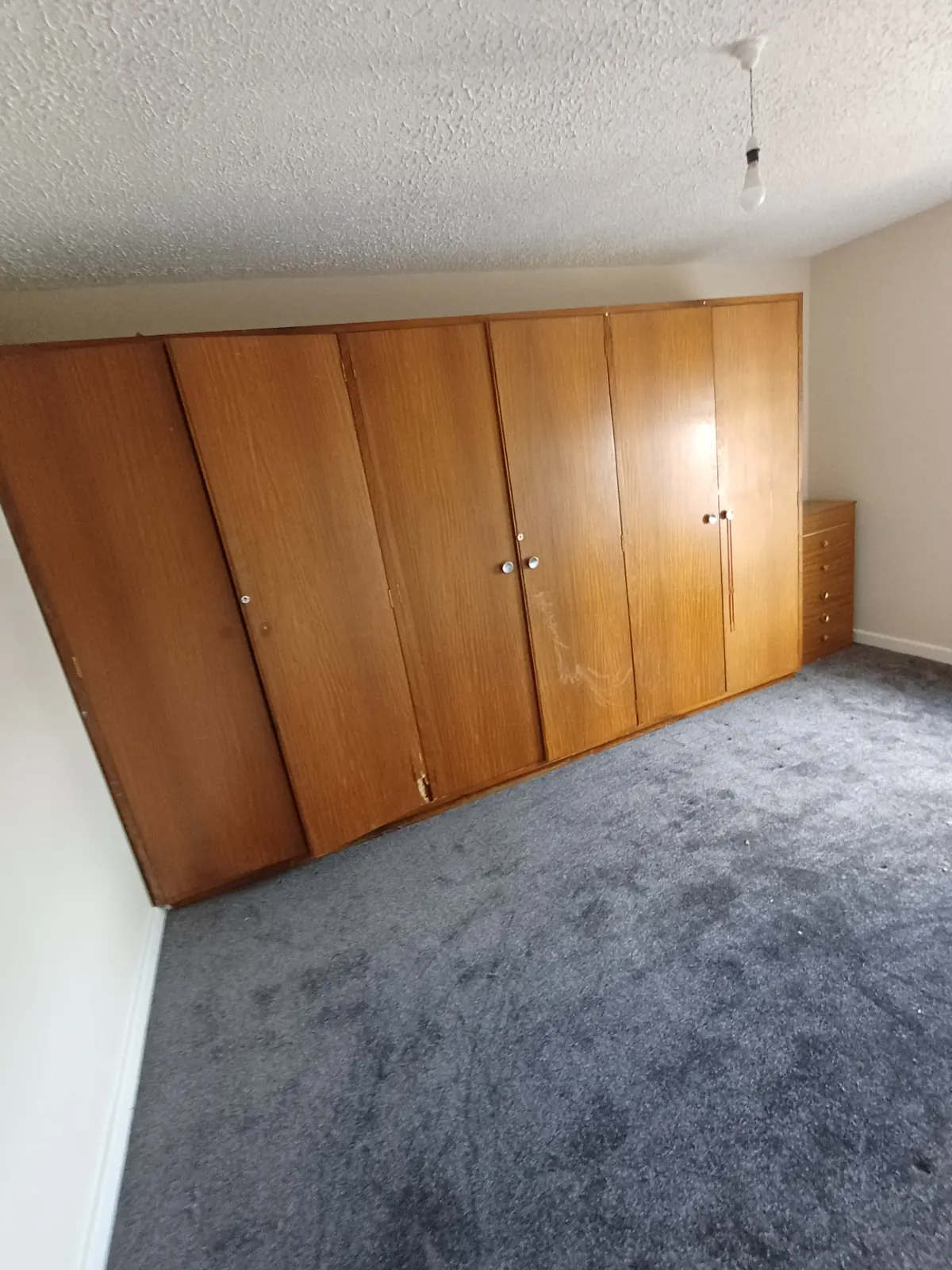
The wardrobe and the chest of drawers. Clothes, shoes and coats. Good clothes are welcome in charity shops, and we take the rest along with the furniture itself if the wardrobe is going too.
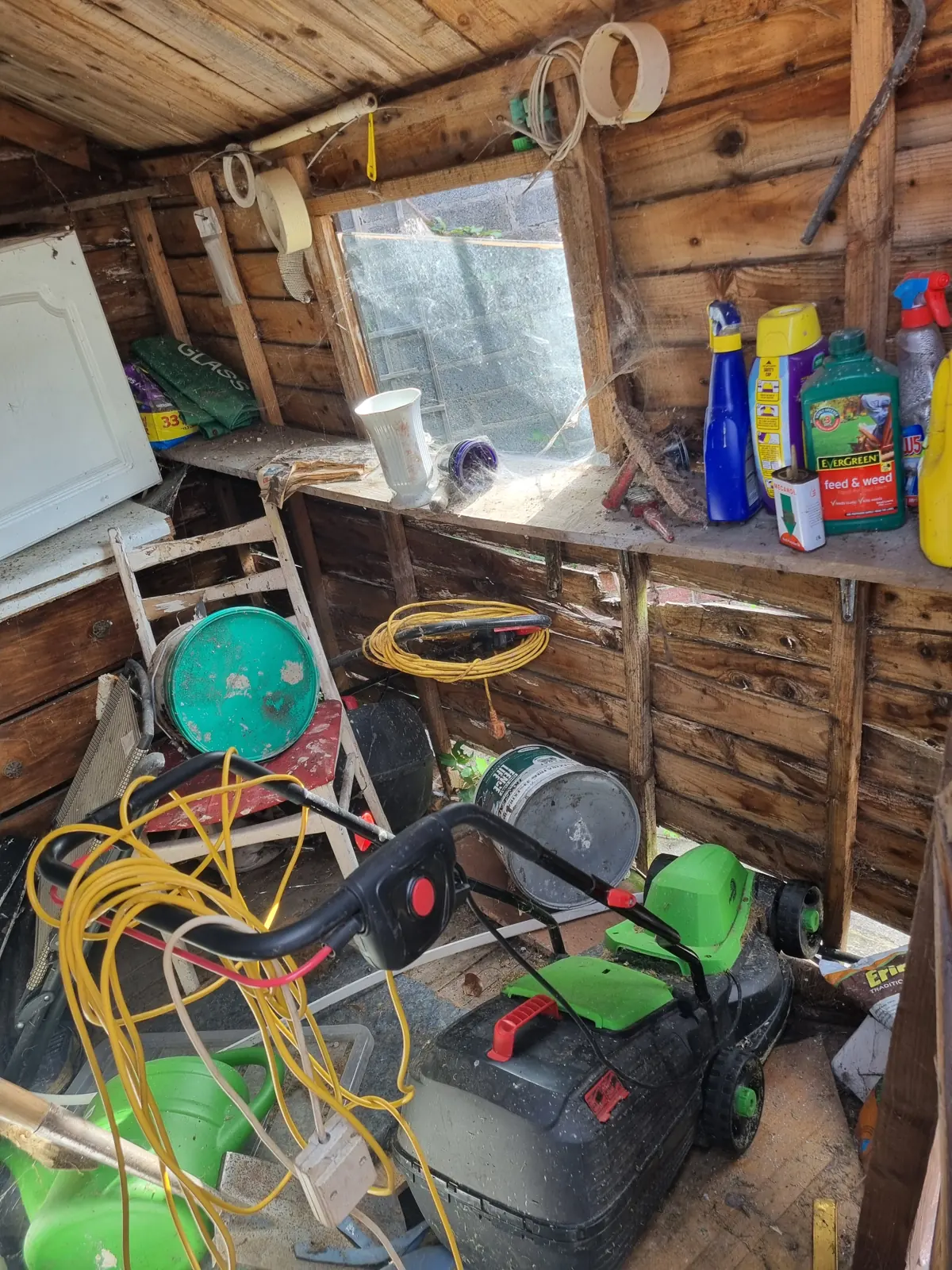
The desk or the study. This is the area to slow down in. Keep every paper with a name, an account number or an official heading on it until the executor has what is needed. The furniture, the old computer equipment and the stationery can go; the paperwork should not.
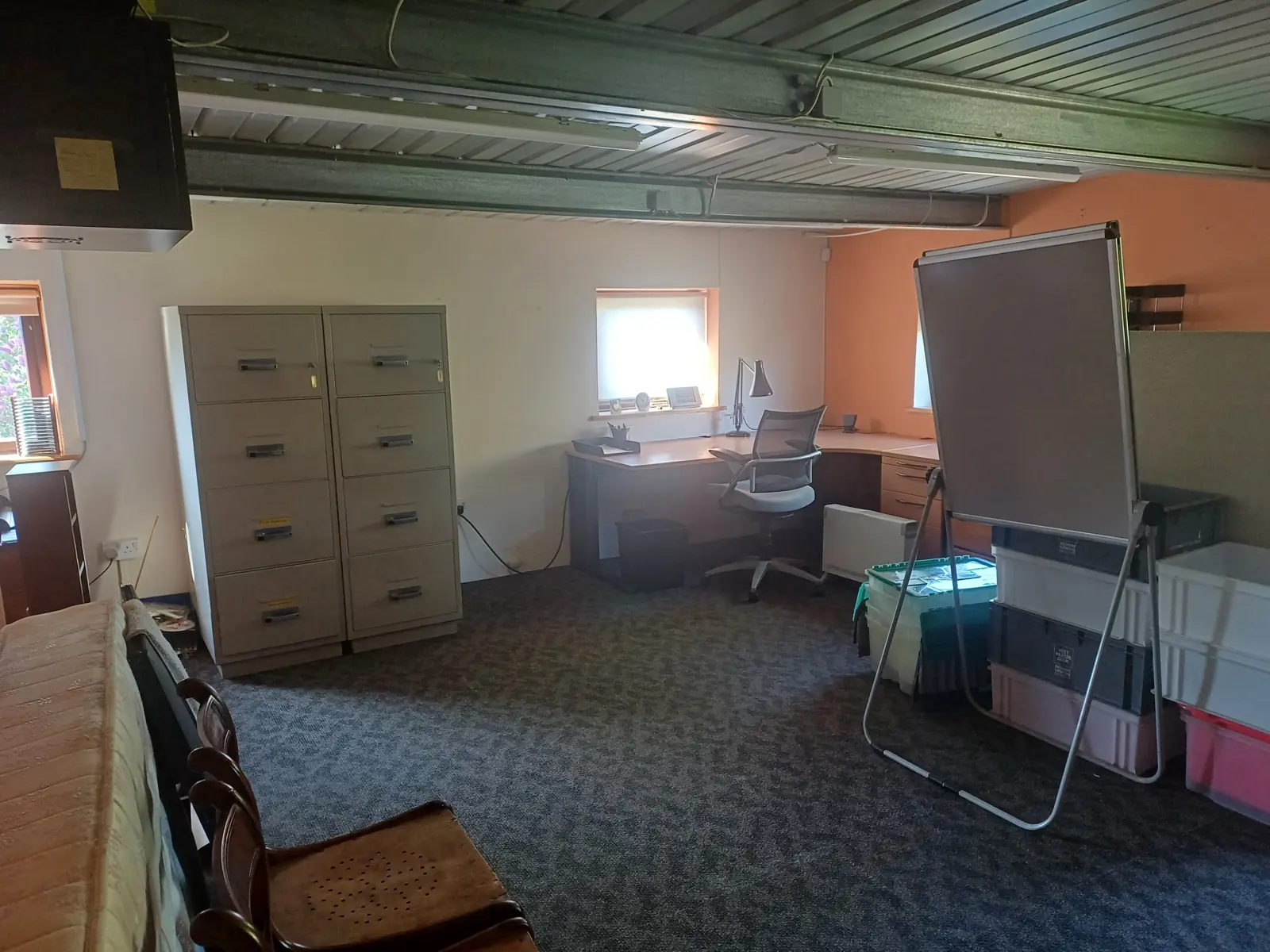
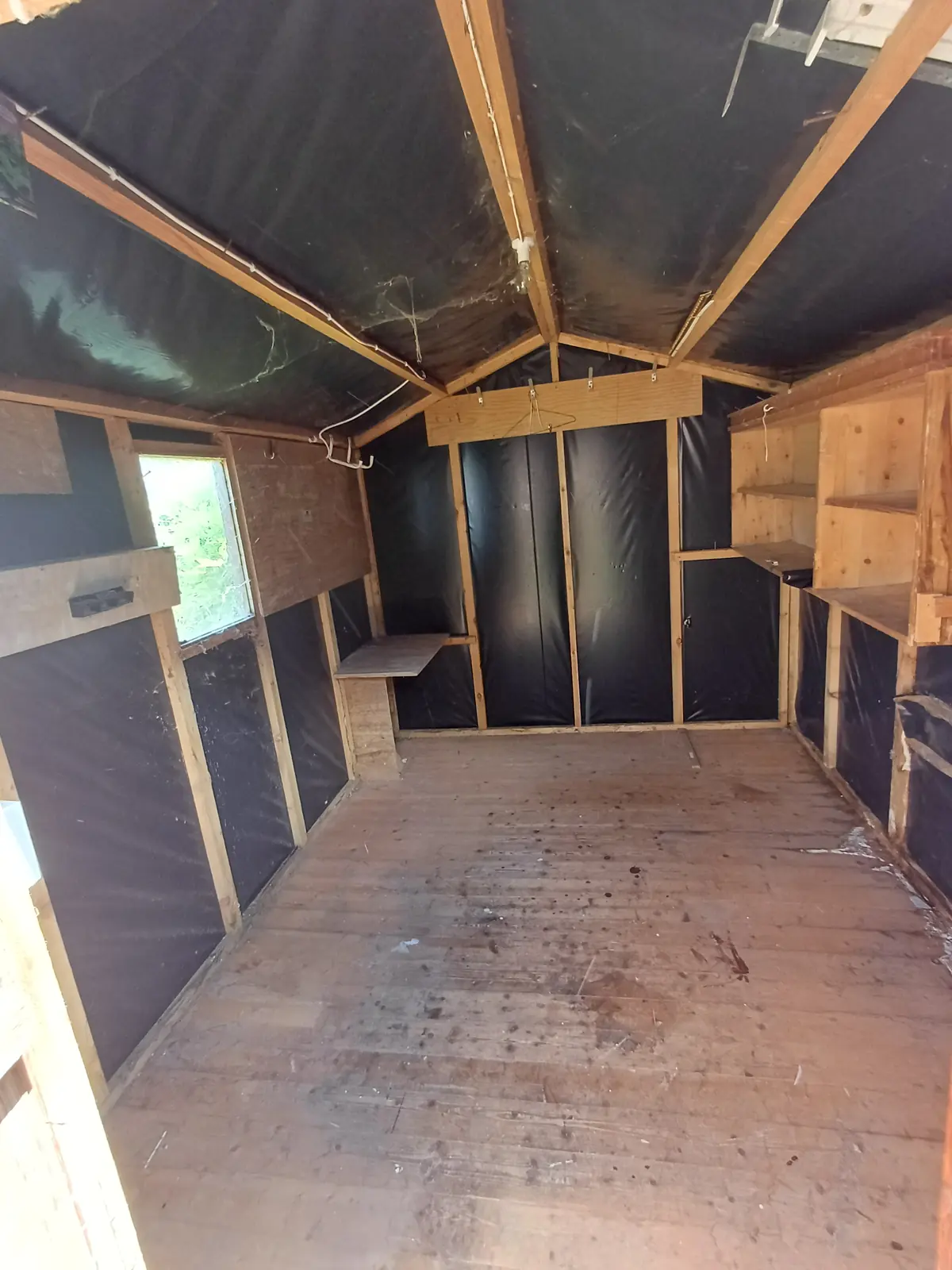
The shed, the garage or the workshop. Tools, timber, tins, garden machinery and the projects that were never finished. Working tools are set aside for reuse where we can arrange it. Paint, oils, fuel, chemicals, batteries and gas cylinders are not ours to take and go to a civic amenity site.
The attic. Boxes of work papers, hobby equipment, suitcases and things kept for a reason nobody remembers. We bring them down through the hatch so nobody in the family has to.
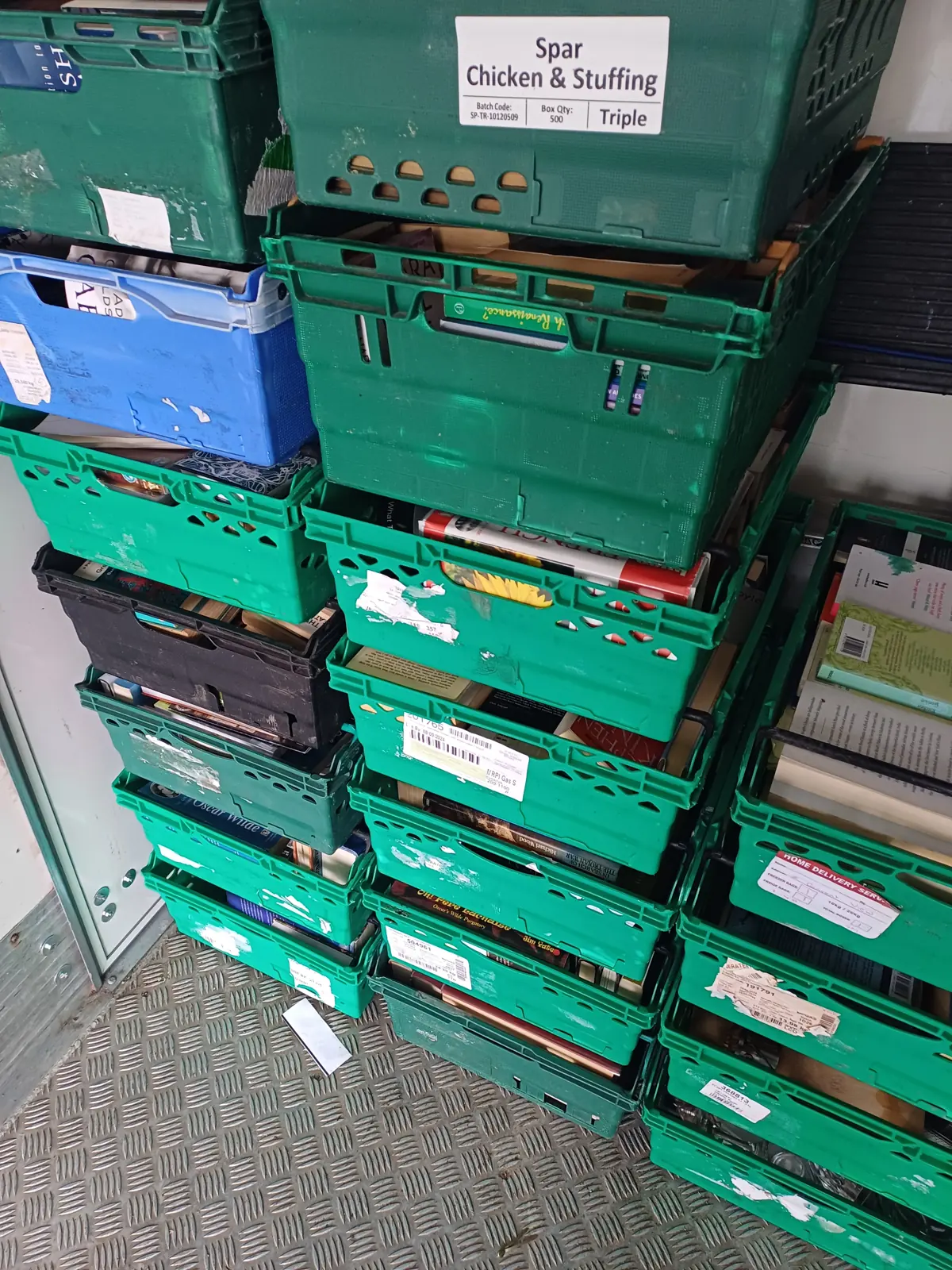
The hobby. Golf clubs, fishing tackle, a sewing machine, a record collection, books by the shelf. These are the items most worth offering around the family before they are listed.
Mobility and care equipment. Anything supplied on loan goes back to whoever supplied it; the label usually says who to ring. We do not take medicines or clinical waste, and a pharmacy can advise on returning unused medicines.
What can stay exactly as it is
Some things are not clutter. The chair by the window, the coat on the hook and the bedside table may be staying for good, and a part clearance works around them without comment. If you are helping a parent with this, it is worth saying out loud that nothing has to go. That is easier to hear than a list of what should go.
It can help to photograph a room before anything changes. Some families keep the photographs and some never look at them again.
What Junk Removal does on a visit like this
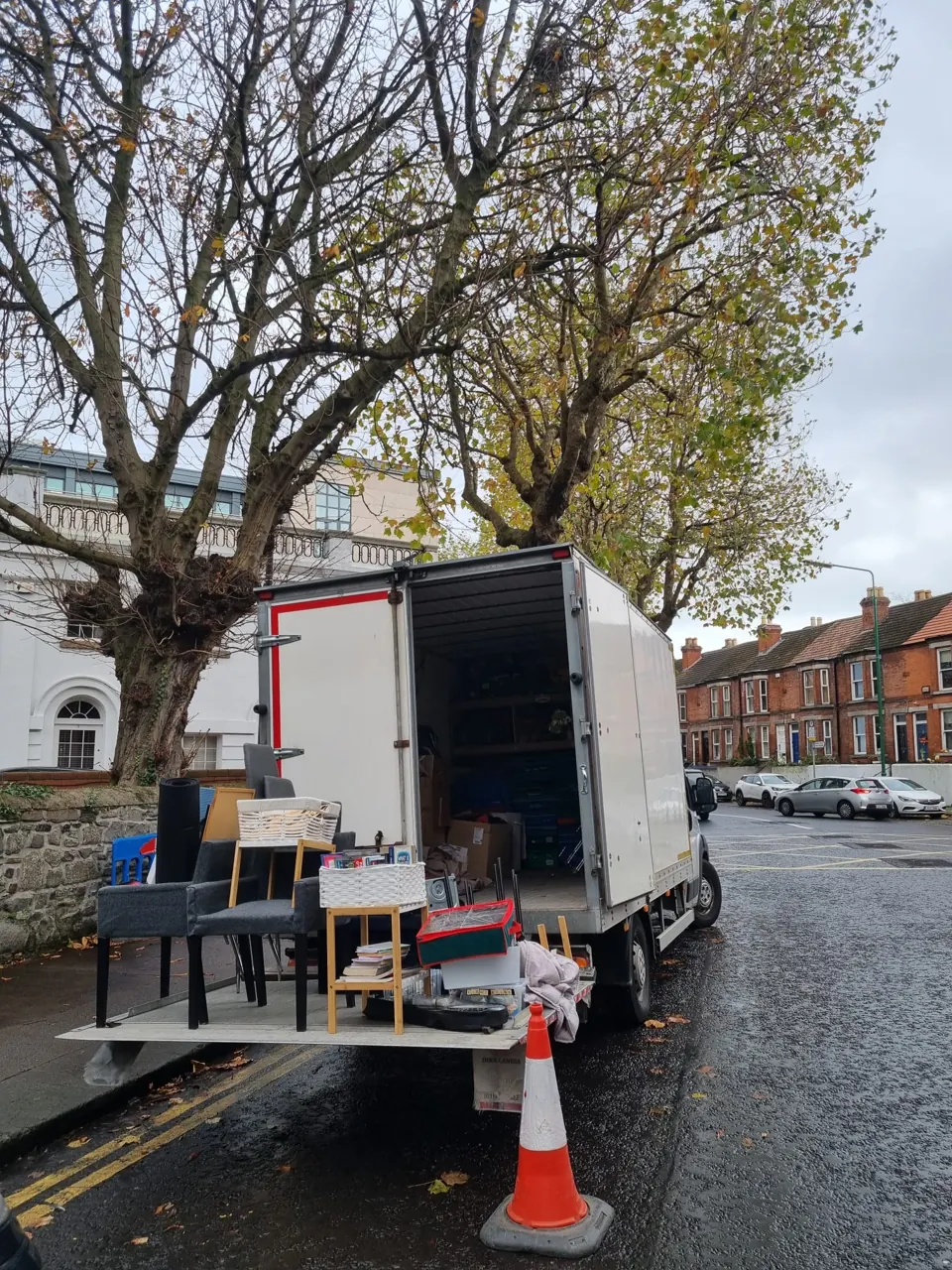
We are a clearance company with a two-person crew and a box van. On a part clearance the work is narrower than usual, and it helps to know exactly what it covers.
- We take only what is marked or listed. Masking tape on furniture and a written list for boxes and bags is all it needs.
- We carry from where the item is. Upstairs bedrooms, the attic, the far end of the garden. Nothing has to be brought to the door.
- Papers and photographs are set aside. If personal papers or photographs turn up inside something that is leaving, they are handed to you.
- Single pieces are fine. A second bed, a desk or a wardrobe is a furniture removal job, priced as a part load.
- Attic, garage and shed can be separate visits. See attic clearance, garage clearance and shed clearance.
- The rest of the house is left as it was, with the cleared area swept.
Usable furniture and working items are set aside for reuse where we can arrange it, metal goes for scrap, electrical items go for recycling, and what remains goes to an authorised facility under our waste collection permit, NWCPO-25-13287-01. We are fully insured.
Dundrum: family houses and apartments
Dundrum has two kinds of home, and this job comes up in both. On the roads behind the town centre, towards Ballinteer, Taney and Churchtown, there are semi-detached houses from the 1950s to the 1970s that have been family homes for decades, with an attic, a garage and a shed that one person looked after. Nearer the Luas there are apartment blocks, where a couple may have downsized years ago and the belongings are fewer but closer together.
In a house, the work is mostly the garage, the shed and the attic. In an apartment it is a wardrobe, a desk and the storage press, and we ask about the lift and the management company’s arrangements before the day. Our page on house clearance in Dundrum covers both kinds of building.
Making the house easier to live in afterwards
A part clearance is not only about what leaves. Done well, it gives a room back. A cleared box room becomes somewhere for a grandchild to stay. An emptied garage takes the things that were blocking the hall. A study with the filing cabinets gone can hold a bed downstairs if stairs become a nuisance later.
It is worth asking the parent who is staying what they would like the space to be for, and letting that set the order of the work.
Later, if the house is sold
Sometimes the house is sold in the end, months or years on. A full clearance at that stage is a different job, and it is easier for having been started gently. The guides to bereavement clearance in Churchtown, which is about deciding what to keep when nobody has room, and finishing a half-cleared house in Ballinteer pick up from there.
Next step
When one area has been agreed, send photos of what is going on WhatsApp to 085 202 1222 with a short list, or use the quote form below. You will get a fixed price in writing for that visit, and a day that suits the person who lives there.