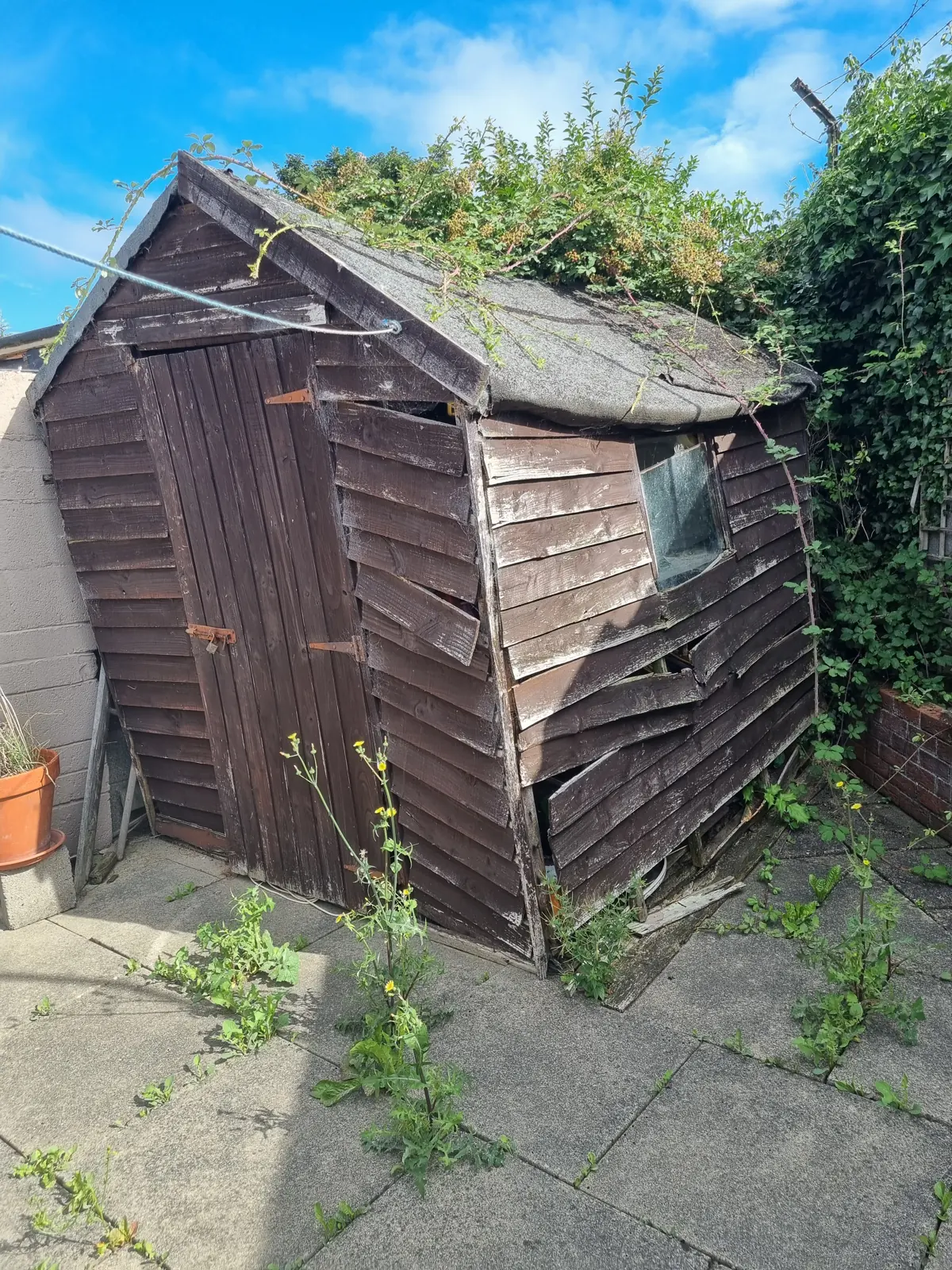




In Churchtown back gardens the old shed is often older than anything in it. The felt on the roof has lifted, the floor has gone soft in one corner and the door has dropped so far that it drags on the step. At some point the shed itself becomes the thing that needs to go.
That is shed removal: the structure taken down and taken away, whether it is empty or still full. Our main page on shed clearance and removal in Dublin explains the service, and our page on house clearance in Churchtown covers the area. This page is about taking down the shed itself: what it is made of, what stays behind, and the few things to sort out before we come.

When a shed is past saving
A shed is usually worth taking down when two or three of these are true:
- the roof leaks, or the felt has come away in sheets,
- the floor is soft, or the joists underneath have rotted,
- the frame has racked, so the door no longer meets the frame,
- the cladding has split or rotted at the bottom,
- nothing in it stays dry any more.
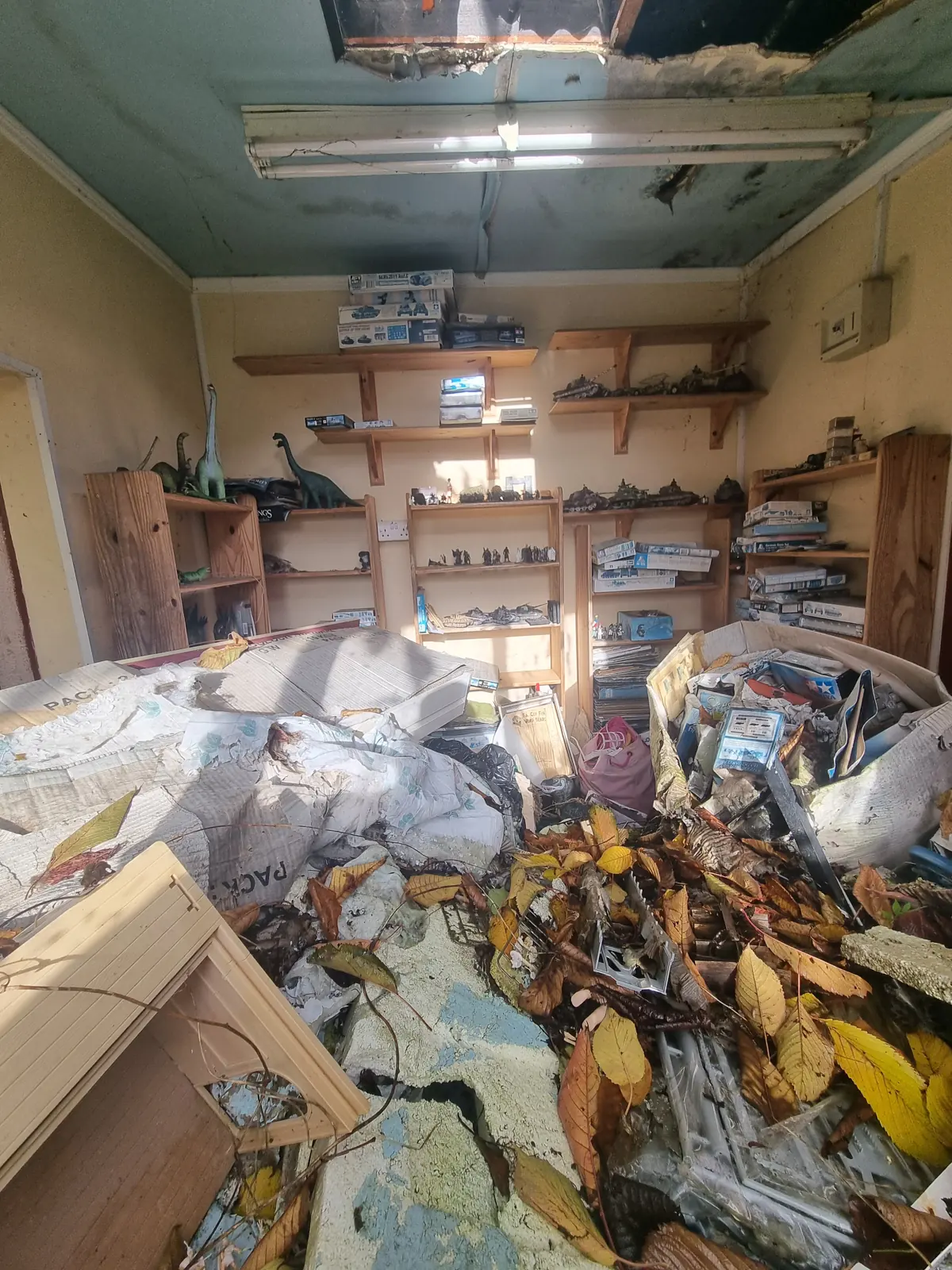
A rotten shed is usually easier to take down, not harder. It comes apart with little effort. A rusted metal shed is cut where it will not unbolt. If the roof has already fallen in, the contents and the panels are cleared together.

Timber, metal and plastic: how each comes down
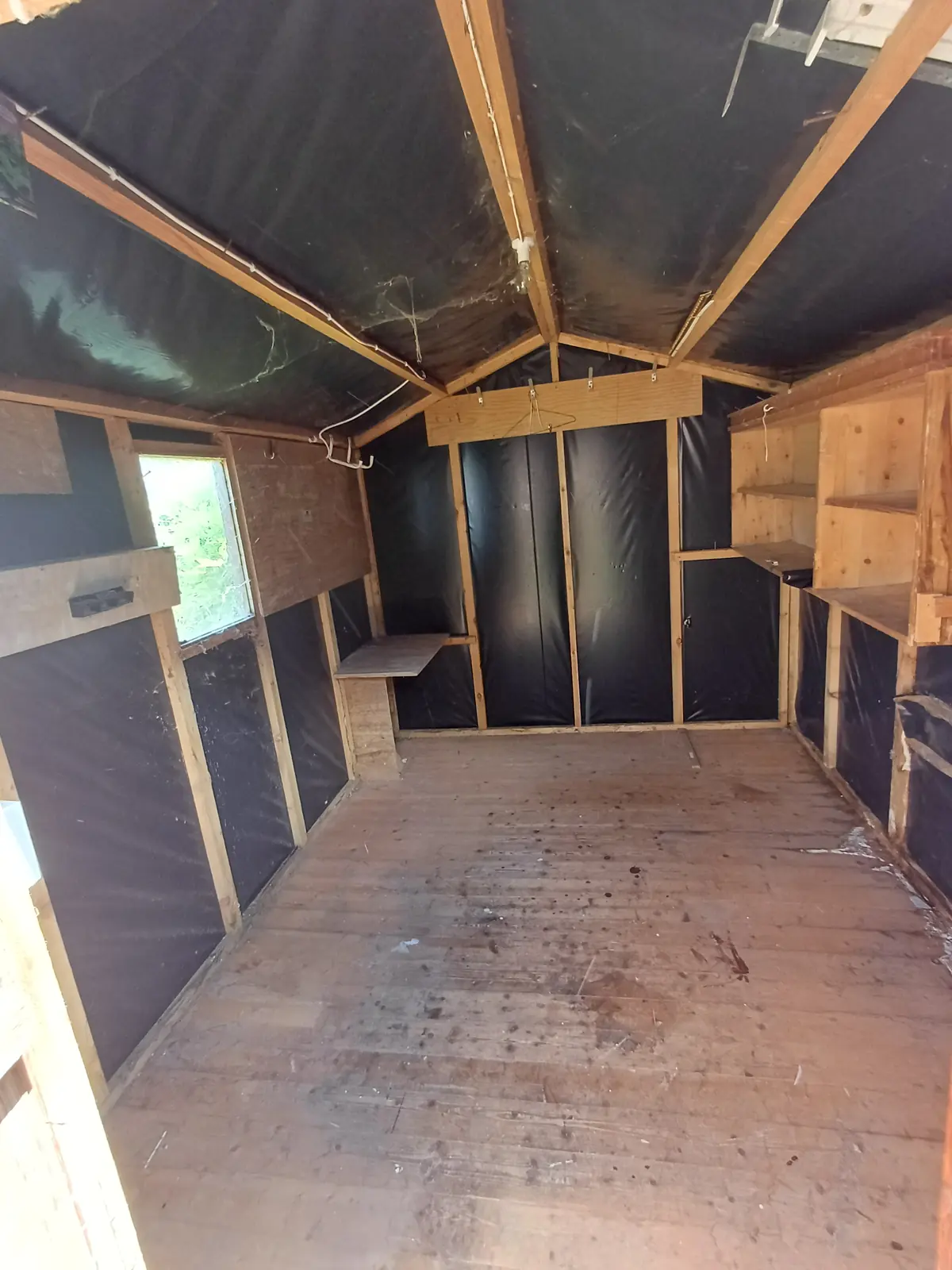
Timber sheds. The roof comes off first: felt, then the roof boards. The wall panels follow, then the timber floor and its bearers. Each piece is cut to a size two people can carry down a side passage.
Metal sheds. Sheet metal sheds are unbolted panel by panel. Where the bolts have rusted solid, the crew cuts through them. The sheets have sharp edges, so they are stacked and carried with care.
Plastic sheds. Resin and plastic sheds usually unclip or unscrew and come apart quickly. If the plastic has gone brittle in the sun, it breaks up rather than coming apart, which is fine.
Garden rooms and workshops. A large timber building with insulation, lining boards and a proper floor takes longer than an ordinary shed, and is priced from photos of the inside as well as the outside. Any electrics or plumbing must be disconnected first.
A shed built of concrete blocks, or one with an asbestos roof, is a different job and we will say so when we see your photos.
What stays behind: the base
A timber floor goes with the shed. A concrete slab or a base of paving flags stays where it is. Breaking out concrete is a job for a builder and a skip, not for a van.
After the shed is down, the base is swept so you can see what you have. If a new shed or a garden room is going in the same spot, whoever is building it will tell you whether the old base can be reused.
Three things to sort out before we come
- Electrics. If there is a light or a socket in the shed, have an electrician disconnect the supply before the day. We do not touch wiring.
- The roof. Old corrugated cement sheeting may contain asbestos, which we do not handle. Send a photo of the roof. A roof like that has to be taken off by a specialist first, and we can still empty the shed without disturbing it.
- The boundary. Sheds often stand tight against the fence. The roof comes off first and we work from your side, so it is rare that anyone has to go next door. If a panel can only be reached from the neighbour’s garden, ask them before the day.
Clearing the contents first
Most sheds that are coming down are not empty. The mower that stopped working, the garden chairs, the bikes, the tools and the pots all have to come out before the shed can come apart.
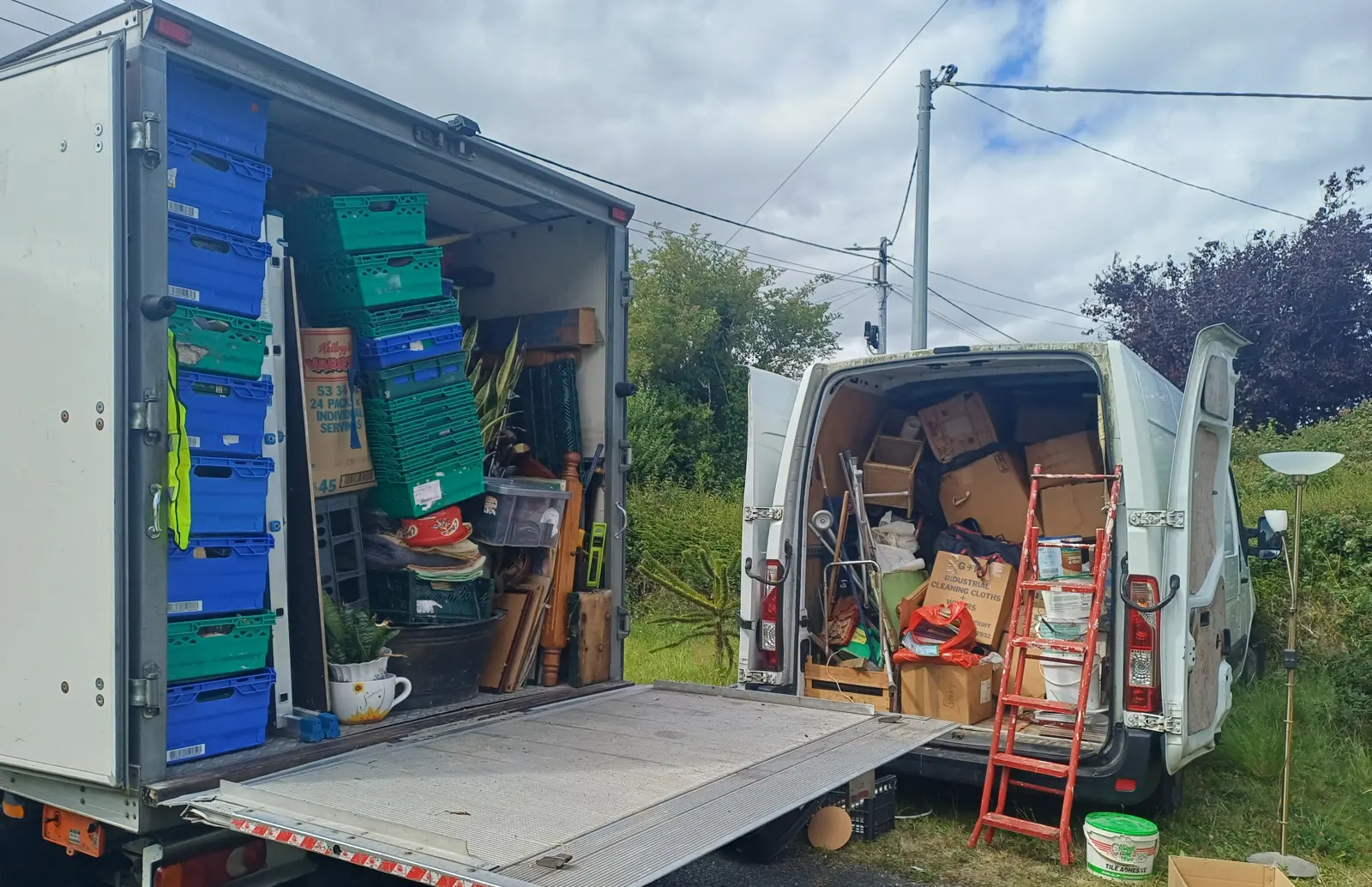
The crew empties the shed by hand, and anything you are keeping is set aside on the lawn or the patio. Part of our job is to donate, so tools, garden furniture and bikes in good condition are set aside for individuals and charity organisations where they can be used.
The shed is also where the paint, the weedkiller and the creosote are kept. We do not collect paint, solvents, oils, fuel, chemicals, batteries or gas cylinders. The crew stands them together and tells you where they are. A civic amenity site takes most of them, and a gas cylinder goes back to its supplier.

Getting it out of a Churchtown garden
Everything that comes out of the back garden has to reach the van. Where there is a side passage, the pieces are cut small enough to fit it at its narrowest point, which is why we ask for a photo of the passage.
Where there is no side entrance, the shed comes out through the house. Floor protection goes down from the back door to the front door, and the pieces are cut small enough to carry through without touching the walls. Tell us when you send photos, so the extra time is in the price from the start.
What happens to the shed
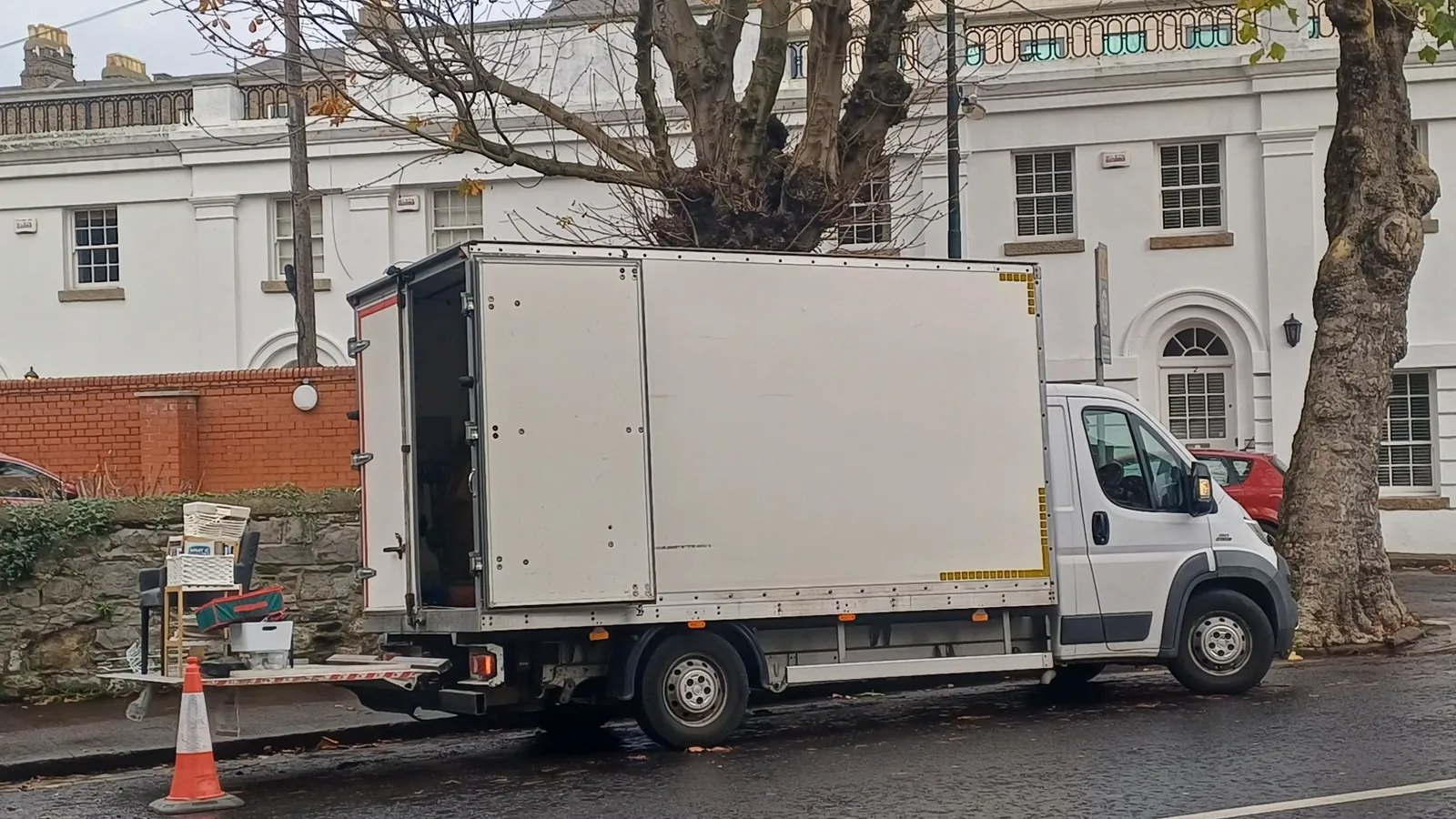
Timber and metal are separated for recycling. Anything electrical, like an old mower or a strimmer, goes through the WEEE scheme. The rest goes to an authorised facility under our waste collection permit, NWCPO-25-13287-01.
The rest of the garden on the same visit
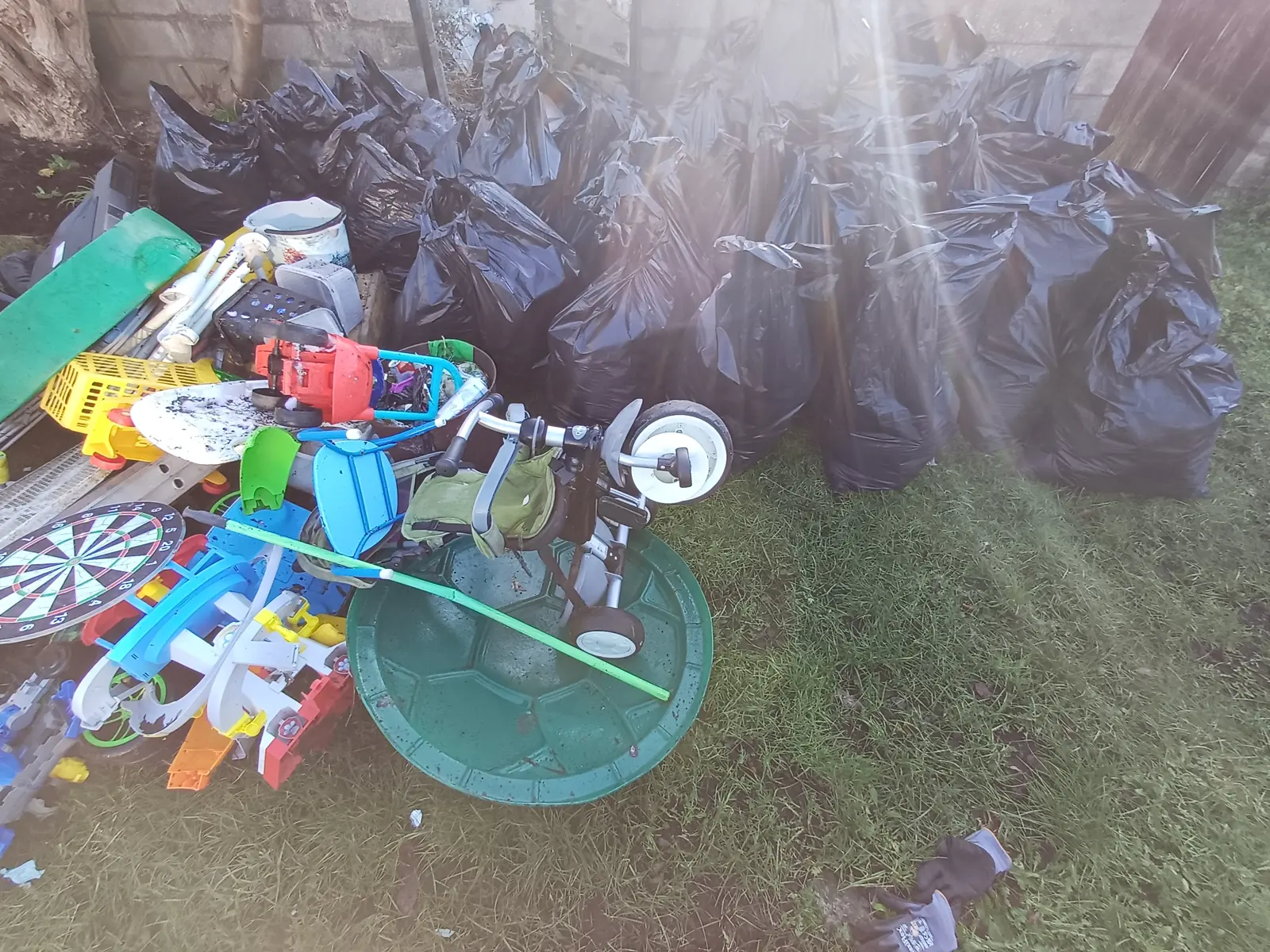
A trampoline, a timber playhouse, a plastic play set and garden storage boxes can be taken apart and loaded while the van is there. Old garden furniture, broken pots, a rusted barbecue and bags of leaves can go on the same load. A glass greenhouse is looked at case by case because of the glass.
For a large amount of green waste or soil, a skip or a garden waste service is the better choice, and we will say so.
What Junk Removal does on a job like this
- Shed clearance and removal: the contents cleared, and the shed dismantled and taken away.
- Garage clearance: usually in the same state as the shed, and cheaper on the same visit.
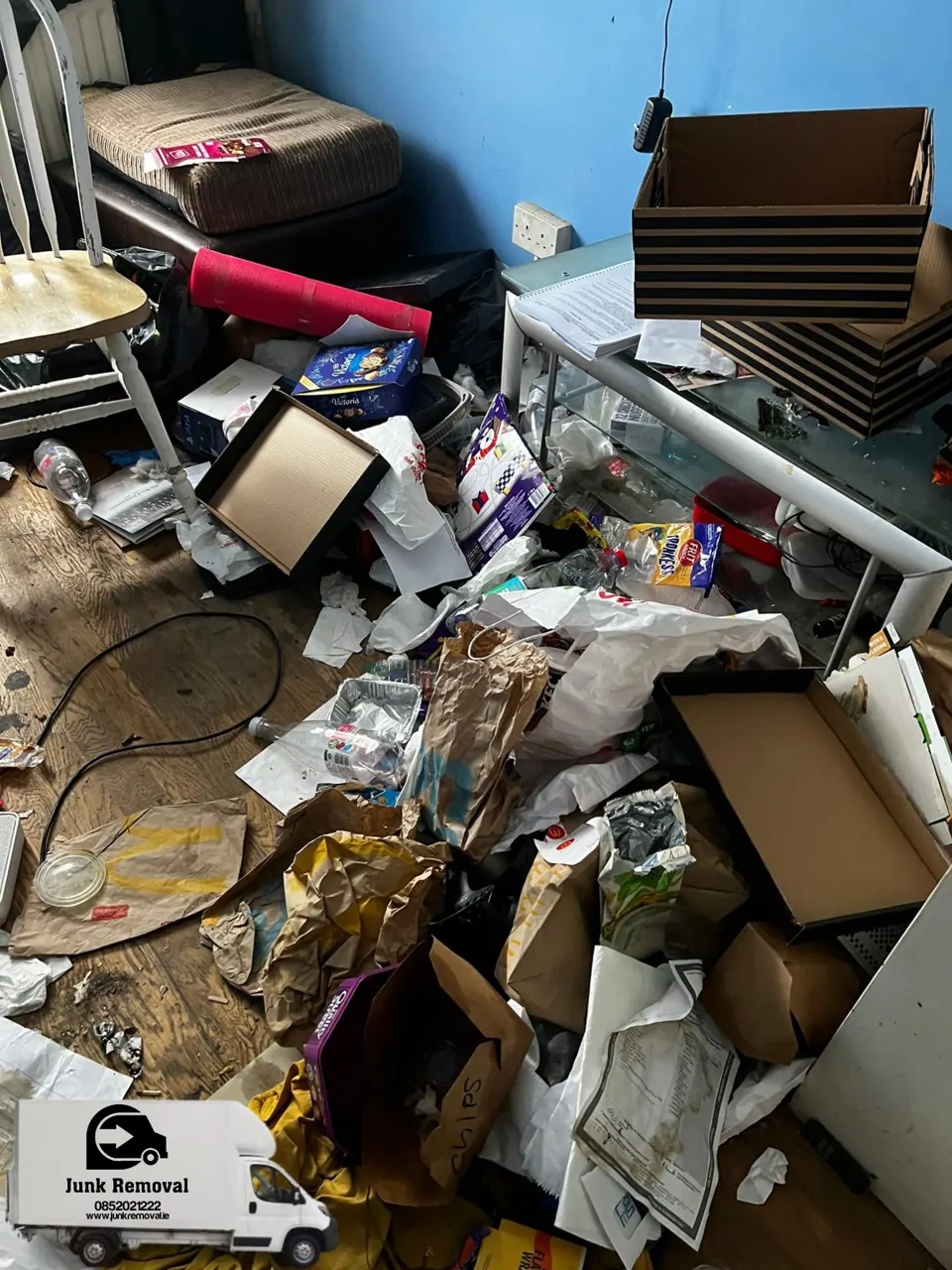
- Junk and rubbish removal: whatever else is waiting in the garden.
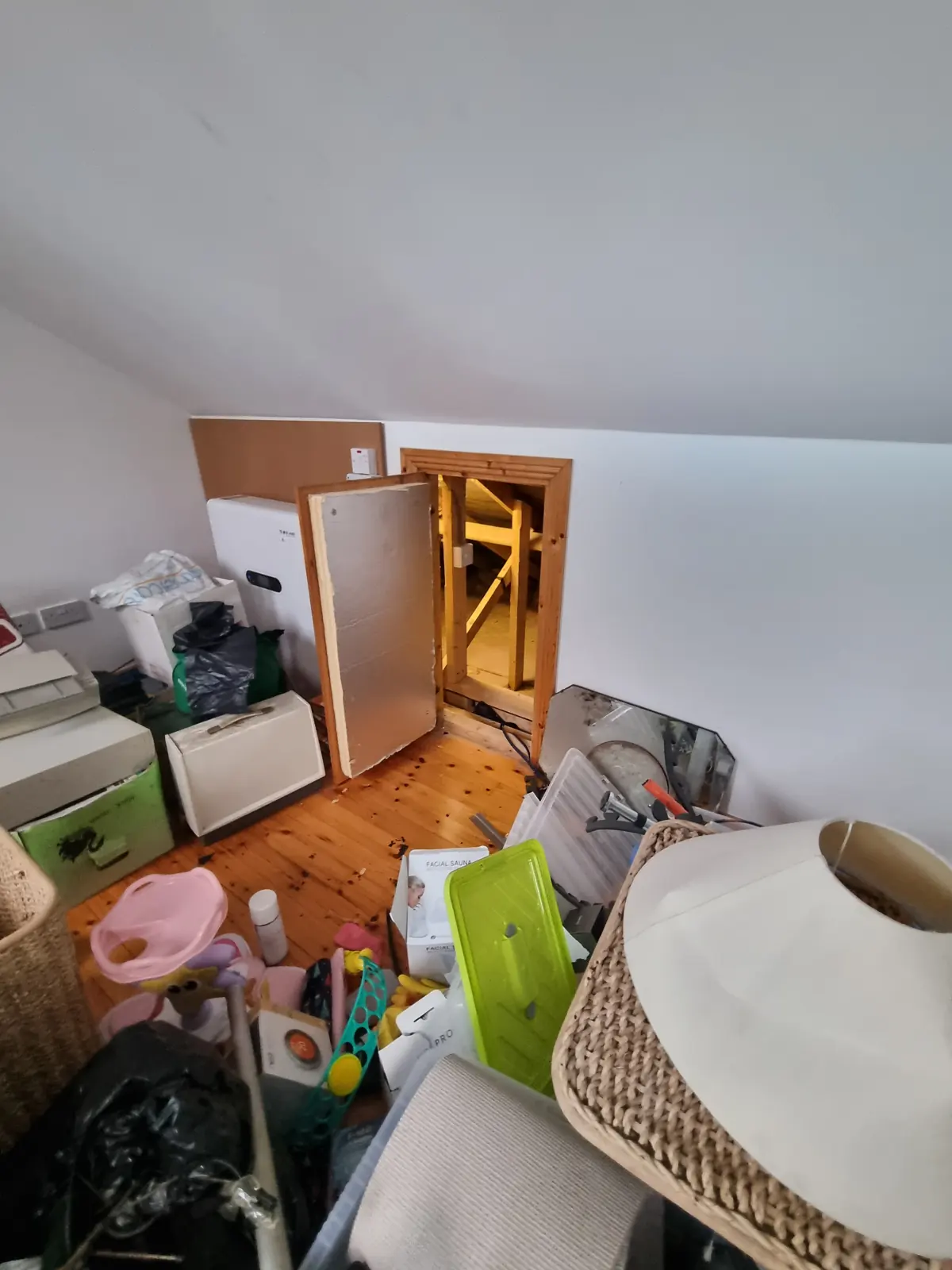
- Attic clearance: the other place everything ends up.
- House clearance: when the shed is one part of emptying the whole property.
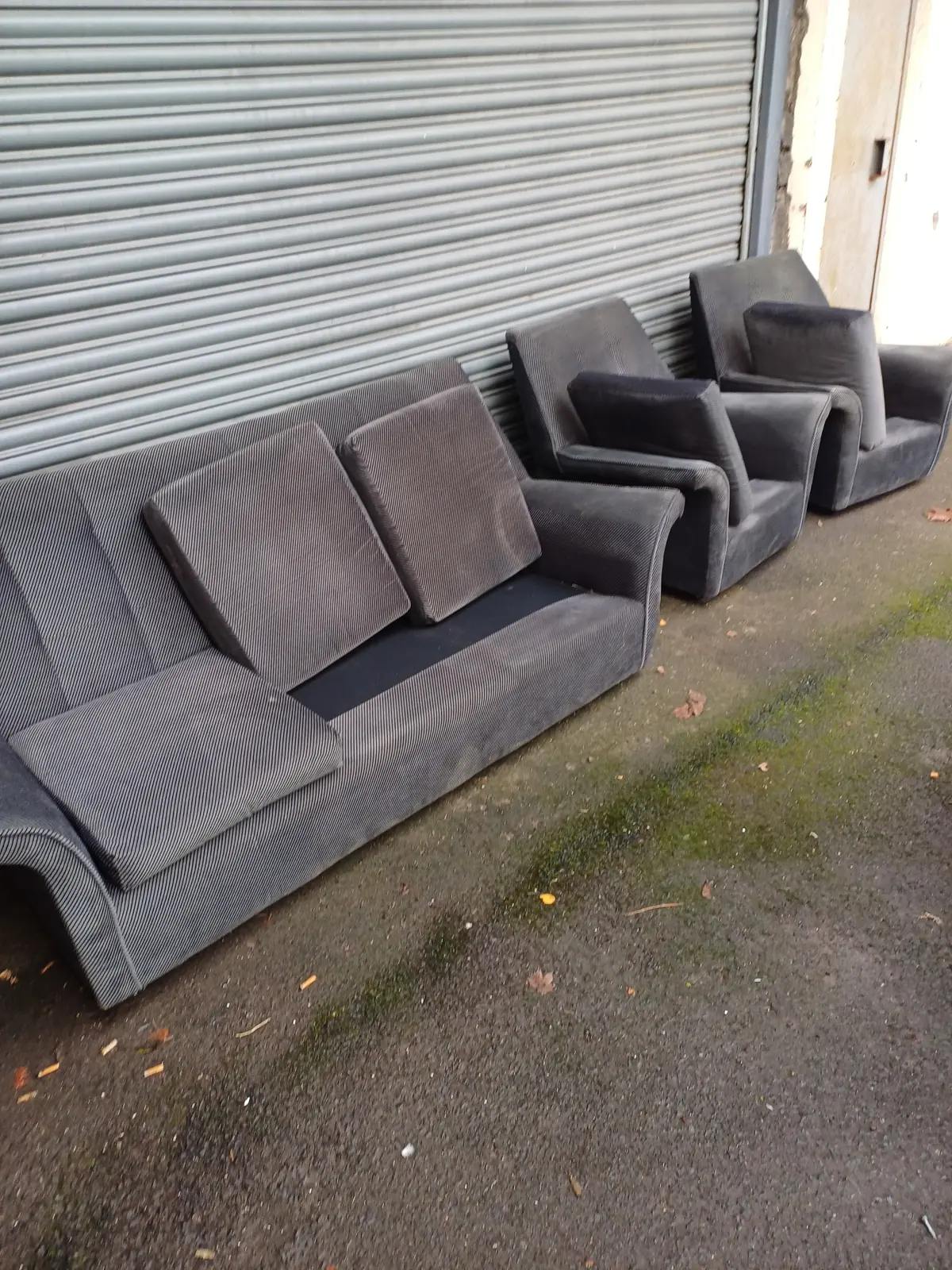
- Furniture removal: for the garden furniture or the one large piece.
We are fully insured, and we work Monday to Friday from 8am to 5pm and Saturday from 8am to 2pm.
If you are weighing a shed removal against a skip, the carry usually settles it: a skip sits on the drive and you fill it yourself, one trip down the garden at a time. We compare the two in house clearance vs skip hire.
What to send for a price
- A photo of the outside, with the roof in view.
- A photo of the inside, taken from the door.
- A photo of the way out: the side passage at its narrowest, or the hall.
- The size of the shed, roughly, and what it is made of.
- Whether there is a light or a socket, and what the roof is covered with.
Next step
Send the photos on WhatsApp to 085 202 1222, or use the quote form below. You will get a fixed price in writing for taking the shed down and away, with the contents and the way out already allowed for.