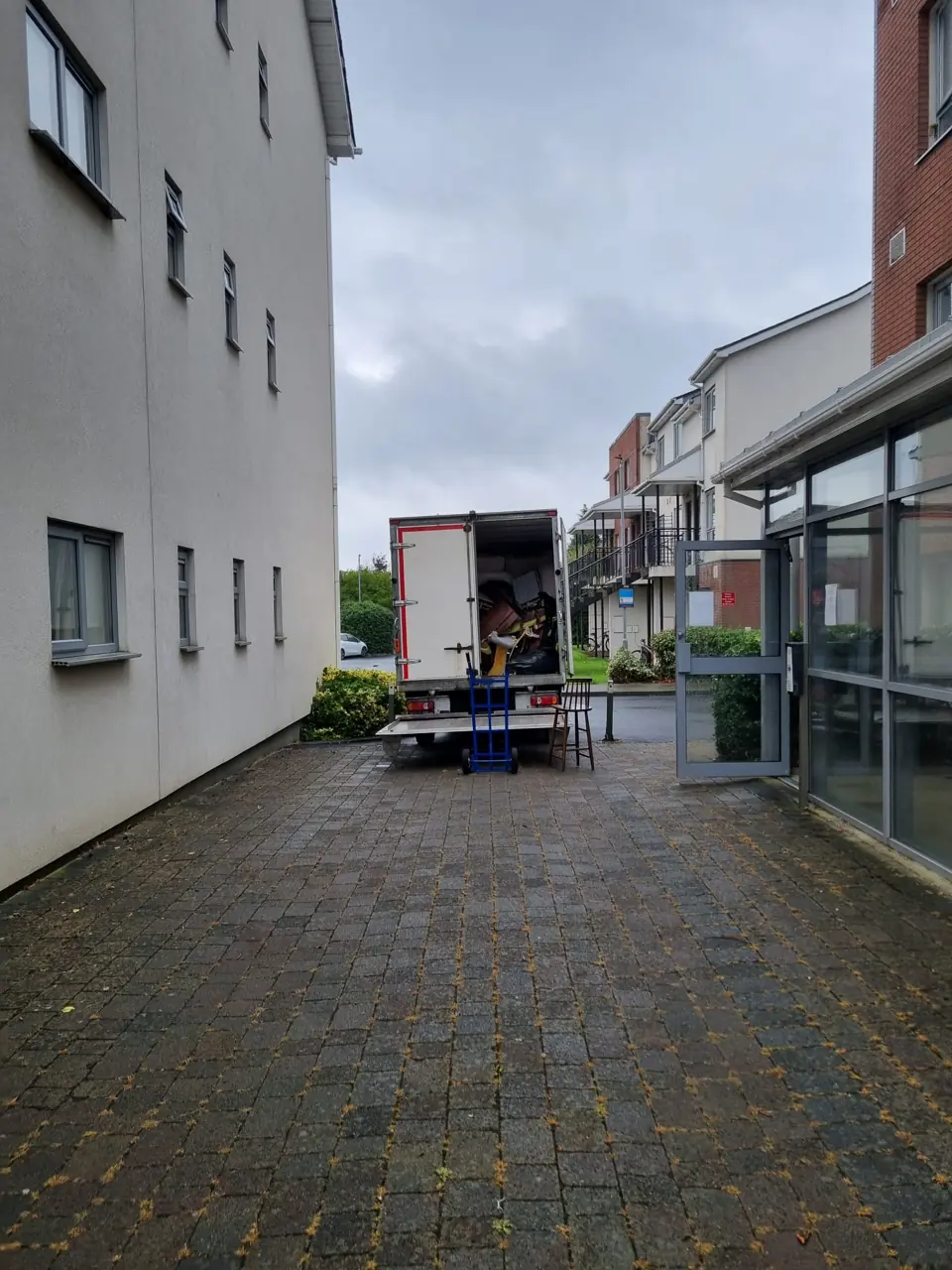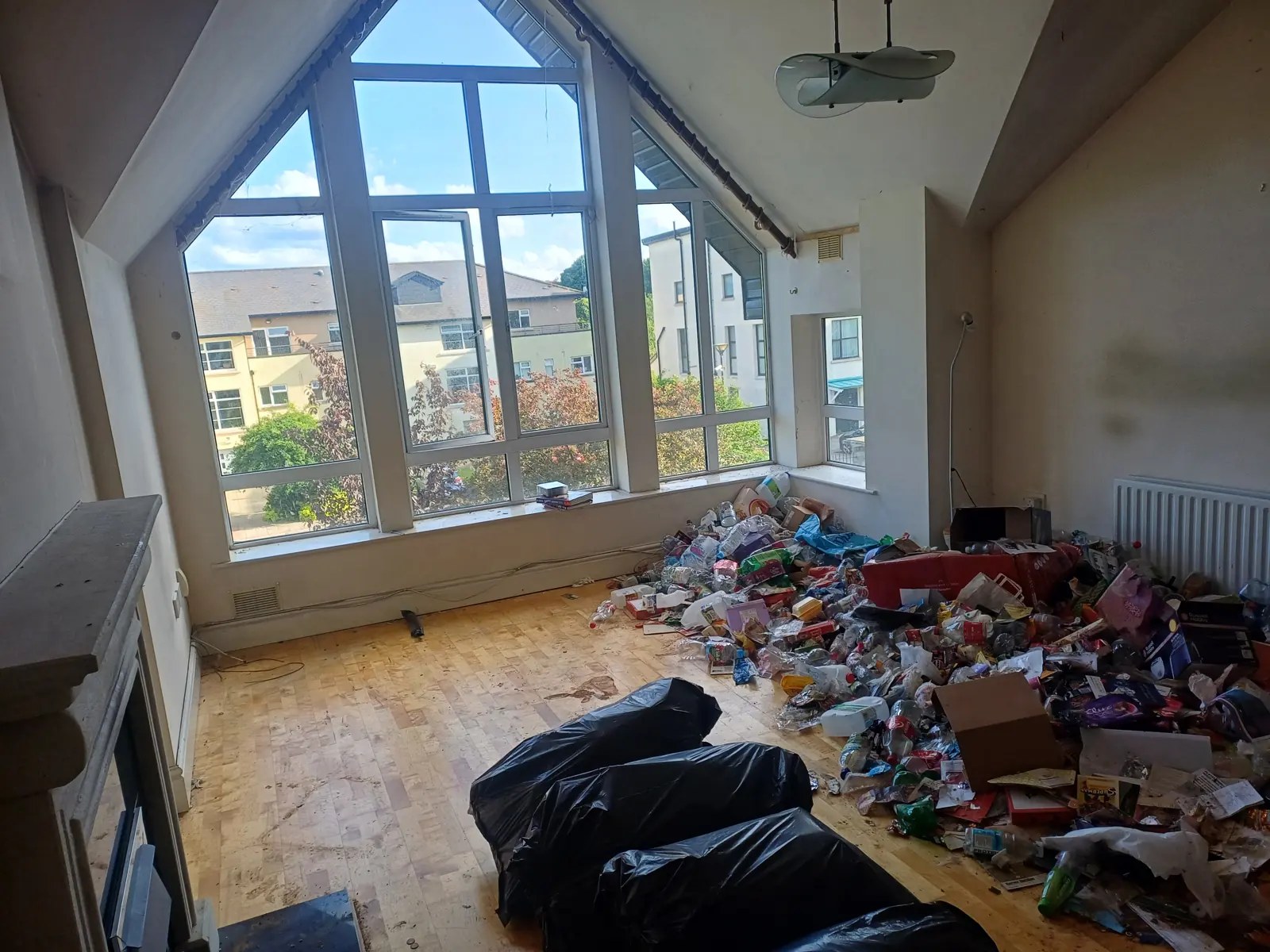
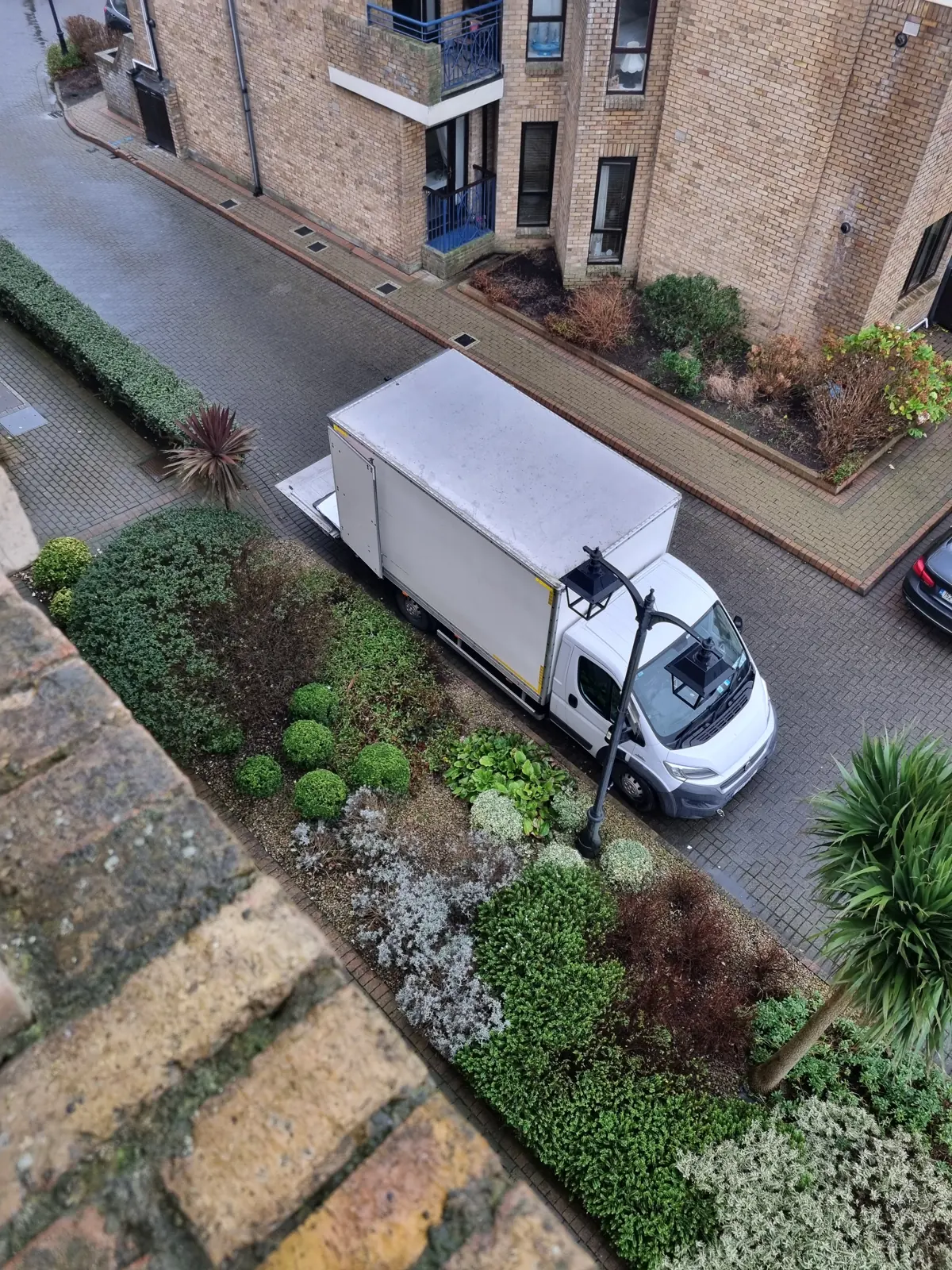




The newer parts of Lucan, out towards Adamstown, were built with a mix of houses, own-door duplexes and apartment blocks, and the older estates have their share of flats over shops and small blocks as well. Many of these have none of what people picture when they think of an apartment clearance: a concierge, a goods lift and a loading bay. What they have is a staircase.
That changes the job. Our guide to apartment clearance in Tallaght deals with the big managed complexes, with their gates, fobs and lift bookings, and the main apartment clearance page covers the service across Dublin. This page is about the other kind of apartment, where there is nobody to book anything with and every item goes down by hand.

Two kinds of apartment, neither with a lift
The own-door duplex. Your front door is at the top of an outside stair, above a ground-floor apartment. Inside there are two floors joined by a second, narrower stair, usually with a turn in it. Everything from the upper floor comes down two staircases, one inside and one outside.
The walk-up block. Two or three storeys around a shared stairwell, with a landing at each floor and fire doors between. The stairs are wider than in a duplex but they are shared, so the work has to leave room for neighbours going up and down.
Both are ordinary work for a two-person crew. What matters is knowing which one we are coming to, and that is what the photos are for.
Measure three things before you ask for a price
A price from photos is only fixed if the photos show the hard parts. For an apartment with stairs, three measurements do most of the work:
- The narrowest point of the stairs. In a duplex that is nearly always the turn on the inside stair. Measure the width between the wall and the bannister.
- The front door opening, with the door fully open.
- Your biggest item. The length of the sofa, the height of the fridge-freezer, the size of the mattress.
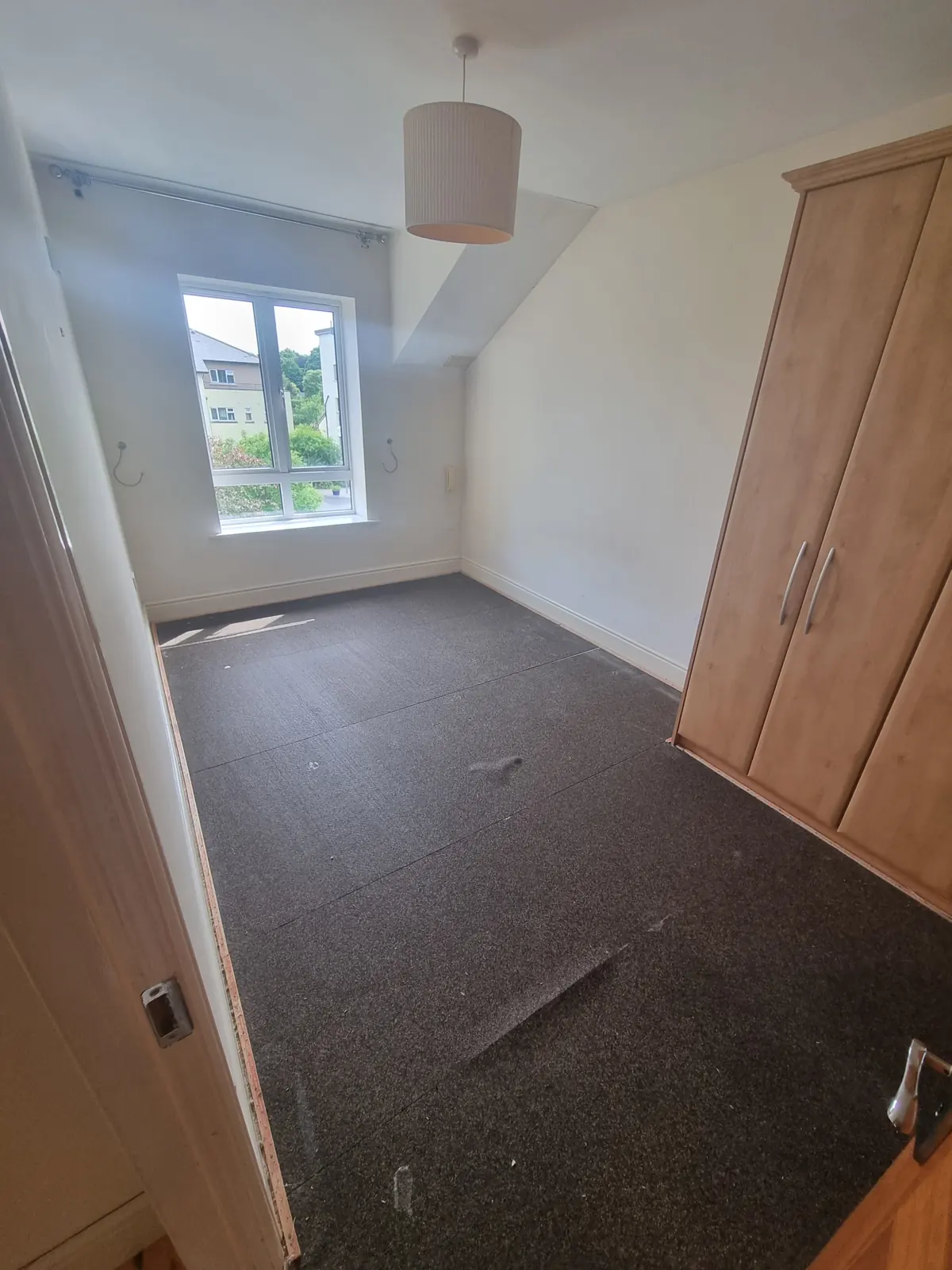
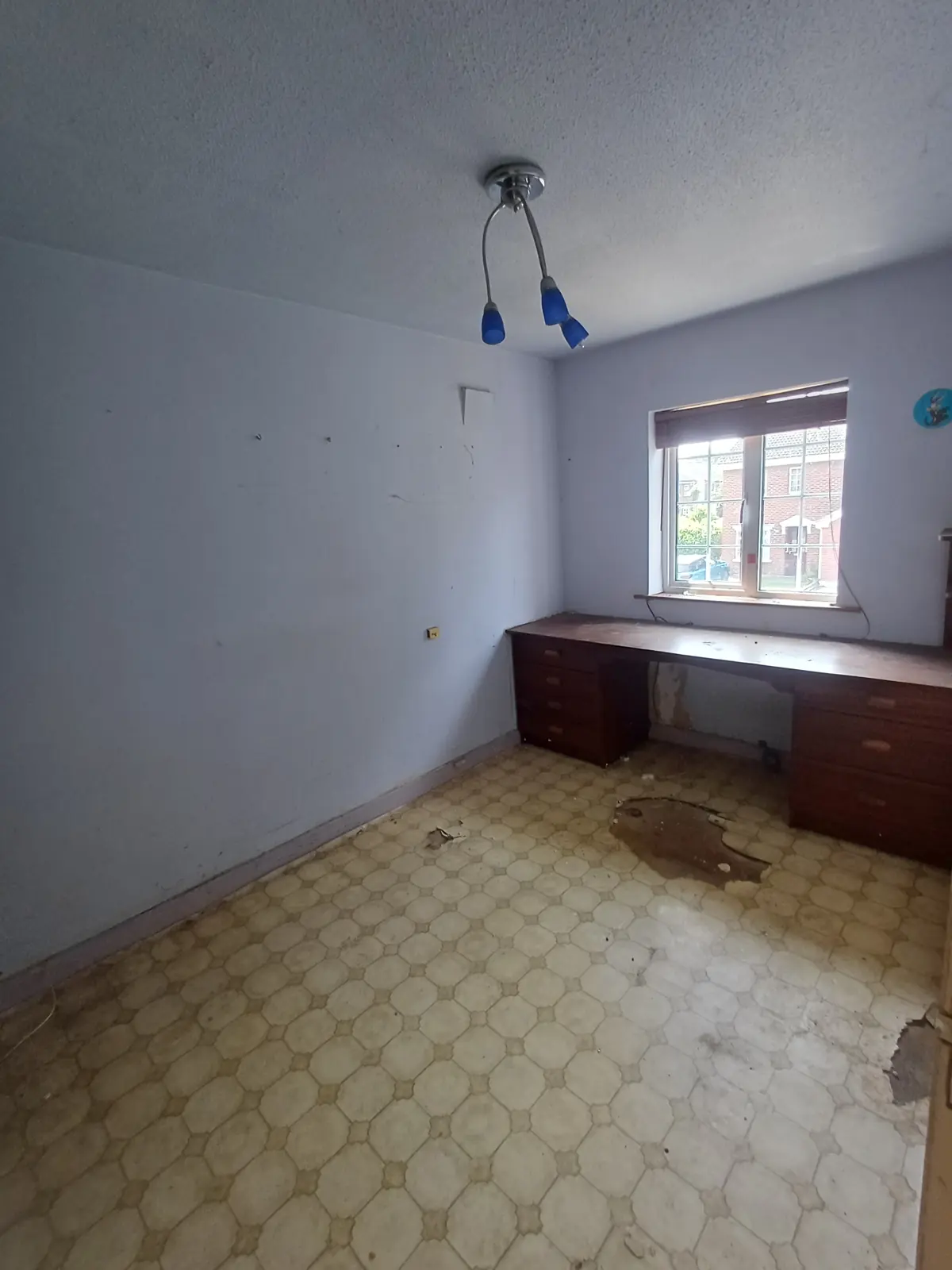
Then send a photo of each room from the doorway, one of each staircase, and one from the front door showing where a van could stop. Tell us the floor. With that, the price we give you in writing is the price you pay, and nothing is added on the day.
Getting big furniture down the stairs
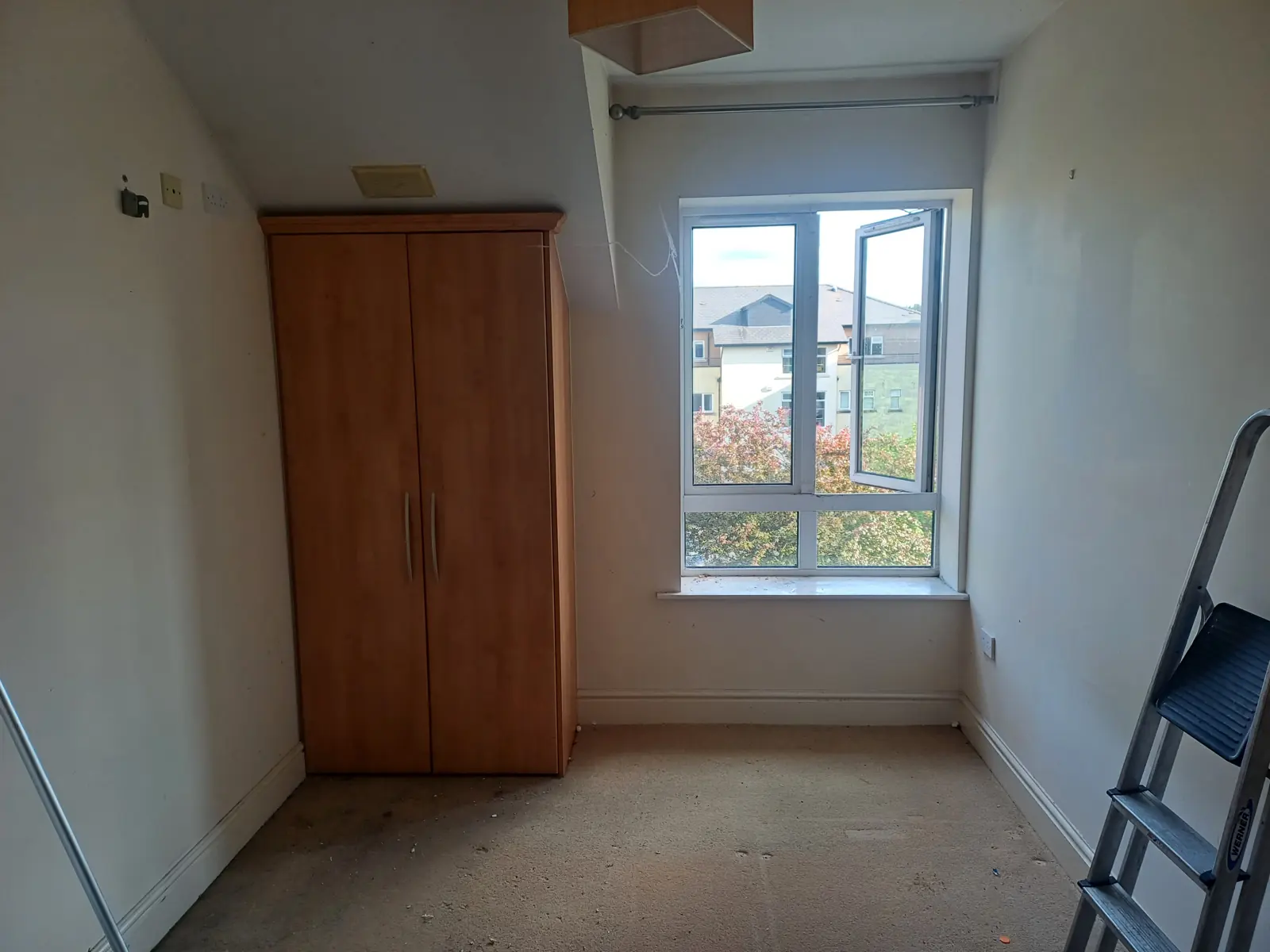
Most furniture went up those stairs once, so most of it comes down, but not always in one piece.
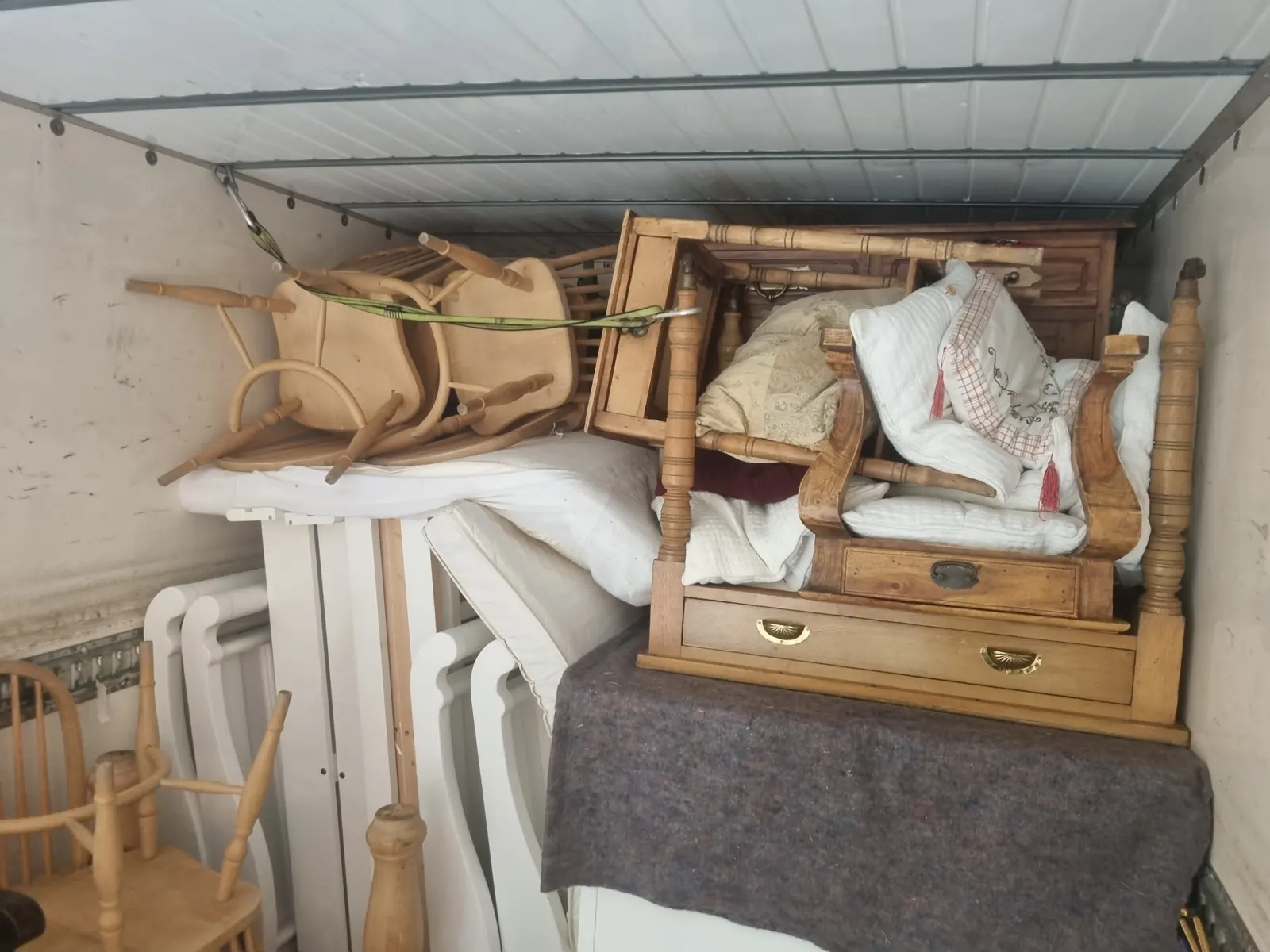
- Beds come apart: headboard, side rails, slats and base. Divan bases usually split in two.
- Flat-pack wardrobes and desks are unscrewed and carried as panels.
- Corner sofas separate into sections, and many sofas have feet or arms that unbolt.
- Mattresses bend enough to take a turn and are carried by two people.
- Fridge-freezers, washing machines and cookers go down on a sack truck, one step at a time.
The awkward pieces are the ones that were delivered before the bannister or a door was fitted, and solid one-piece wardrobes. If you have one, photograph it beside the stairs. We would rather plan for it than find out on the landing.
Stairs, walls and bannisters are protected where they need it, and the same goes for the landings of a shared stairwell. Items are carried rather than slid, including on outside steps in wet weather.
Shared areas, neighbours and the managing agent
Even without a concierge, most developments have an owners’ management company and a managing agent who looks after the common areas. A short email a week or so ahead does no harm: the apartment number, the date, roughly how long we will be there and that Junk Removal is doing the work. Two questions are worth asking in the same email, because the answers differ from one development to the next and we will not guess them:
- Where may a van stop while it is being loaded?
- Is visitor parking controlled or clamped?
In a duplex, the ground-floor neighbour’s door and path are usually under or beside your stair. A knock on their door the evening before is the simplest courtesy there is, and we keep their entrance clear while we work.
One rule is the same everywhere: the bin store is for bagged household waste and recycling, not for mattresses, chairs or a broken wardrobe. Bulky items go in our van.
The balcony, the storage press and the attic hatch
Small apartments hide a surprising amount outside the rooms. Before you take photos, open:
- the storage press on the landing or under the inside stair
- the balcony, including anything behind the door you cannot see from the sitting room
- the attic hatch, if your duplex has one on the top landing
- any outside store or bike space that belongs to your unit
A gas cylinder from a balcony barbecue or heater stays with you and goes back to a supplier. Paint, solvents, oils, chemicals and batteries stay too, and go to a civic amenity site.
What Junk Removal does, and for whom
We are a clearance company with a two-person crew and a box van, fully insured, and we hold waste collection permit NWCPO-25-13287-01. In apartments we work for four kinds of customer, and the service is slightly different for each:
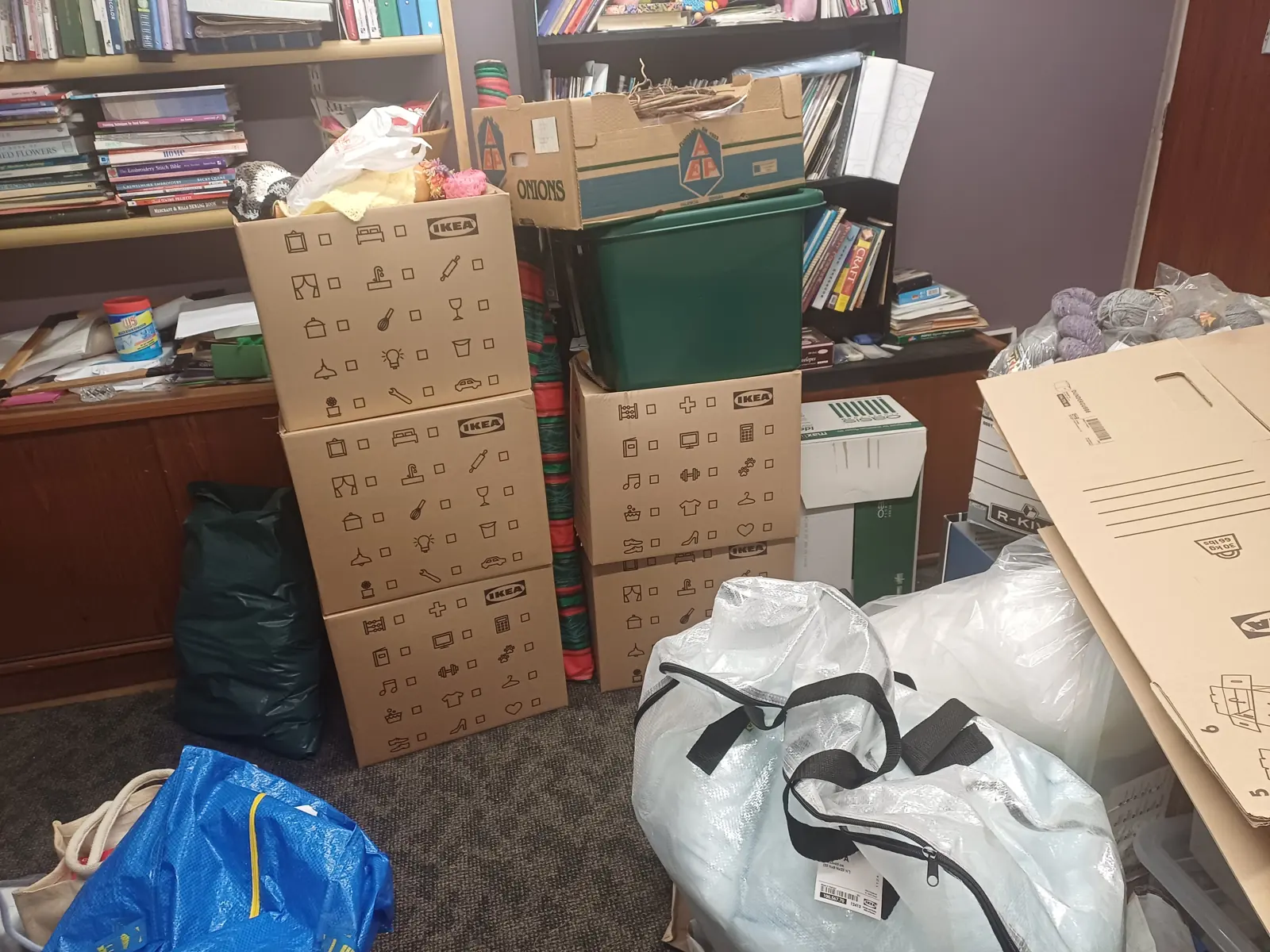
- Tenants moving out who own some of the furniture and need it gone before the inspection. This is usually furniture removal plus a few bags, priced as a part load.
- Landlords and letting agents between tenancies, where a previous tenant has left belongings behind. That is a full apartment clearance, with photos sent to the agent afterwards.
- Families after a death, where the pace is slower and personal papers and photographs are set aside for you. See bereavement clearance.
- Owners who are selling or moving, who want the apartment empty for photographs or for the buyer. If some of the contents went into storage years ago, we clear the storage unit on the same booking.
For bags, boxes and broken items without much furniture, junk and rubbish removal is the service to ask for. Good furniture and working appliances are set aside for reuse where we can arrange it, electrical items go for recycling, and the rest goes to an authorised facility under our permit.
On the day
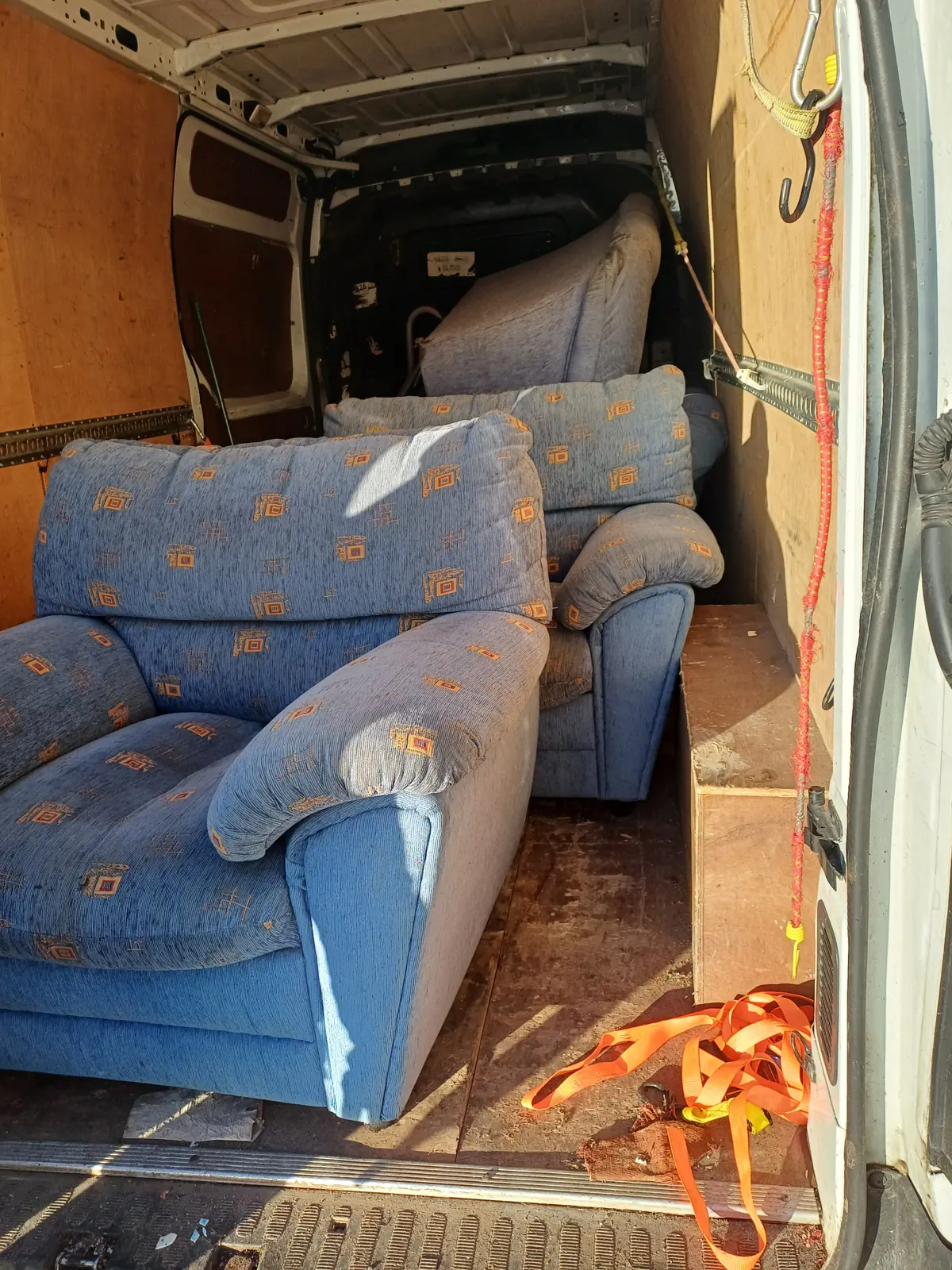
We arrive at the time agreed, walk through with you or with your list, and start with the largest pieces while the stairs are clear. The rooms are emptied one at a time and swept as we go. If you cannot be there, we collect keys from you, a neighbour or the agent, and send photos of every room when it is finished. We work Monday to Friday from 8am to 5pm and Saturday from 8am to 2pm.
If the apartment is going back to a landlord or on to the market, tell us who else should get the photos. A letting agent or a solicitor often wants to see the rooms empty before the keys change hands, and it saves you a trip. Anything that belongs to the building, such as fitted wardrobes, blinds, the cooker or a landlord’s own furniture, stays where it is unless you tell us otherwise.
Next step
Send photos of each room and the stairs on WhatsApp to 085 202 1222, with the three measurements and the floor you are on, or use the quote form below. For a rough idea of the load before you ask, try the van-load planner.