



Ask for an attic clearance in most of Dublin and the job is a hatch on the landing and a ladder. In the tall houses of Monkstown it is often something else: a room, or two, at the top of the house, under the slates, at the end of a staircase that gets narrower with every flight.
Our main page on attic clearance explains the service, and our page on house clearance in Monkstown covers the area. If your attic is a roof space with a hatch, our page on attic clearance in Blackrock goes through that method step by step. This page is about the other kind: the attic you walk into, and the stairs everything has to come down.

Two kinds of attic in Monkstown
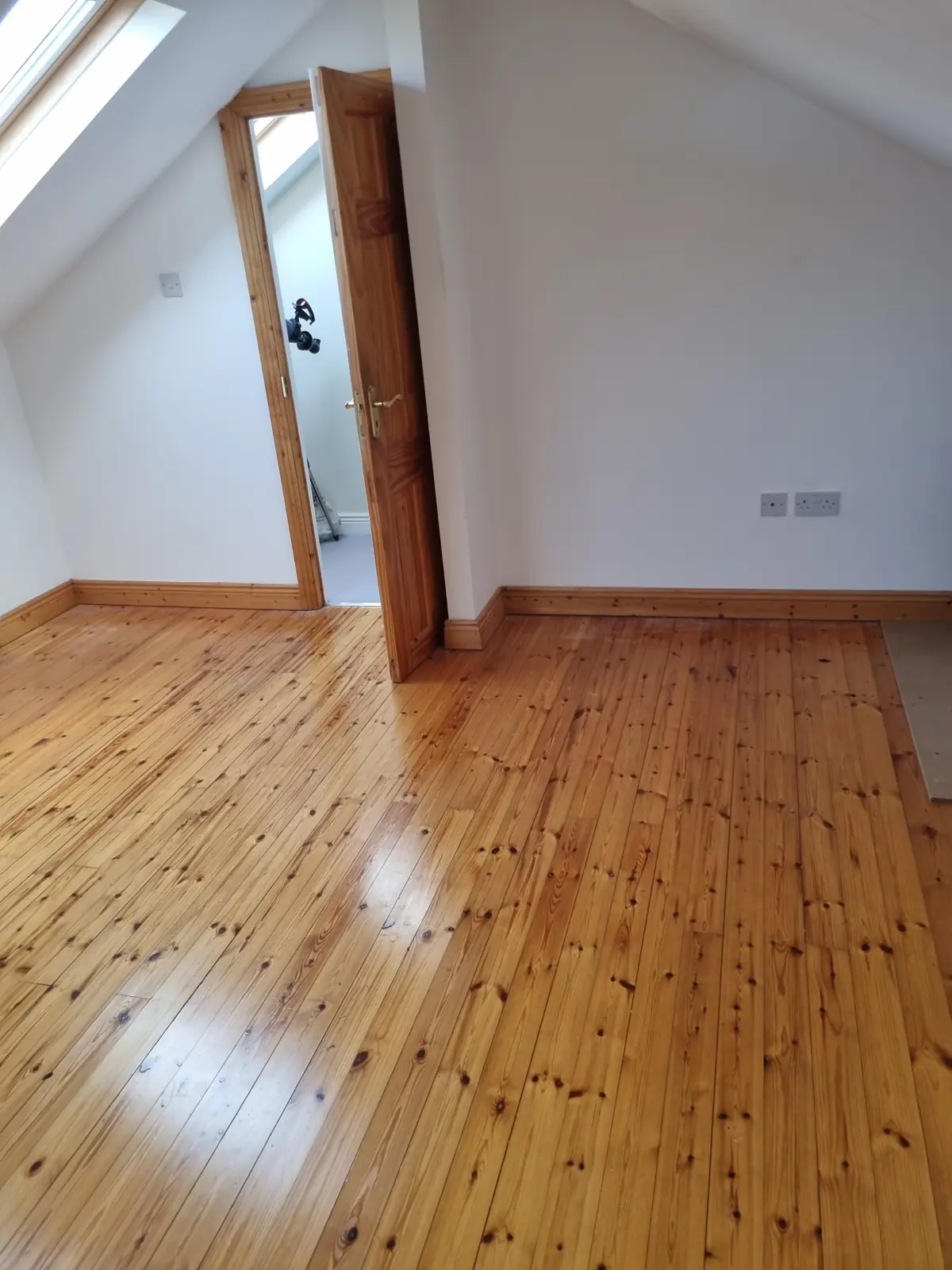
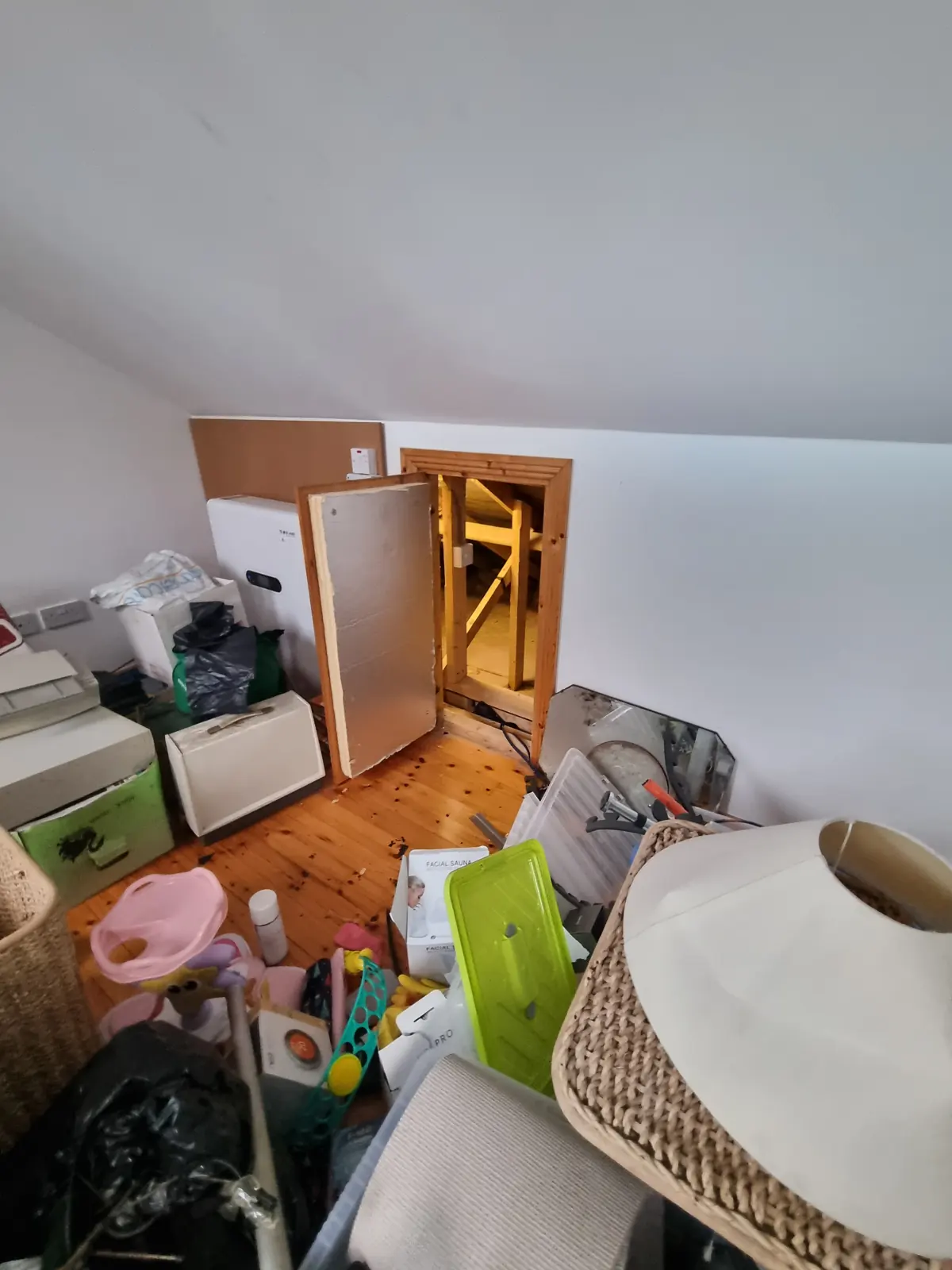
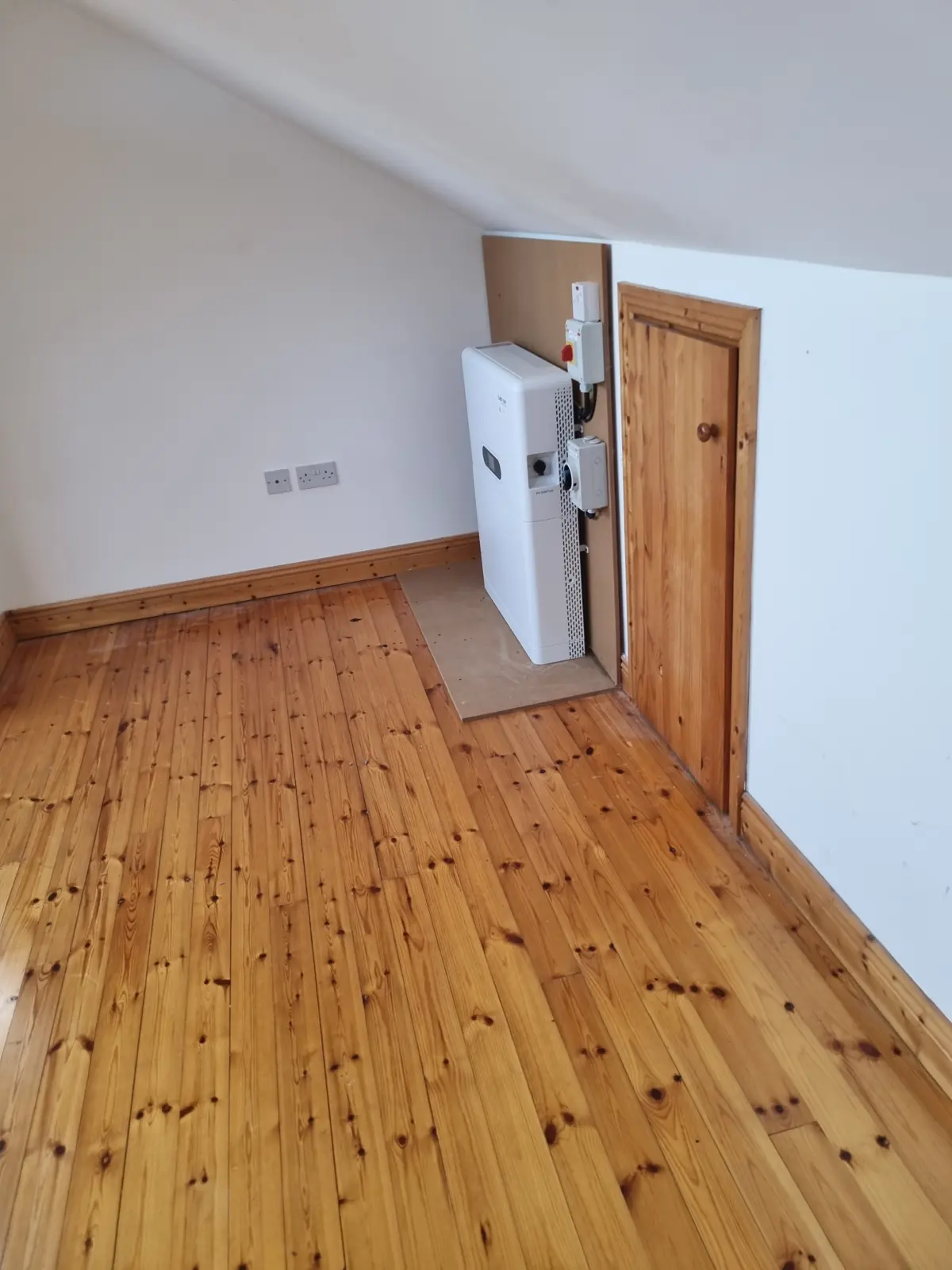
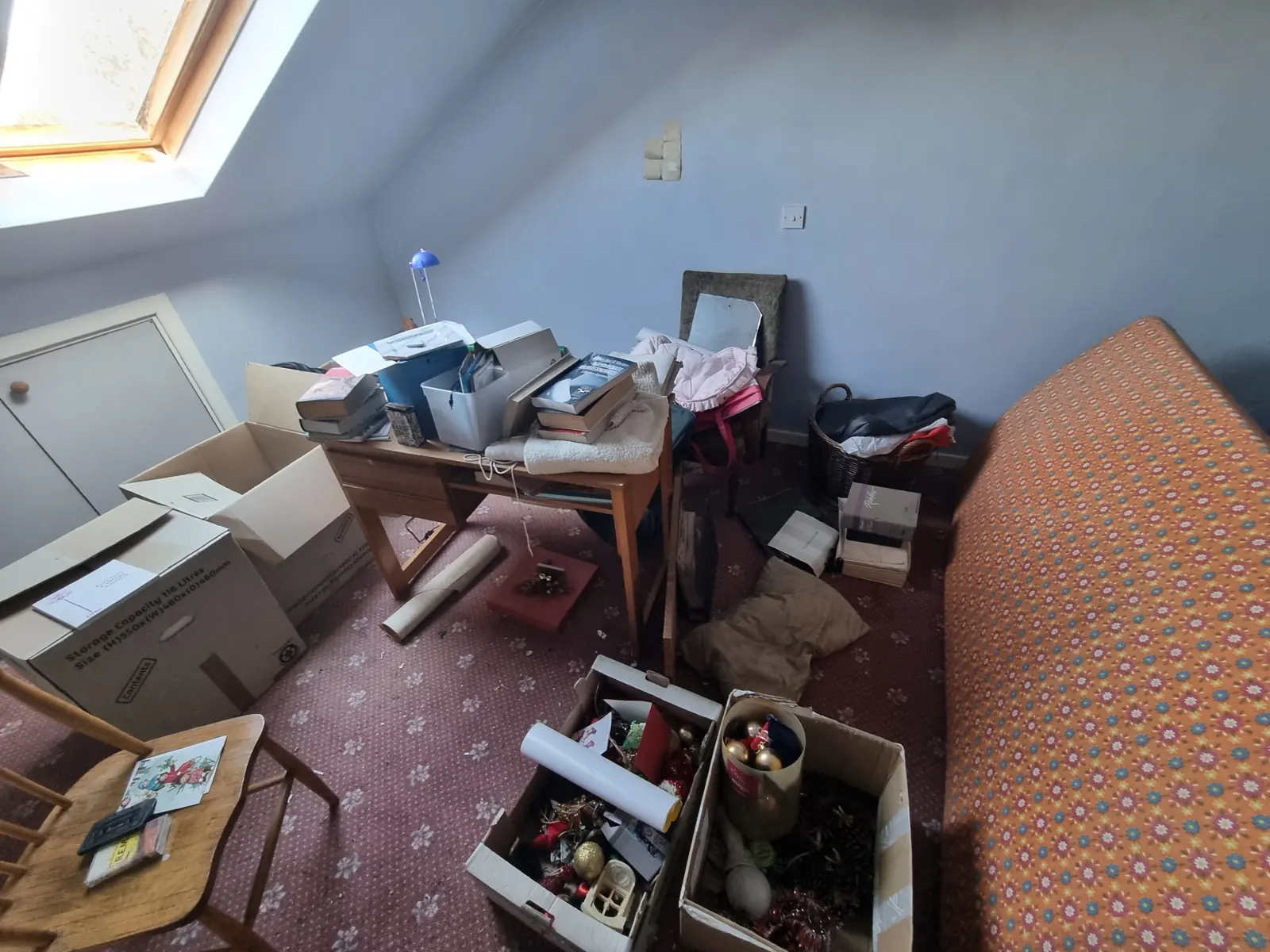
- A top-floor room. In the terraces and squares near the sea, such as Longford Terrace, Belgrave Square and Montpelier Parade, the top of the house is often a room or two with sloping ceilings and a proper door. Many were bedrooms once and became the place where things were put.
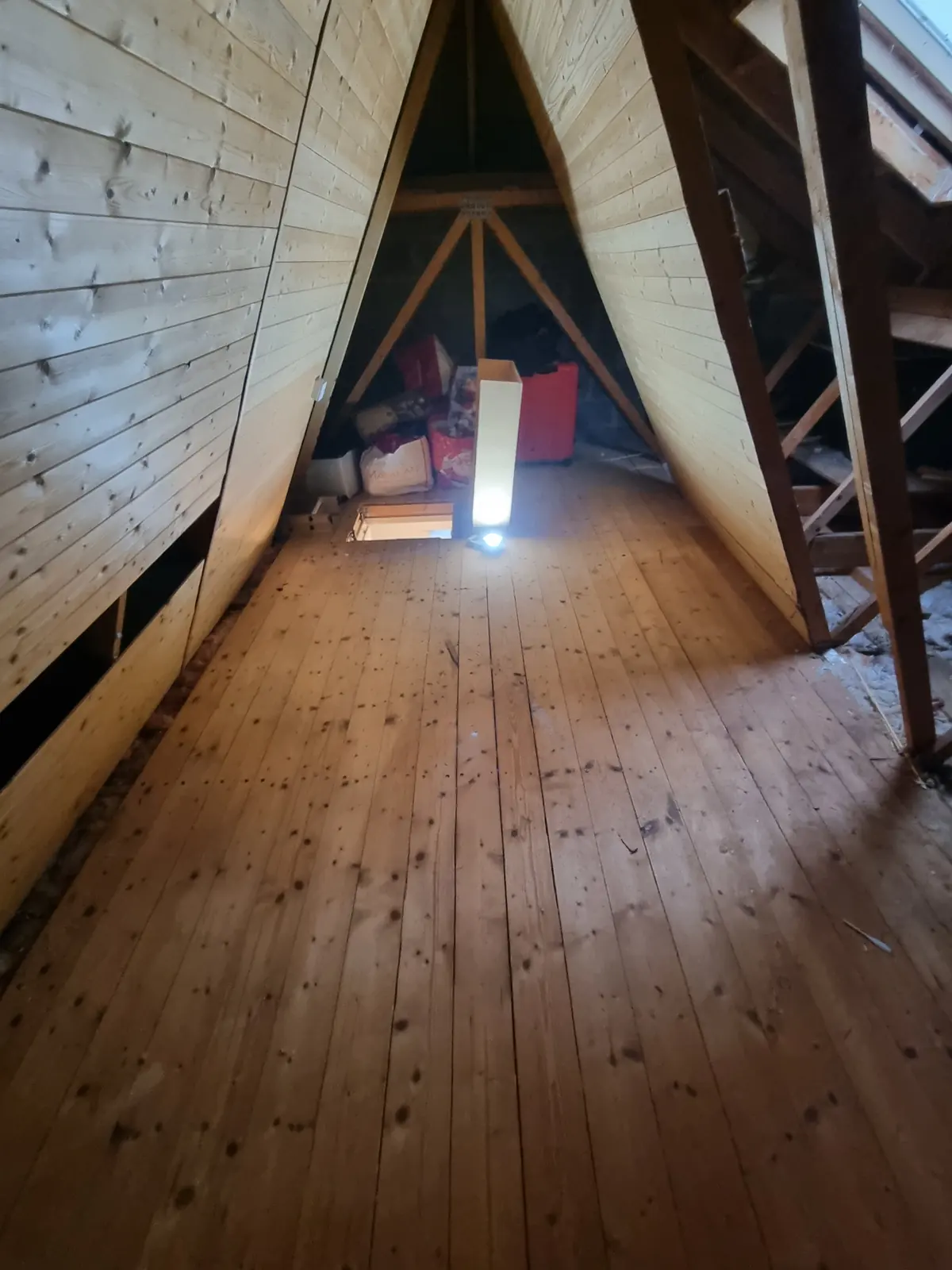
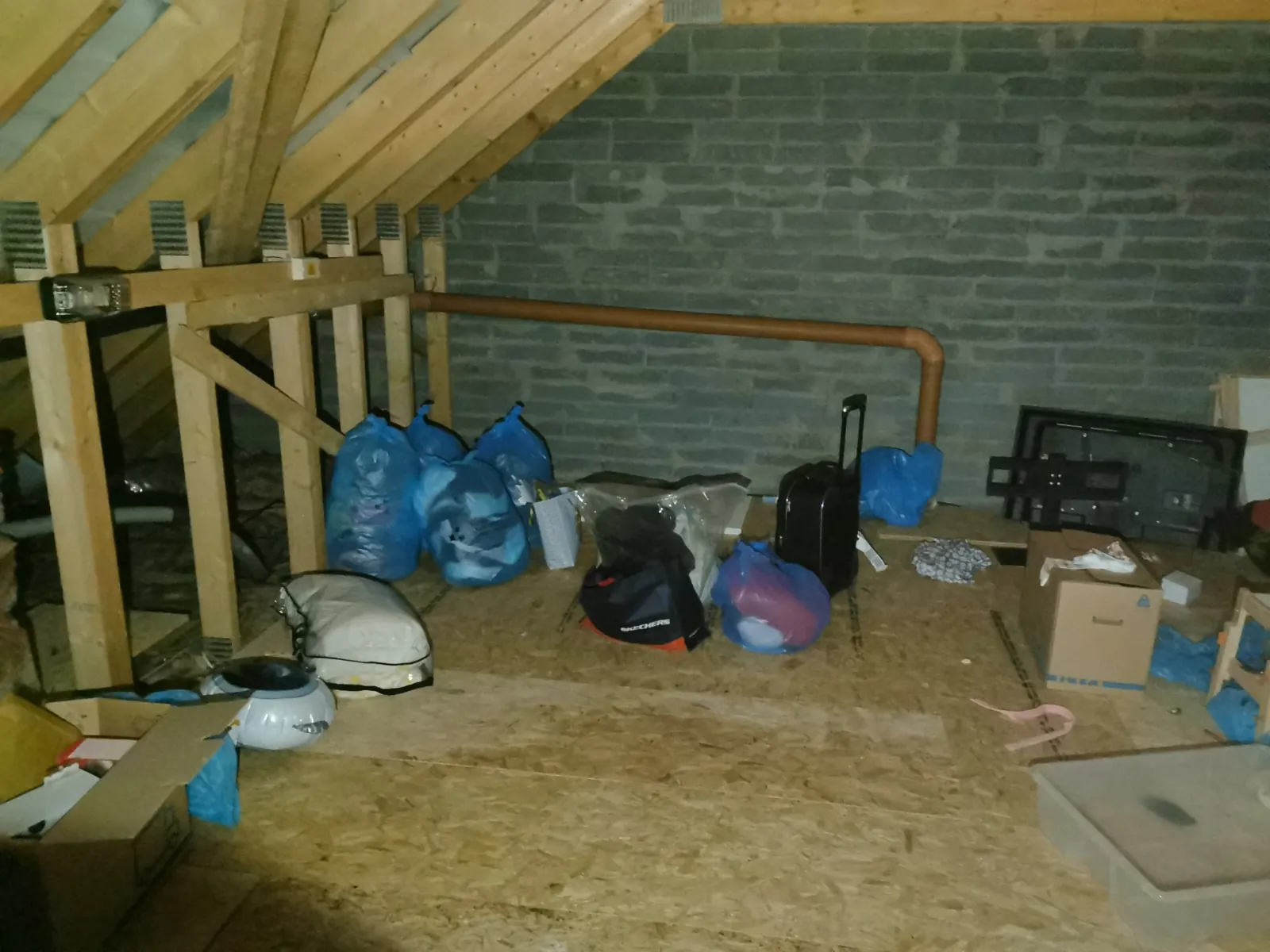
- A roof space. Above that top floor, and above the bedrooms of the later houses towards Monkstown Farm and Deansgrange, there is a roof space reached through a hatch.
Many of the older houses have both, and both are usually full. Tell us which you have, because they are different jobs. A roof space is cleared through the hatch, by passing things down hand to hand. A top-floor room is cleared like any other room, except that it is several flights from the front door.
Why the stairs are the job
In an attic room nothing is hard to reach. The work is the journey down, and in a tall house that journey has a few parts worth knowing about before the day.
- The top flight. Usually the narrowest and the steepest in the house, often with a turn in it.
- The landings. Where a long piece has to be stood up, turned and started down again.
- The banisters and the walls. Old handrails, spindles and plaster were not made to have a wardrobe leaned on them.
- The hall and the front steps. The last part of every carry, down to the footpath and along to the van.
None of that prevents the job. It sets the pace. Each piece is carried, not slid, by one of the crew or by both together, and anything too big to turn on a landing is taken apart upstairs first.
What is taken apart before it moves
Furniture reached the top of the house in one of two ways. It was carried up in pieces, or it went up before a door, a wall or a banister was changed. Either way it comes down in pieces.
- Wardrobes. The doors come off, then the frame comes apart.
- Beds. Frames are unbolted, slats are bundled and the mattress is carried on its own.
- Desks and bookcases. Emptied first, because books are the heaviest thing in the room.
- Anything built in the room. Flat-pack furniture assembled up there will not go down in one piece.
We bring the tools. If you can see from the door that something large is up there, mention it with your photos, so the time is in the price.
Looking after the house on the way down
A period house is cleared with the building itself in mind.
- Dust sheets go down on the stairs and landings before anything is moved.
- Boxes that have gone soft are repacked upstairs, so nothing gives way on a flight.
- Loose things are bagged and carried, not balanced on top of something else.
- Nothing fixed is touched. Fireplaces, doors, shutters and built-in presses in the top rooms are part of the house and stay where they are. We take the contents, not the fabric.
If the house is a protected structure, that last point matters more. Clearing what is stored in a room does not affect the building, and we do not take out anything that is fixed to it.
The roof space above
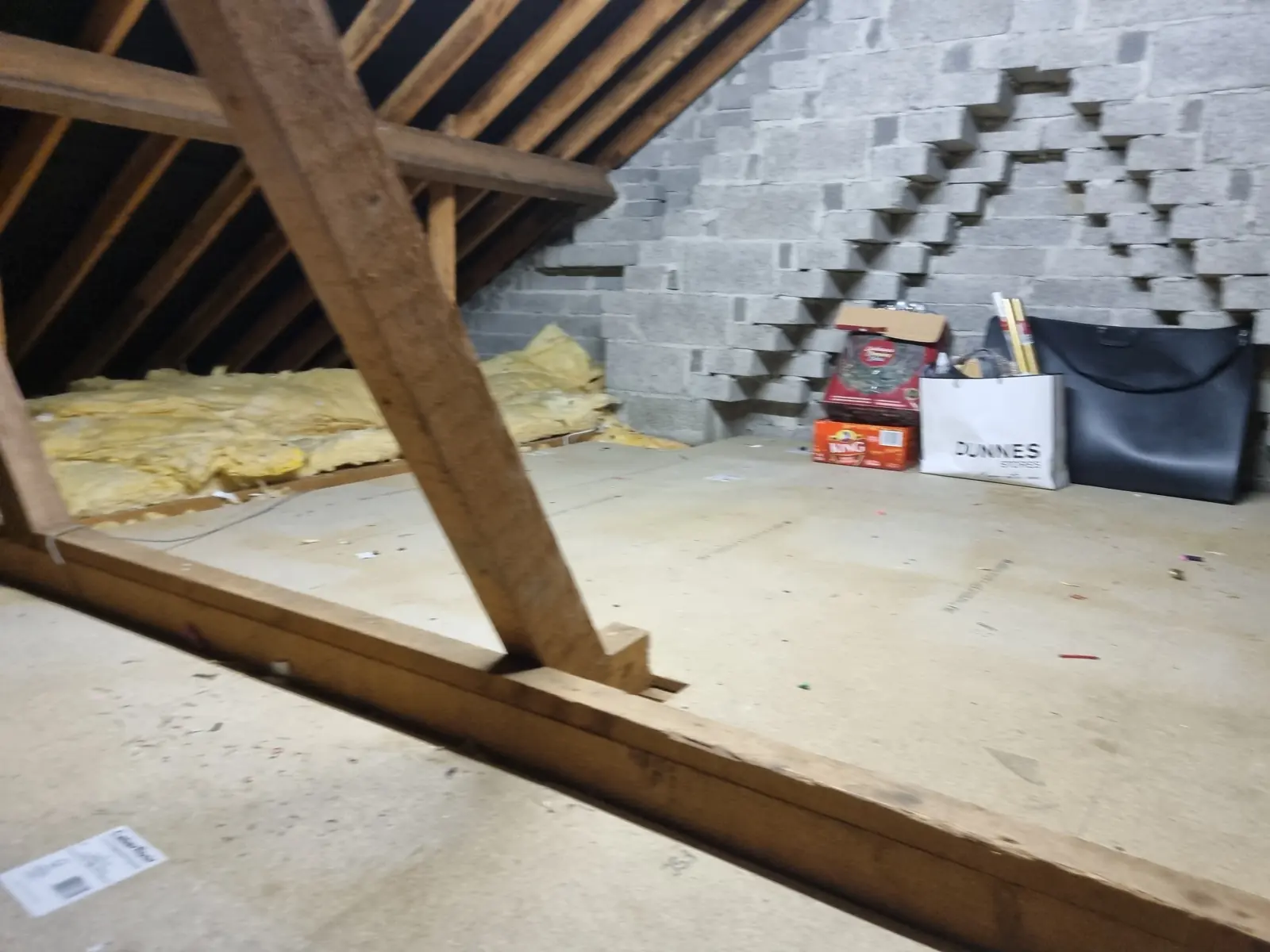
Above the top floor there is usually a roof space as well, reached by a hatch in the ceiling of the top landing or of one of the rooms.
It is cleared the way any attic is. One of the crew works in the roof space and the other stands below, and everything is passed down one piece at a time. Three things are worth telling us.
- Where the hatch is and how big. A hatch over the stairwell needs a plan before the day. Send a photo of it and of the floor beneath.
- Whether there is a floor. In an unboarded roof space the crew keeps its weight on the joists and off the ceiling between them, which in an old house is often the original plaster.
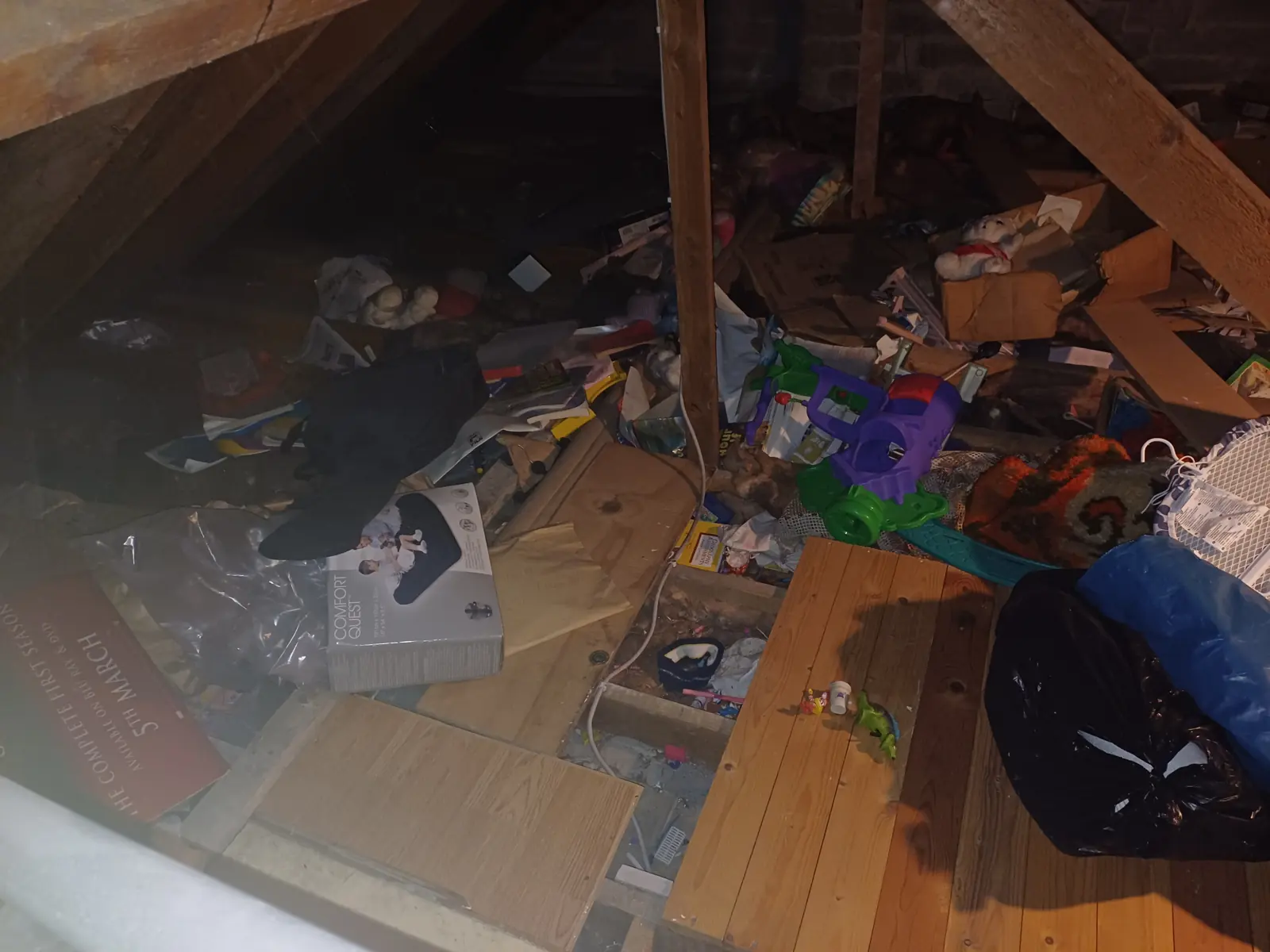
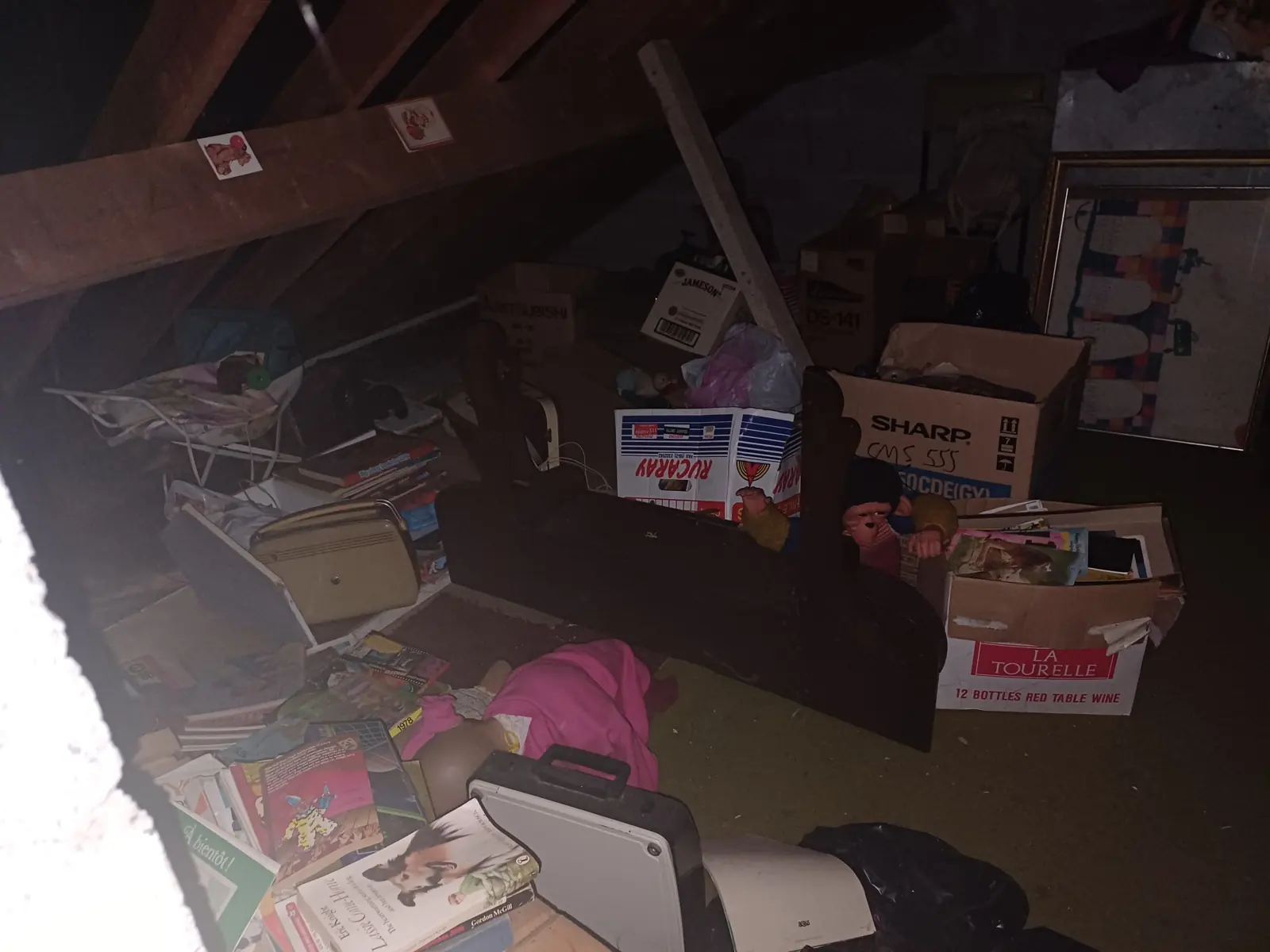
- What is up there besides boxes. An old water tank, rolls of carpet, lengths of timber.
Insulation stays where it is. An empty water tank that has already been disconnected can usually be taken. One that is still plumbed in is a job for a plumber first.
What usually comes out
From the rooms:
- Beds, mattresses and wardrobes from when the room was last slept in.
- Trunks, suitcases and tea chests.
- Books, papers and files.
- Children’s furniture, toys and school things.
- Carpets, rugs and curtains taken down from the rooms below.
From the roof space:
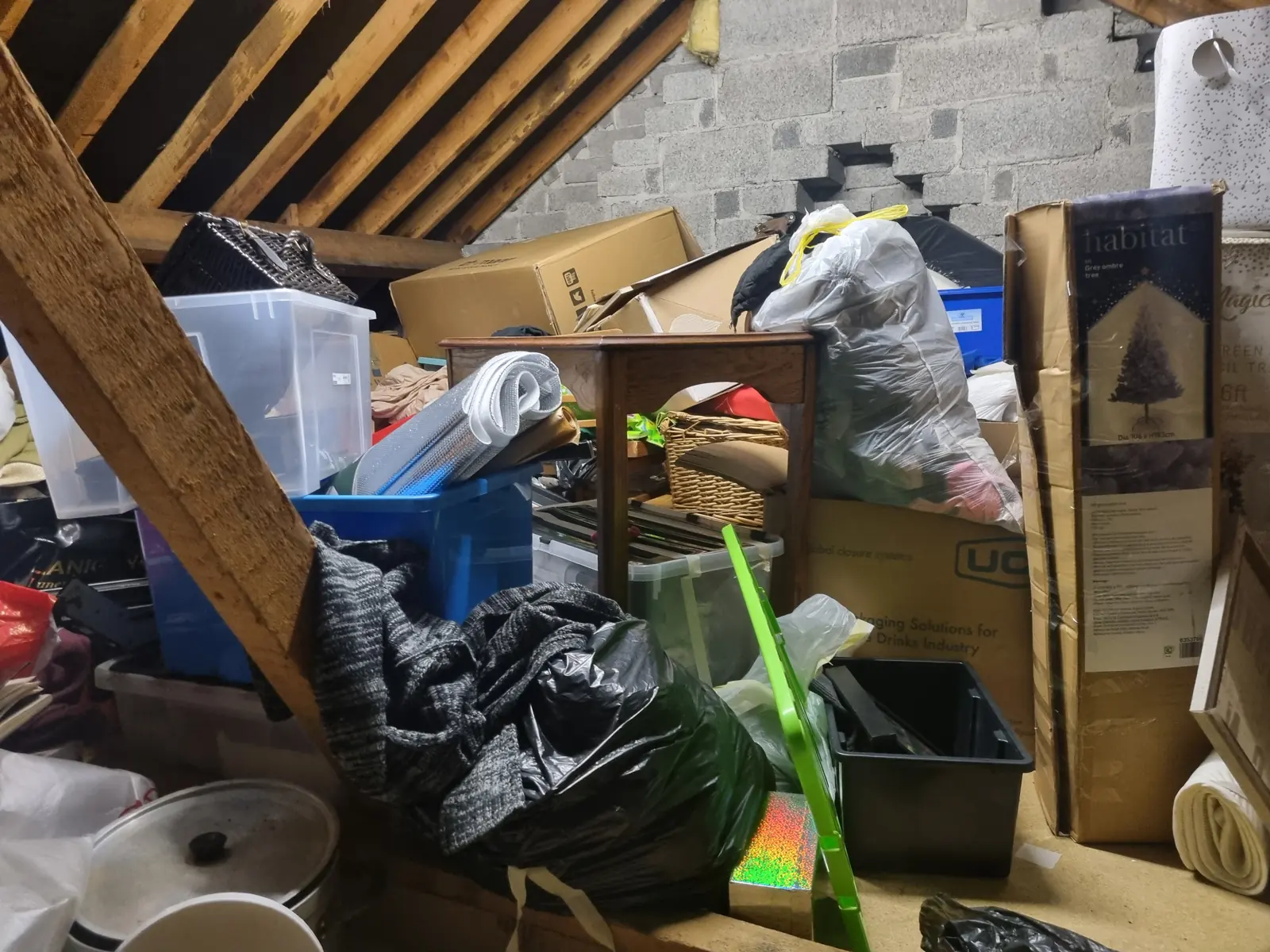
- Boxes and bags of household items.
- Christmas decorations and picture frames.
- Rolls of carpet and underlay, lengths of timber and an old water tank.
What is set aside before anything leaves
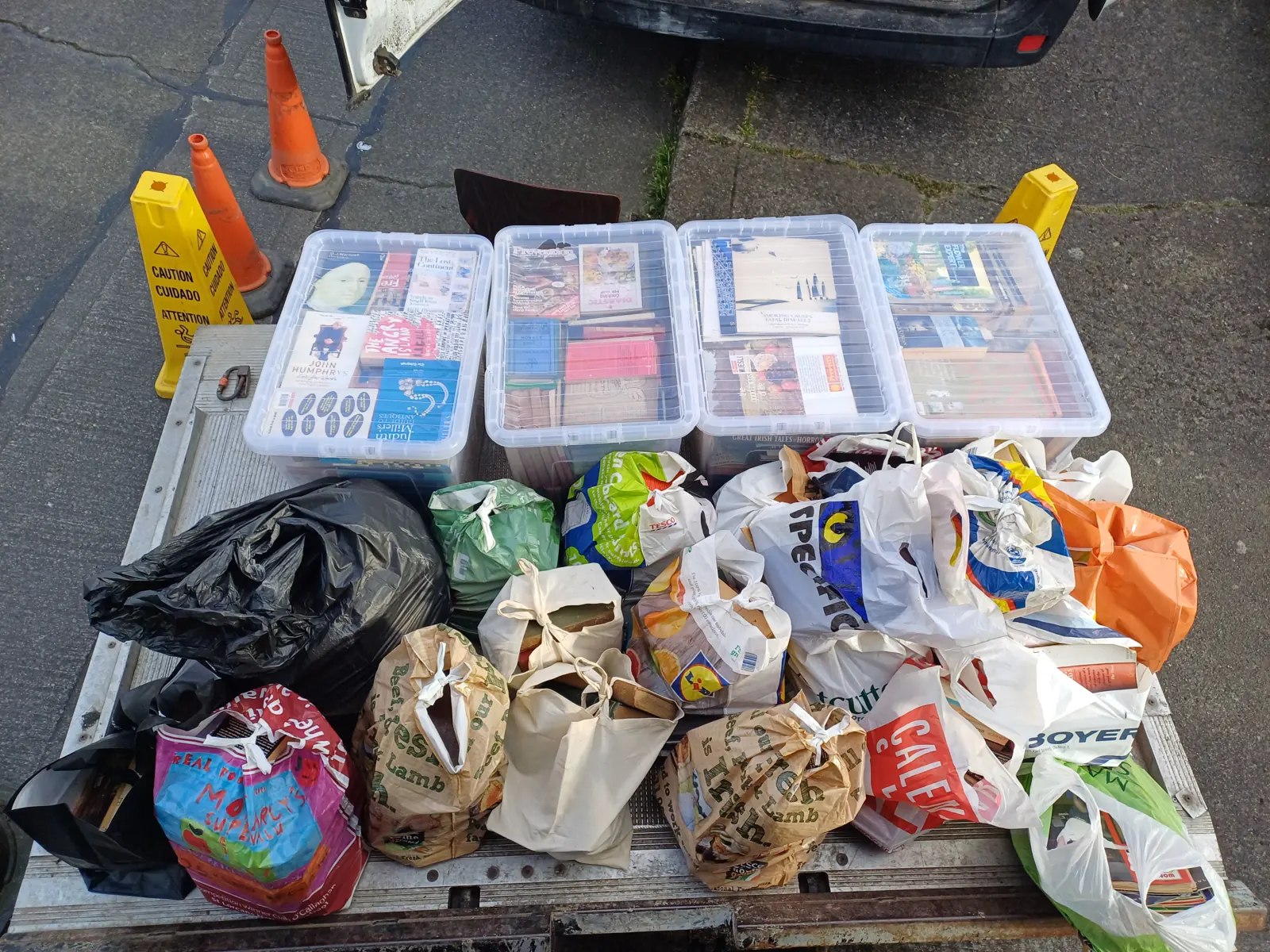
The top of a house holds what a family could not throw away, which is why it gets a second look. As the rooms are emptied, the crew opens trunks, suitcases and boxes, and puts these to one side:
- Photographs, albums, slides and home films.
- Letters, cards, certificates and anything with a name on it.
- School reports, drawings and the box each child was meant to collect.
- Anything you told us to look out for.
They are left in a room you choose and shown to you. If nobody from the family can be there, they are kept together in that room, and a photo of them is sent with the photos of the empty rooms.
What we cannot take
We do not handle asbestos. If there is old pipe lagging or board in the roof space that looks suspect, we leave it alone and tell you, because it needs a specialist contractor. We also do not take clinical waste, paint, solvents, oils, fuel, chemicals, batteries or gas cylinders.
A live wasps’ nest has to be dealt with by a pest controller before we come. Old, empty nests are common and are not a problem.
Parking and the front door
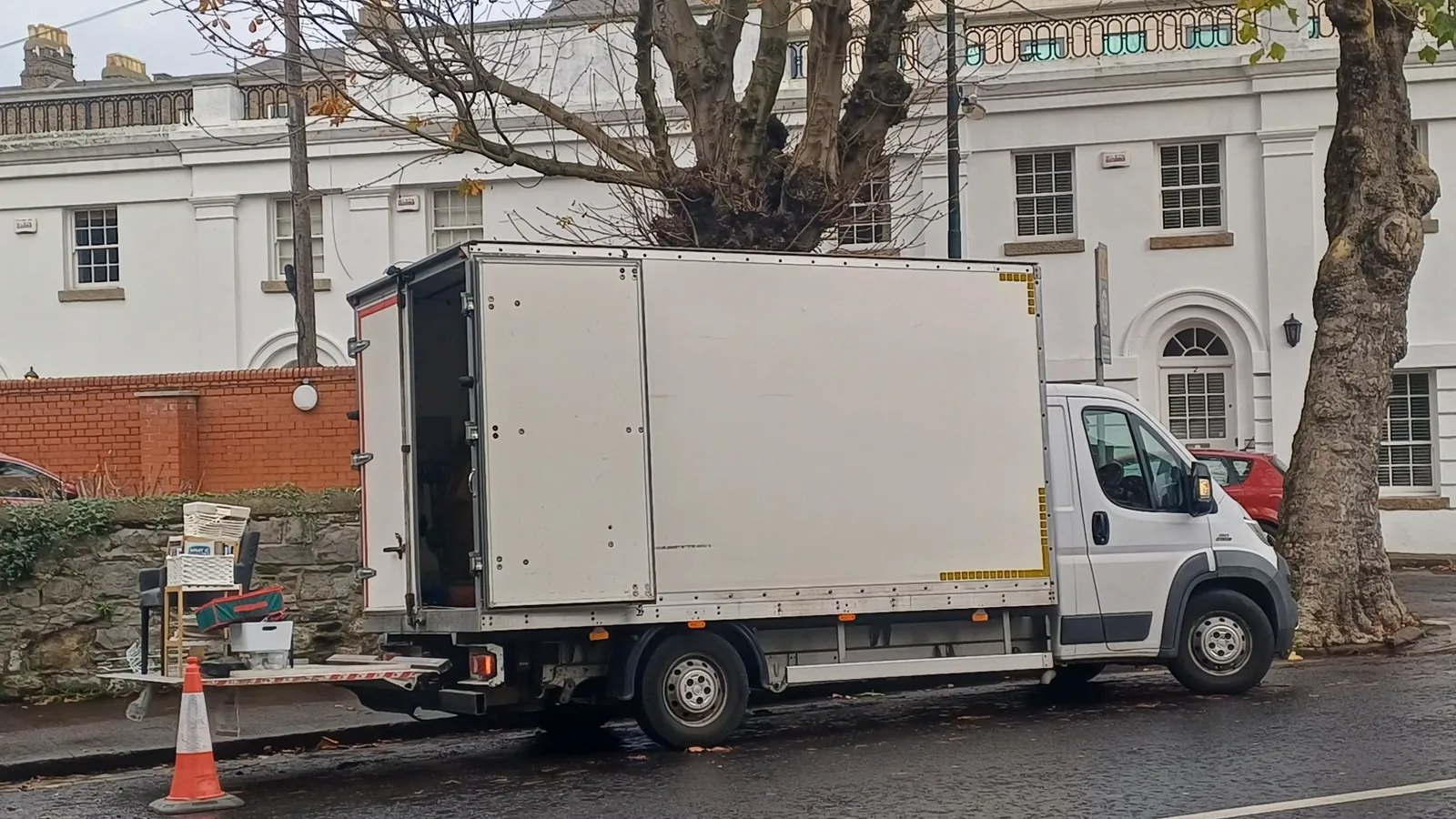
On the older roads, parking is by permit or pay-and-display, and the van has to use a legal space. We pay where it is pay-and-display, and that cost is in the quote. If the nearest space is some distance from your door, the carry along the footpath is part of the job and is priced as such. A photo of the front of the house, taken from the road, tells us what to expect.
When the rest of the house is being cleared
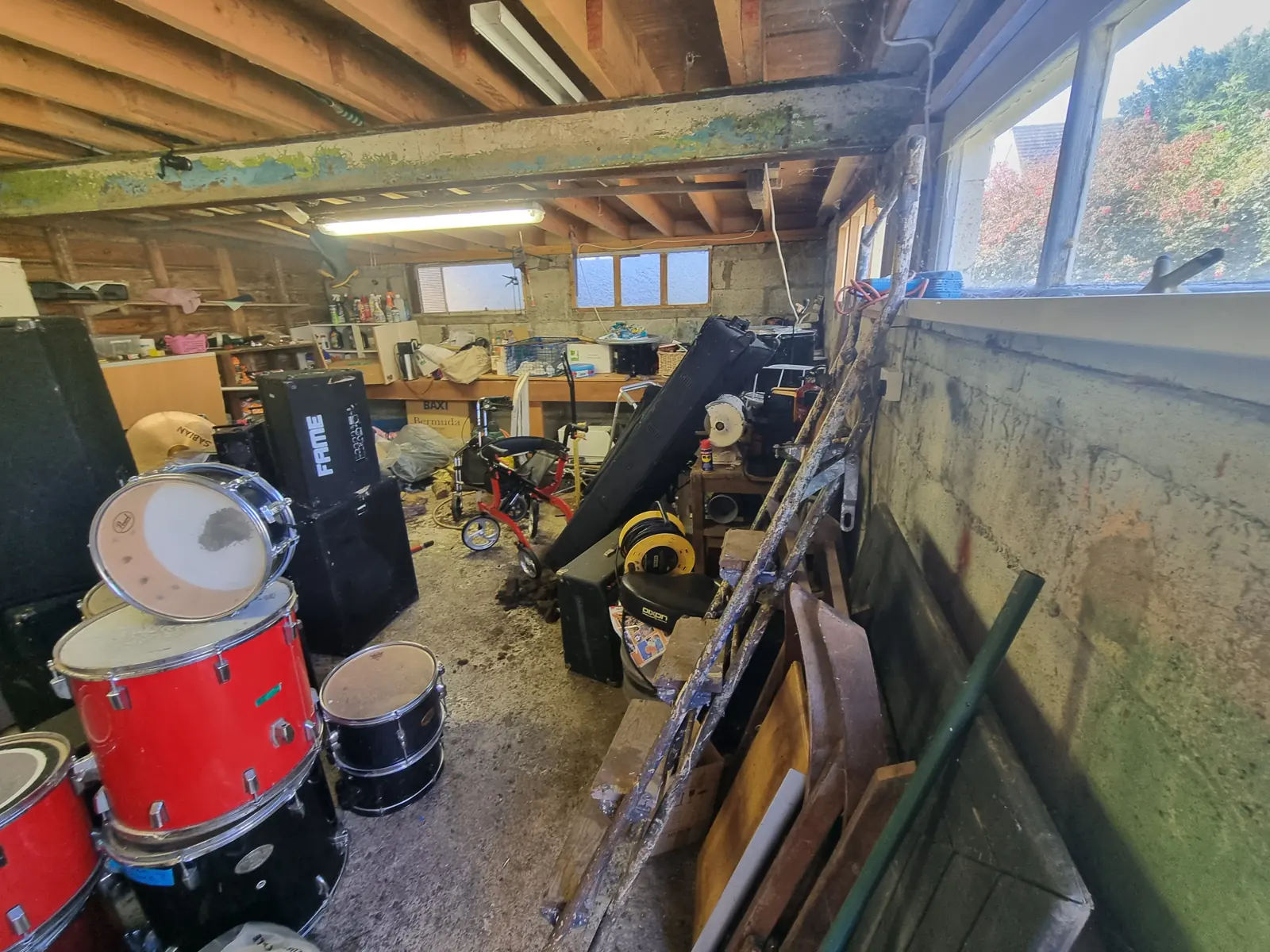
A top floor is often cleared because the house is being sold, or after a death in the family. The attic rooms, the roof space and the rest of the house can be one job with one price. So can the mews garage or coach house at the end of the garden, which we cover in garage clearance in Monkstown.
What Junk Removal does on an attic job
- Attic clearance: top-floor rooms and roof spaces emptied, with everything carried down and taken away.
- House clearance: when the top floor is one part of emptying the whole house.
- Bereavement clearance: the same work at the family’s pace, when the house belonged to a parent.
- Furniture removal: for the beds and wardrobes that came down and are not wanted anywhere.
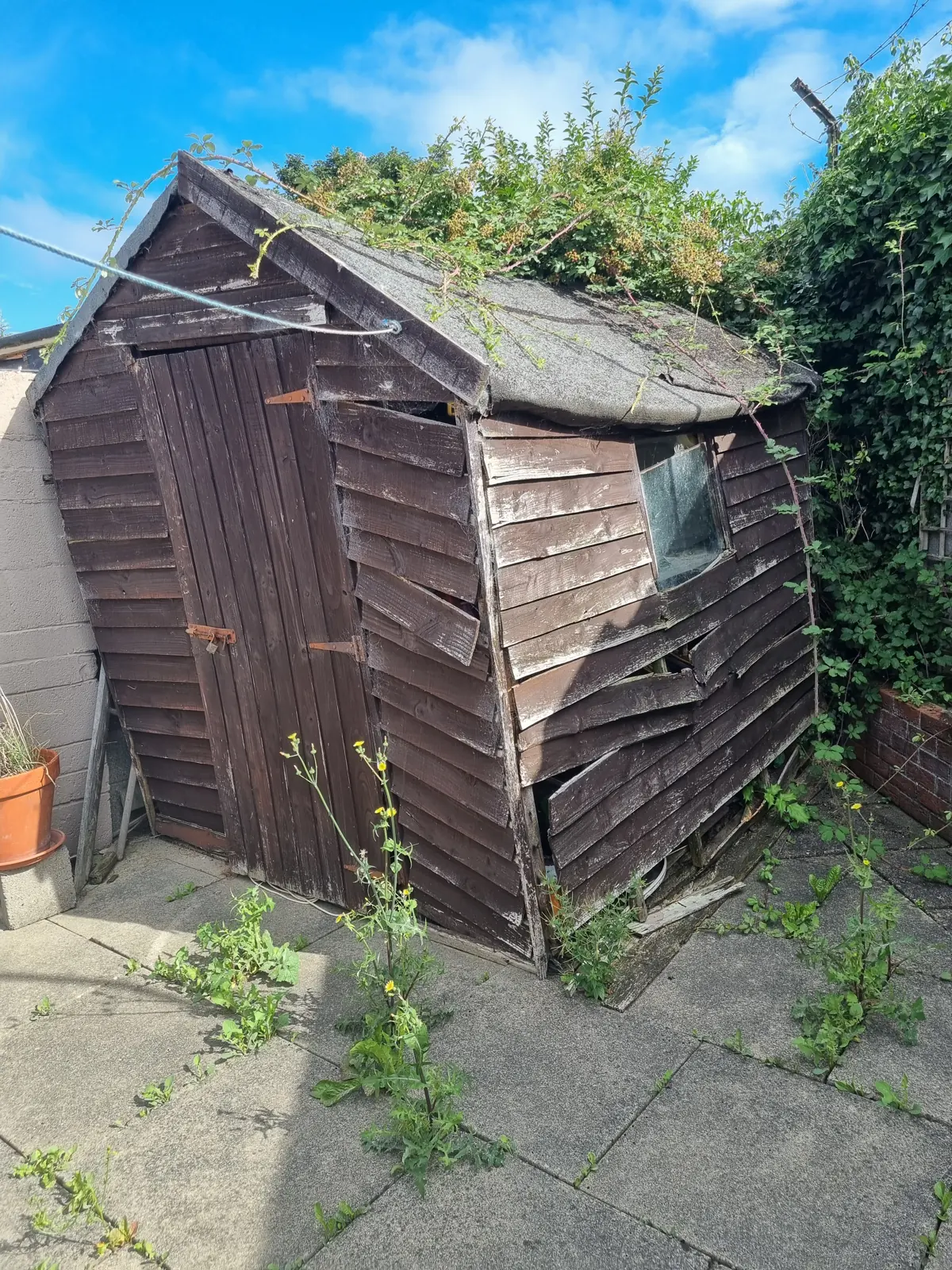
- Garage clearance and shed clearance: cheaper on the same visit, because the van is already outside.
Usable items are set aside for reuse where we can arrange it, metal goes for scrap, electrical items go for recycling, and what remains goes to an authorised facility under our waste collection permit, NWCPO-25-13287-01. We are fully insured.
What to send for a price
- A photo of each top-floor room, taken from its door.
- A photo of the top flight of stairs, looking up from the bottom of it.
- The number of flights from the top floor to the front door.
- A photo from the hatch, if there is a roof space, with a torch or the phone light on.
- Anything large you can see: wardrobes, beds, a water tank.
- What you are keeping, if anything.
Next step
Send the photos on WhatsApp to 085 202 1222, or use the quote form below. You will get a fixed price in writing and a day that suits, Monday to Friday from 8am to 5pm or Saturday from 8am to 2pm.