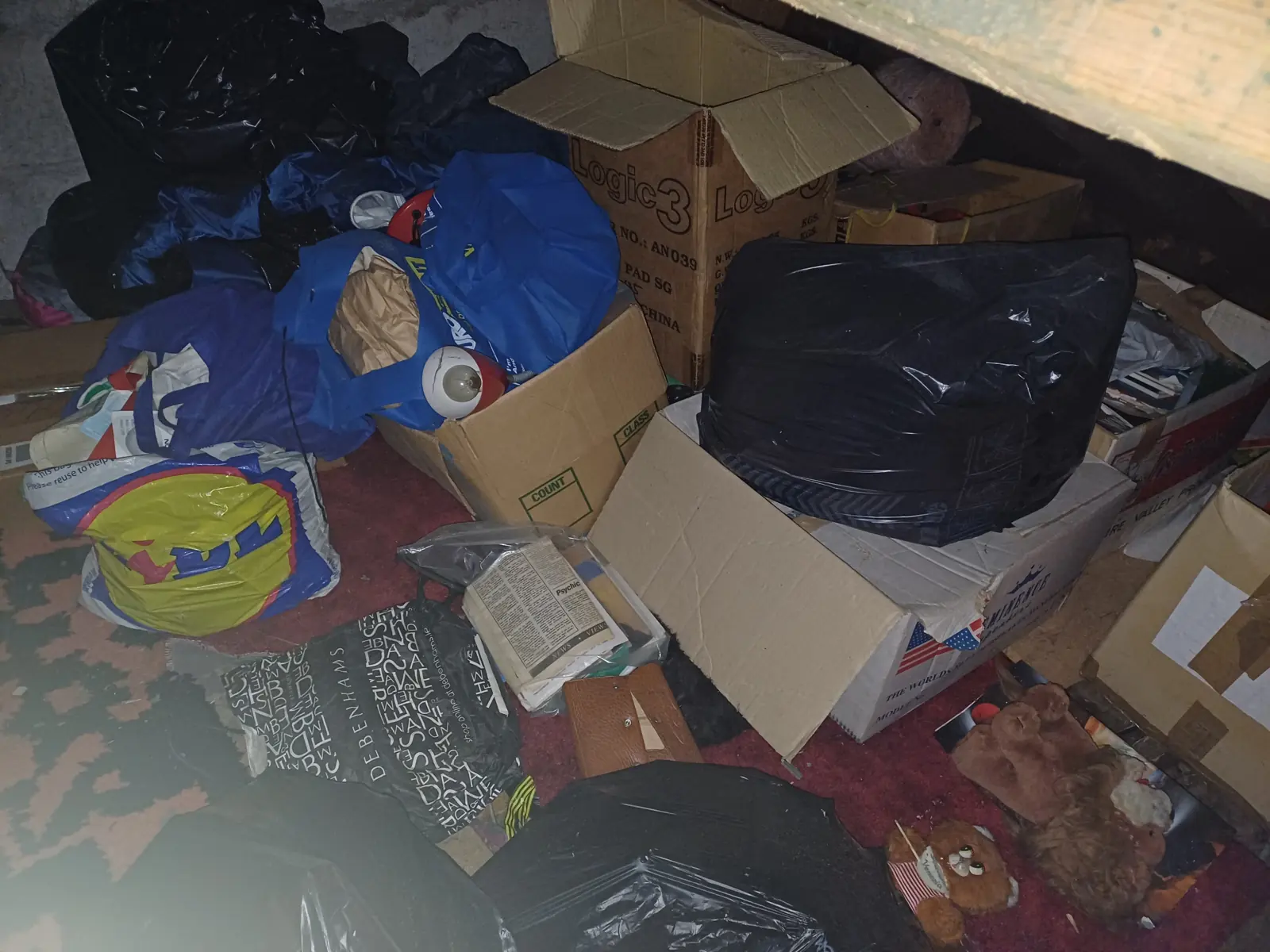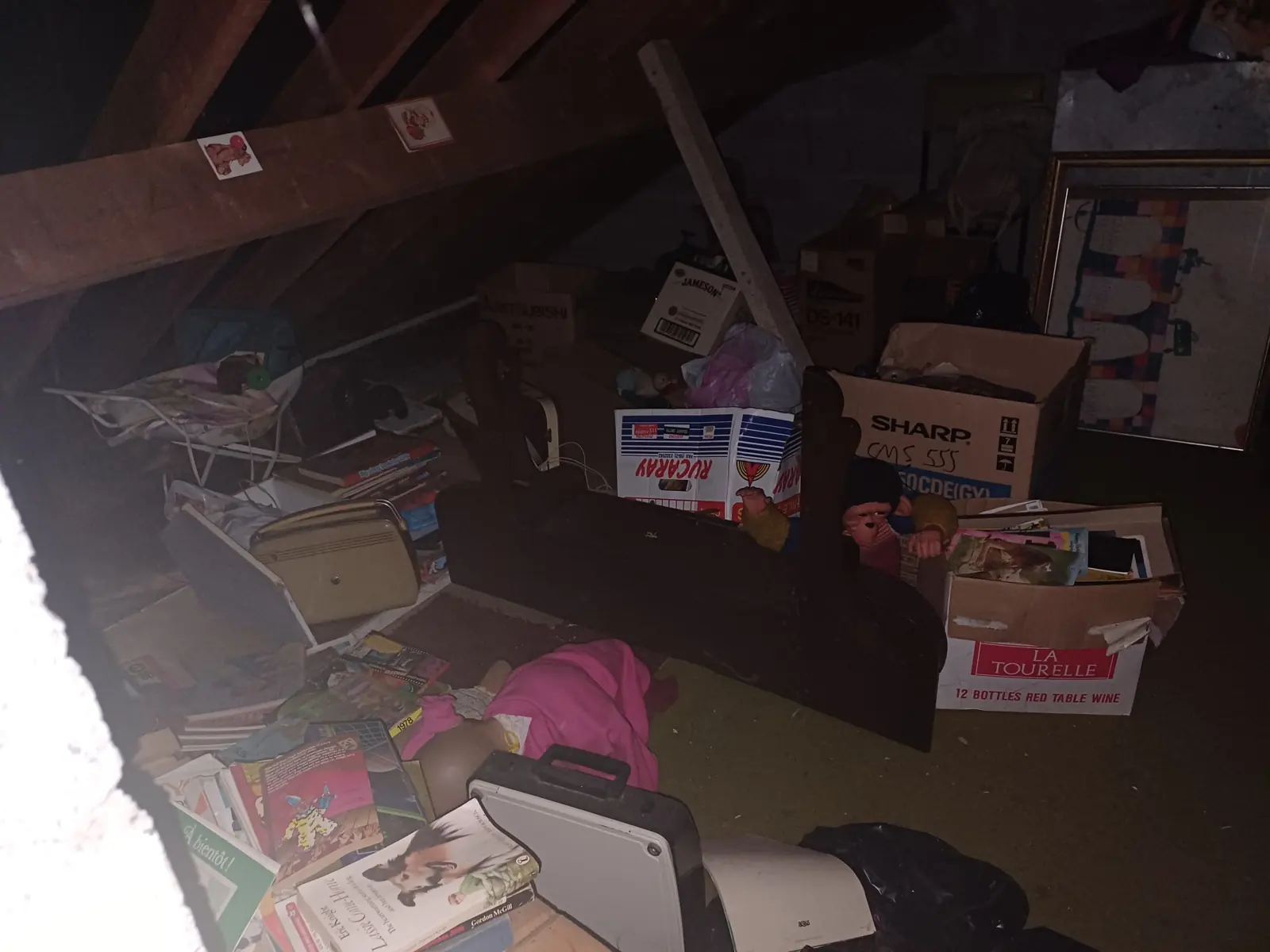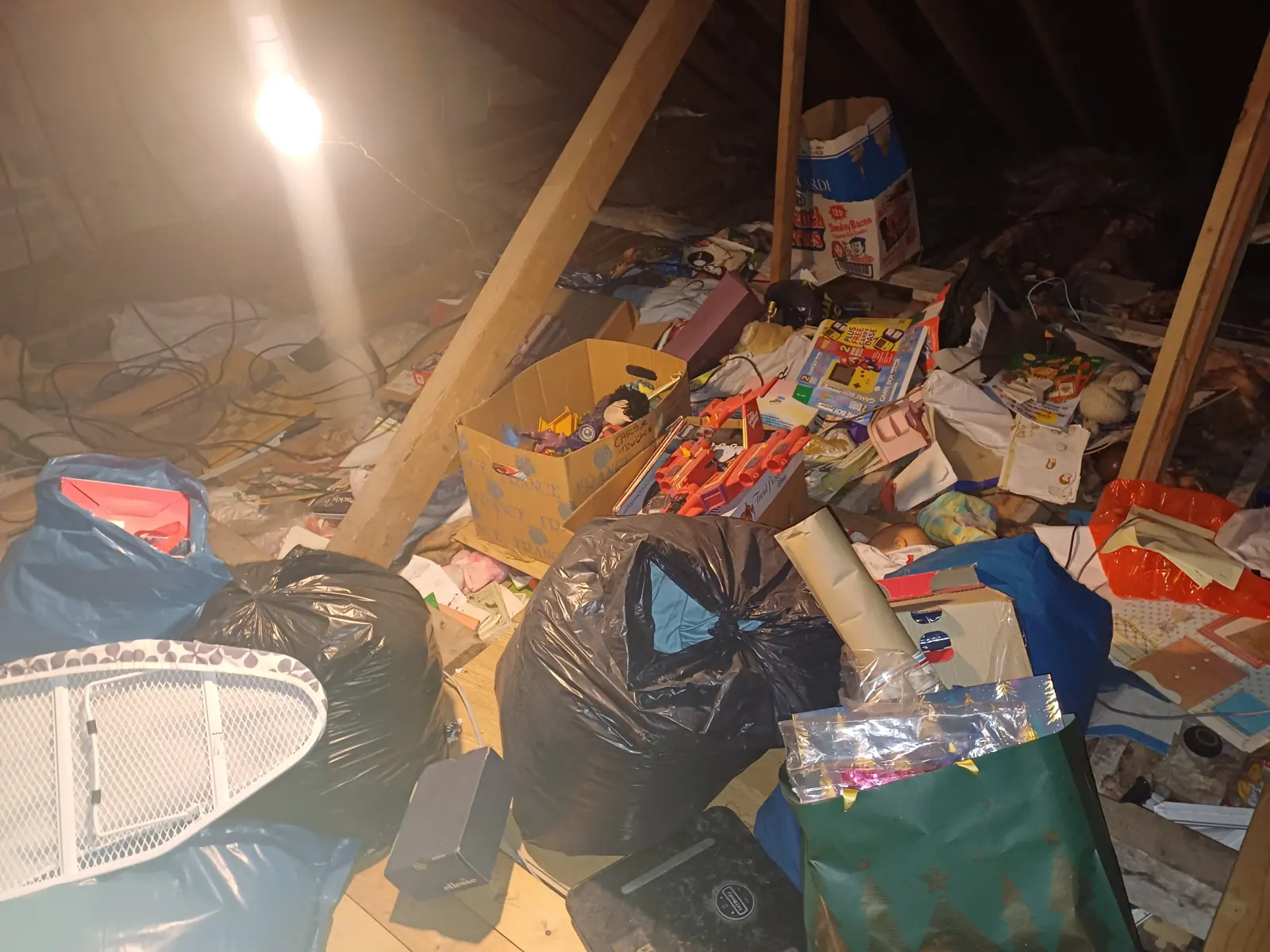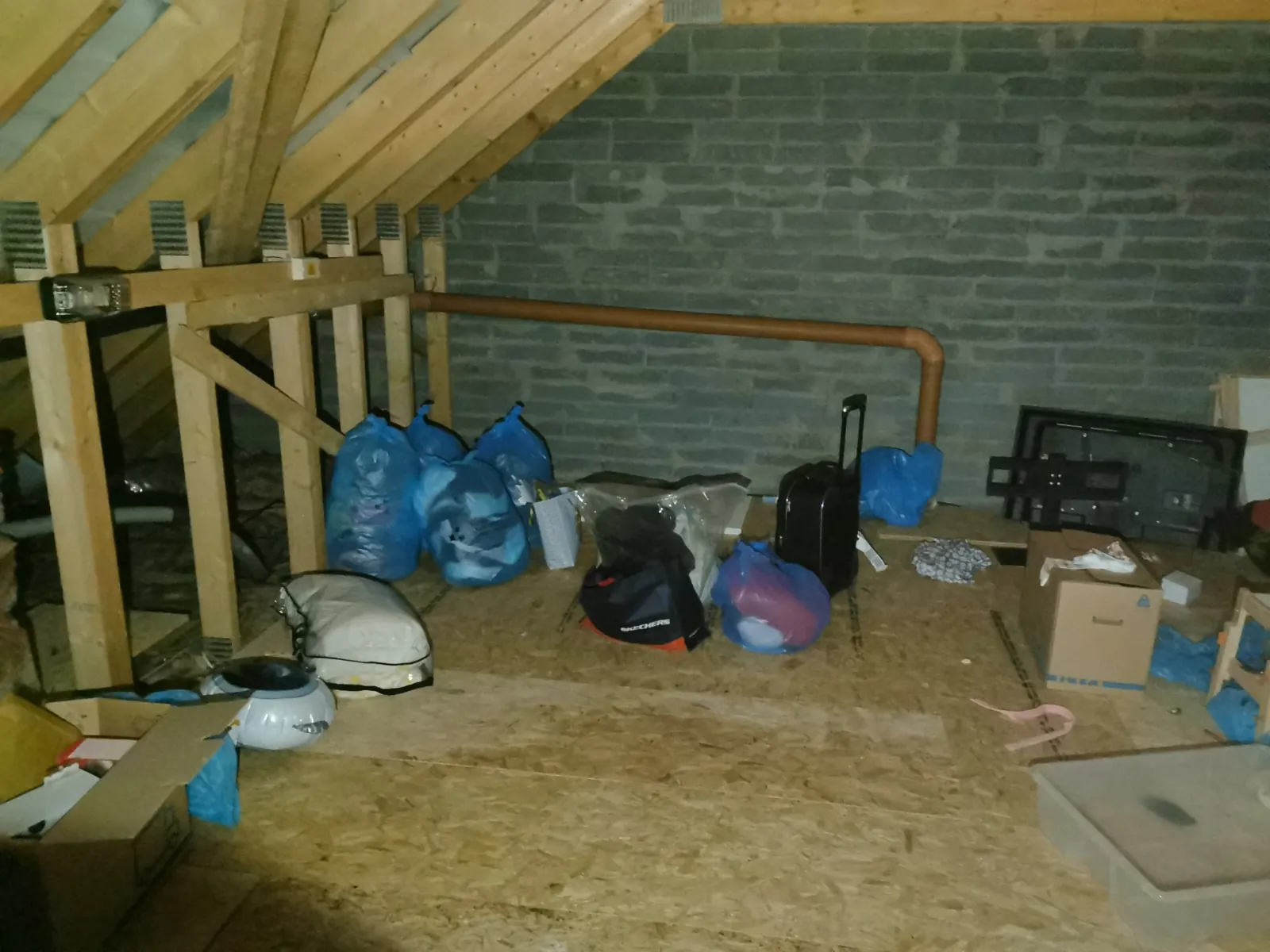






Ask anyone in Blackrock what is in their attic and the answer is a pause. The Christmas decorations, certainly. Suitcases. The cot. School books and university notes belonging to children who now have attics of their own. After that it becomes guesswork, and the guess is always too low.
Our main page on attic clearance explains the service across Dublin, and our page on house clearance in Blackrock covers the area. This page is about the practical side of one job: getting a full attic out of a house through an opening that is often no wider than a suitcase.

Three kinds of attic in Blackrock
The housing in Blackrock falls into three groups, and so do the attics.
- The large detached and semi-detached houses on Avoca Avenue, Mount Merrion Avenue and Carysfort Avenue. These have big roof spaces, often boarded and lit, reached by a folding ladder on the landing. They hold the most, because there was room to keep everything.
- The Victorian terraces and cottages in the village, around Main Street and Idrone Terrace. Some have a small roof space reached by a hatch above the return of the stairs, and some have a top-floor room under the slates reached by a narrow staircase.
- Later houses and estates further from the sea, with trussed roofs, a standard hatch and a light covering of boards near it.
Each one clears differently. The big attic takes time because of how much there is. The terrace takes time because of how awkward it is to reach. The estate house is usually the quickest of the three.
The hatch decides the method
Before anything else, we want to know three things about the hatch.
- How big it is. Measure the opening, not the door. Most things in an attic were chosen, without anyone thinking about it, to fit that opening.
- What reaches it. A folding attic stairs, a sliding loft ladder, or nothing at all. A fixed stairs lets the crew carry with both hands. A stepladder means everything is passed down hand to hand.
- Where it is. A hatch over a wide landing is simple. A hatch over the stairwell, or in a box room or a hot press, needs a plan before the day.
A photo of the hatch with the ladder down, taken from the landing, answers all three.
How a full attic comes down
The method is the same in every house. One of the crew works in the attic and the other stays on the landing.
- Dust sheets go down on the landing and the stairs, and the route to the front door is cleared.
- A light goes up, so the far corners can be seen and nothing is left behind a water tank.
- Items are passed down one at a time. Boxes that have gone soft are repacked up there first, and loose things are bagged.
- The landing is kept moving. Each piece goes straight down the stairs and out to the van, so nothing is stacked outside the bedrooms.
- Personal things are put to one side as they appear, and shown to you.
- The attic is swept of loose debris and the hatch closed.
What went up easily and comes down slowly
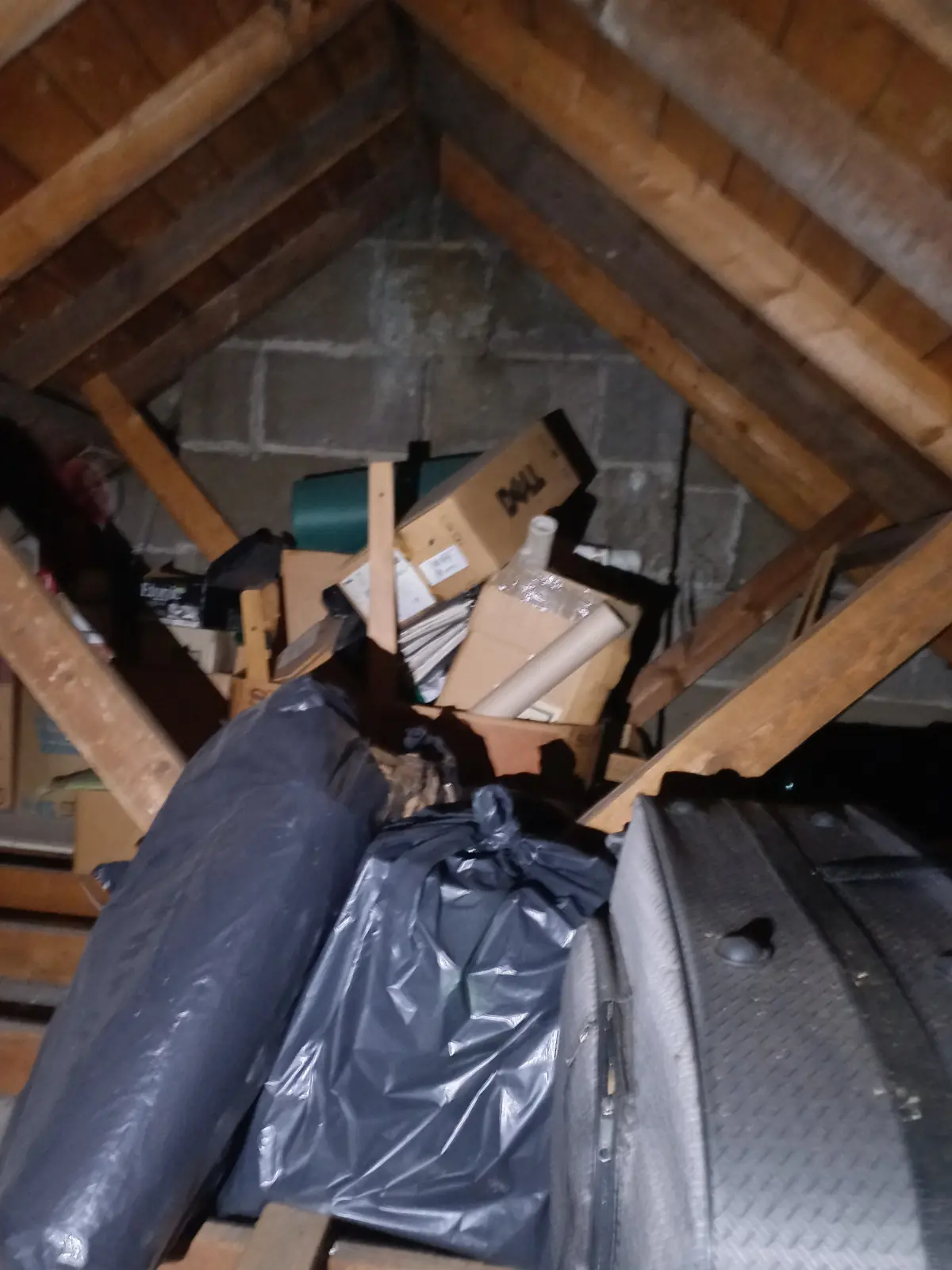
Most of an attic is boxes and bags, and those are quick. A few things are not, and it helps to know about them before the day.
- Furniture. A wardrobe, a bed frame or a desk that was carried up in pieces comes down in pieces. We bring the tools.
- Old water tanks. A disconnected tank is often wider than the hatch, so it has to be cut down before it will come out.
- Rolls of carpet and underlay. Heavy, long and awkward on a ladder, so they are cut into shorter lengths.
- Doors, shelving and offcuts of timber left after a renovation.
- Boxes of books and papers. Small, and far heavier than they look.
If you can see any of these from the hatch, mention them. They do not stop the job, but they change how long it takes.
Boarded or not
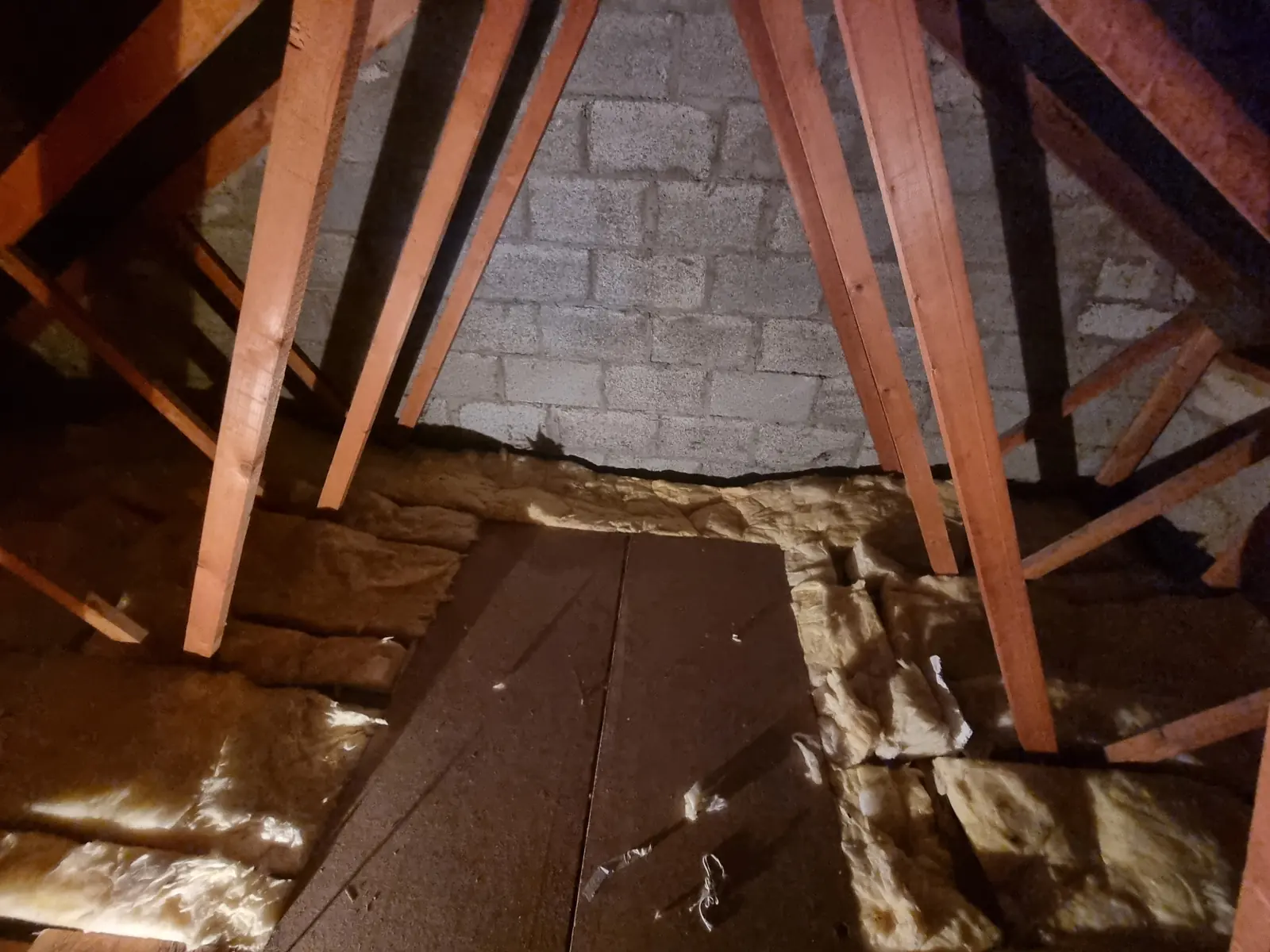
In a boarded attic the crew can walk and carry. In an attic with no floor, they work from joist to joist and cannot put a foot, or a box, on the ceiling between them. Everything is lifted, not slid, so the insulation is not dragged out of place.
It is slower and it takes more care, and that is all. Tell us which you have. If only the area around the hatch is boarded, which is common, say so, because things stored beyond the boards take longest of all.
Insulation stays where it is. It is part of the house, and we clear what has been stored on top of it.
What is set aside before anything leaves
Attics hold the things a family could not throw away, which is exactly why they need a second look. As the attic comes down, the crew opens suitcases, boxes and bags, and puts these to one side:
- Photographs, albums, slides and home films.
- Letters, cards, certificates and anything with a name on it.
- School reports, drawings and the box each child was meant to collect.
- Anything you told us to look out for.
They are left in the room you choose and shown to you. If nobody from the family can be there, they stay together in that room, and a photo of them is sent to you with the photos of the empty attic.
What we cannot take
We do not handle asbestos. If there is old pipe lagging or board in the attic that looks suspect, we leave it alone and tell you, because it needs a specialist contractor. We also do not take clinical waste, paint, solvents, oils, fuel, chemicals, batteries or gas cylinders, though it is rare to find any of those in an attic.
A live wasps’ nest has to be dealt with by a pest controller before we come. Old, empty nests are common and are not a problem.
What Junk Removal does on an attic job
We are a clearance company with a two-person crew and a box van. On a job like this, several of our services usually come together:
- Attic clearance: everything down through the hatch, sorted and taken away.
- House clearance: if the attic is one part of emptying the whole house.
- Garage clearance and shed clearance: usually just as full, and cheaper on the same visit because the van is already outside.
- Bereavement clearance: the same work at the family’s pace, when the attic belonged to a parent.
- Furniture removal: for the pieces that came down and are not wanted anywhere.
Usable items are set aside for reuse where we can arrange it, metal goes for scrap, electrical items go for recycling, and what remains goes to an authorised facility under our waste collection permit, NWCPO-25-13287-01. We are fully insured.
What to send for a price
- A photo from the hatch in each direction, with a torch or the phone light on.
- The hatch measurements and a photo of the ladder or stairs.
- Whether the floor is boarded, fully or only near the hatch.
- Anything large you can see: furniture, a tank, rolls of carpet.
- What you are keeping, if anything.
If the house is being sold or converted, tell us the date you are working to. Our guides to clearing an attic before a conversion and to sorting an attic yourself first go into those in more detail.
Next step
Send the photos and the hatch size on WhatsApp to 085 202 1222, or use the quote form below. You will get a fixed price in writing and a day that suits, Monday to Friday from 8am to 5pm or Saturday from 8am to 2pm.