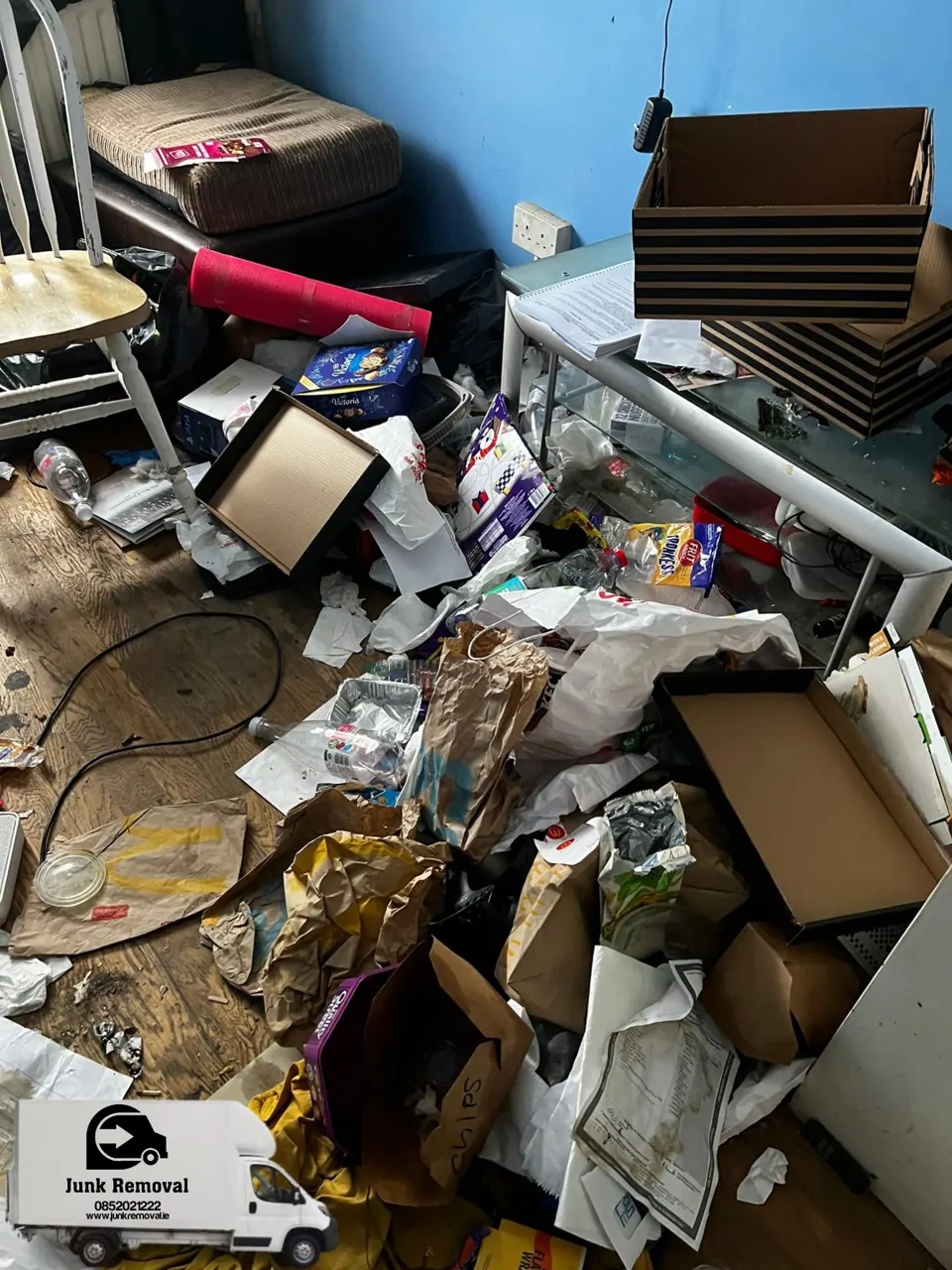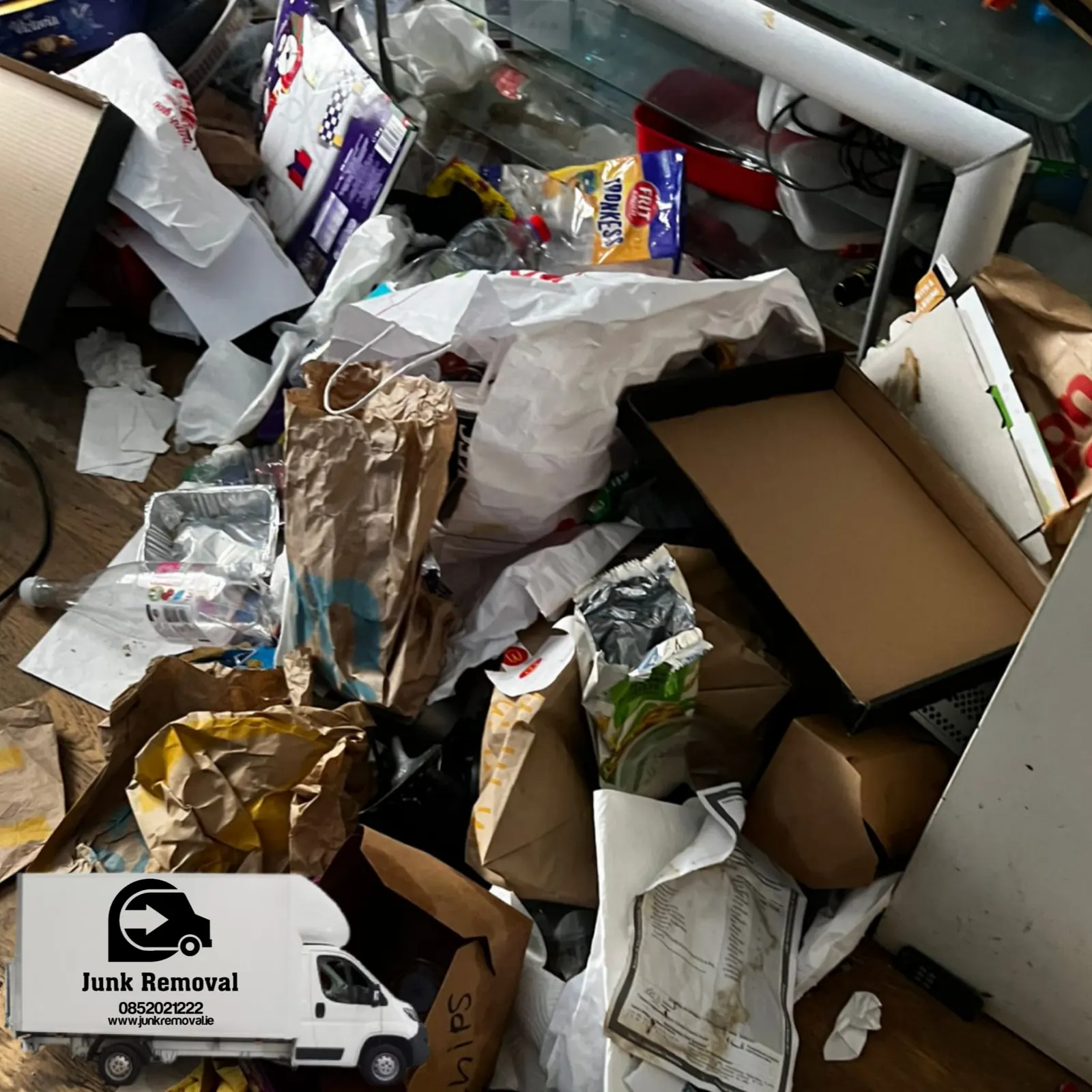
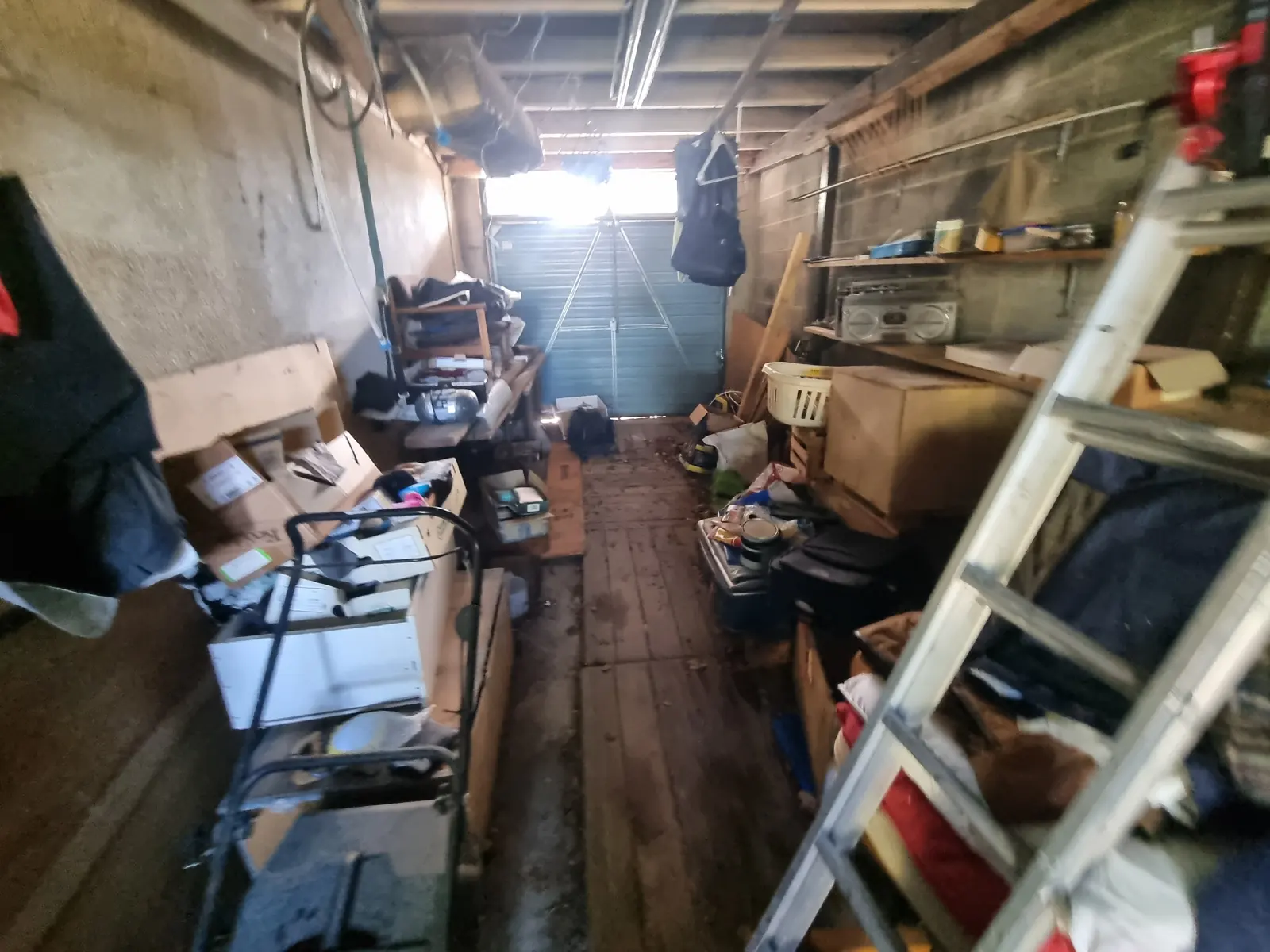






Blackrock has a great many large family homes. On Avoca Avenue, Mount Merrion Avenue and Carysfort Avenue there are detached and semi-detached houses on big plots, many of them lived in by one family for fifty years or more, and almost every one has a garage that stopped holding a car a long time ago.
When that garage finally has to be emptied, the first question is always the same: how much is actually in there. This page answers it. Our main page on garage clearance in Dublin describes the service, and the area page for house clearance in Blackrock covers the neighbourhood. What follows is about one thing: sizing the load properly, so the price you are given is the price you pay.

Why a garage is hard to judge by eye
A sitting room is easy to price from a photo because everything in it can be seen. A garage is the opposite. It is filled from the back wall forwards, so the photo from the door shows the last ten years and hides the twenty before them.
Three things catch people out:
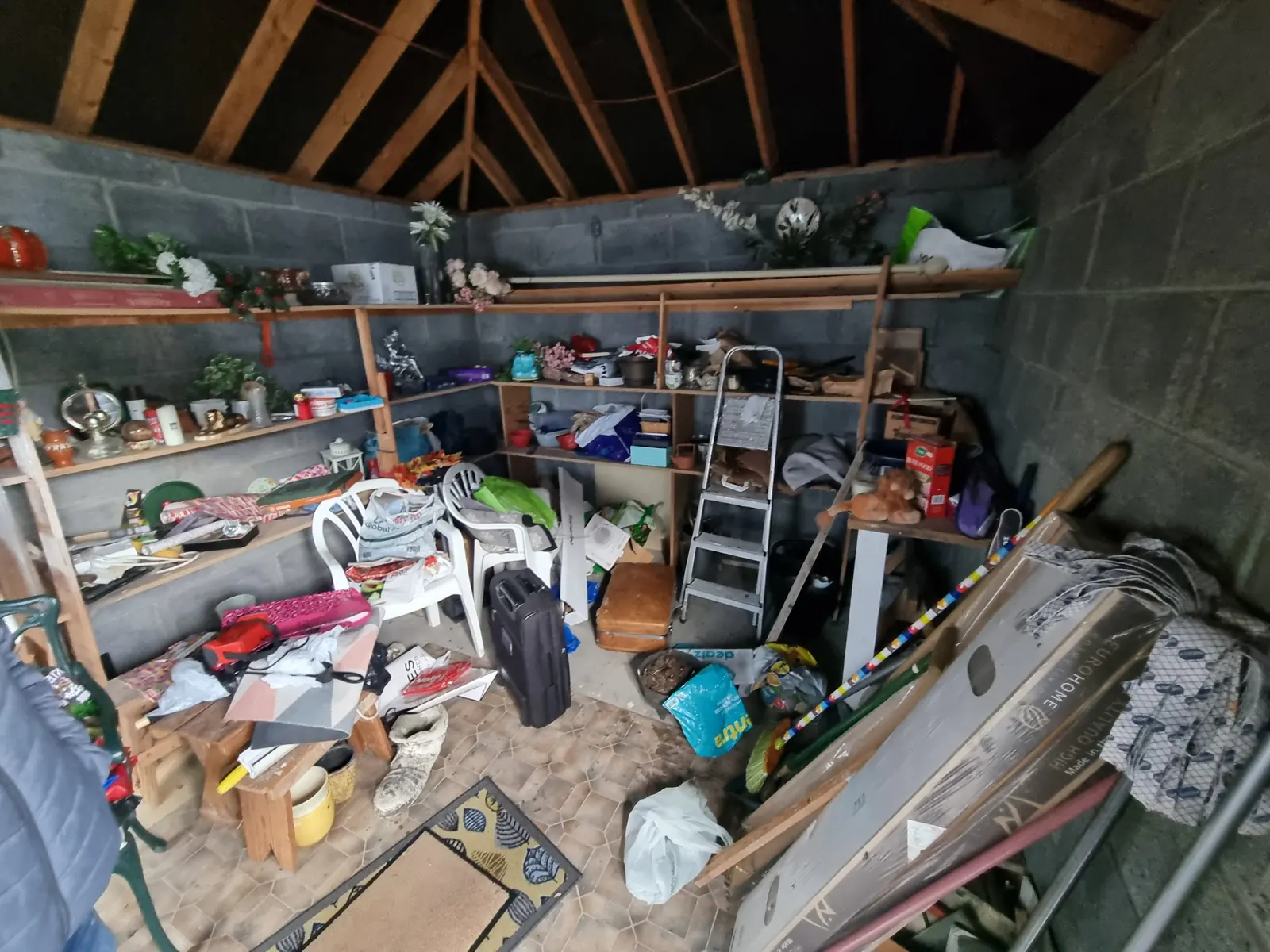
- Depth. A single garage is long and narrow. What looks like one row of boxes is often four rows with furniture stood on end behind them.
- Height. Shelving, roof joists and the top of a wardrobe all get used. A garage stacked to head height holds far more than the floor suggests.
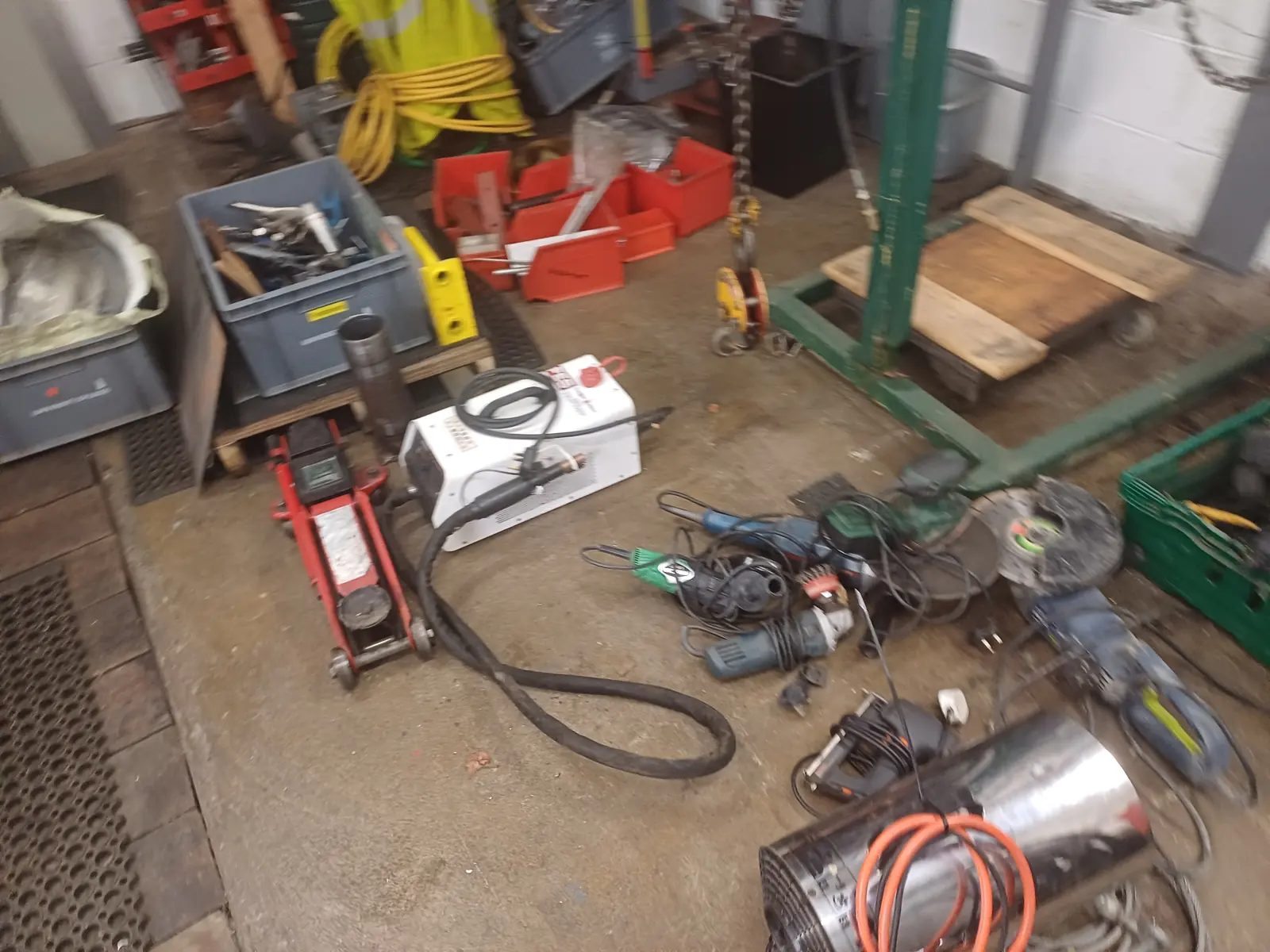
- Density. A room of furniture is mostly air. A garage of boxes, tools and timber is packed solid.
That is why we ask for more than one photo, and why a second photo of the back wall is worth more than five of the front.
Sizing a garage as a van load
We price by how much of the box van the load will fill. As a rule of thumb, these are the sizes we see most often:
- About half a van. An ordinary single garage with a path down the middle, a few appliances and shelving along one wall.
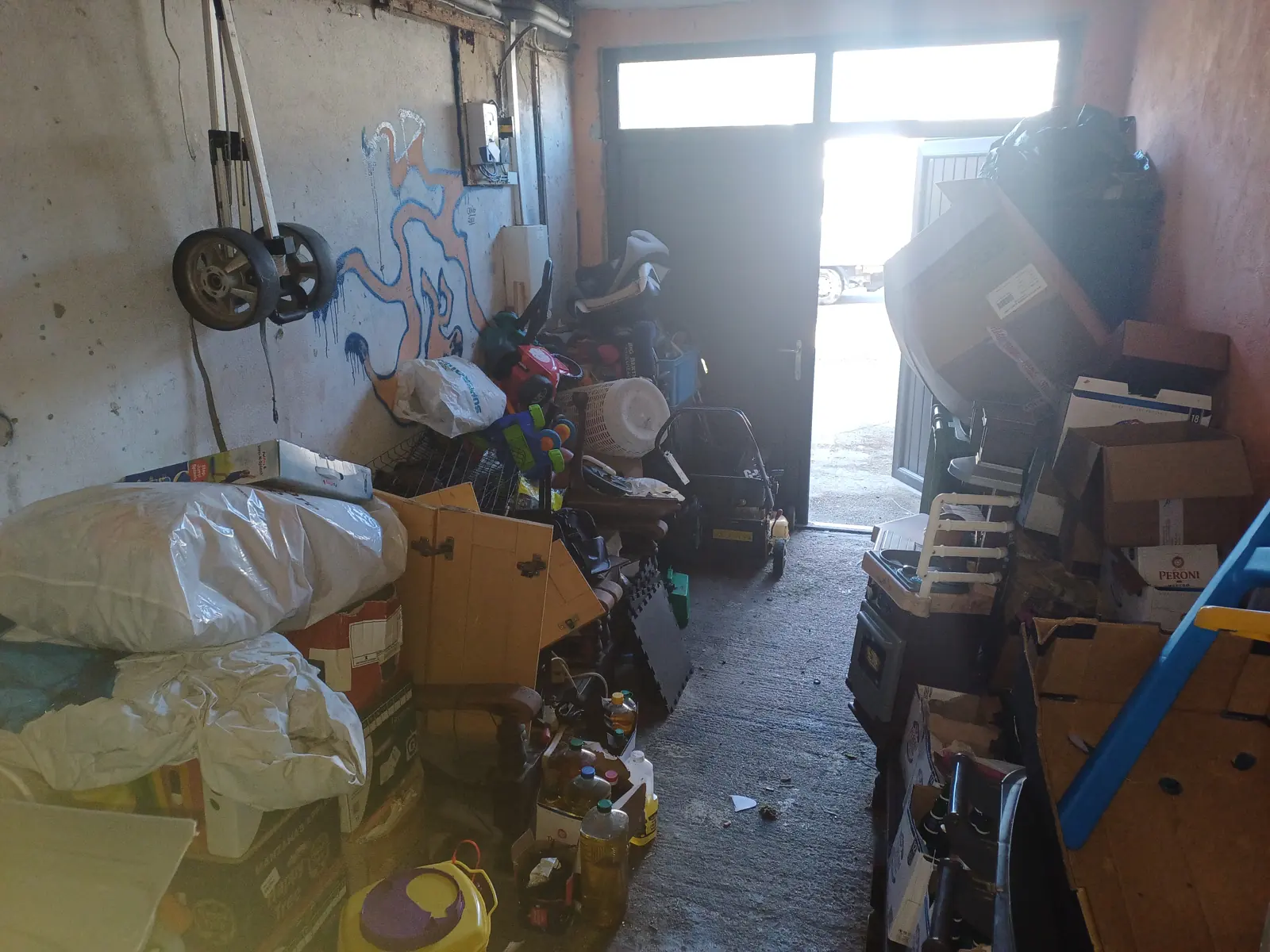
- Closer to a full van. A single garage packed to the door with shelving on both walls, or a garage and a shed cleared together.
- More than one van. A double garage that has been the family store for decades, or a garage cleared along with the attic. We plan two loads, or a bigger crew, and tell you before the day.
You can try this yourself with the van-load planner. Tap in the big items, such as the fridge-freezer, the wardrobe, the bikes and the lawnmower, add a rough count of boxes and bags, and it shows how much of the van they fill. It is a guide, not a quote, and we always confirm the price from your photos.
What makes one garage heavier than another
Two garages of the same size can be very different jobs, because volume is only half of it. Weight matters too, for the crew and for what the load costs to deal with afterwards. These are the things that make a garage heavy:
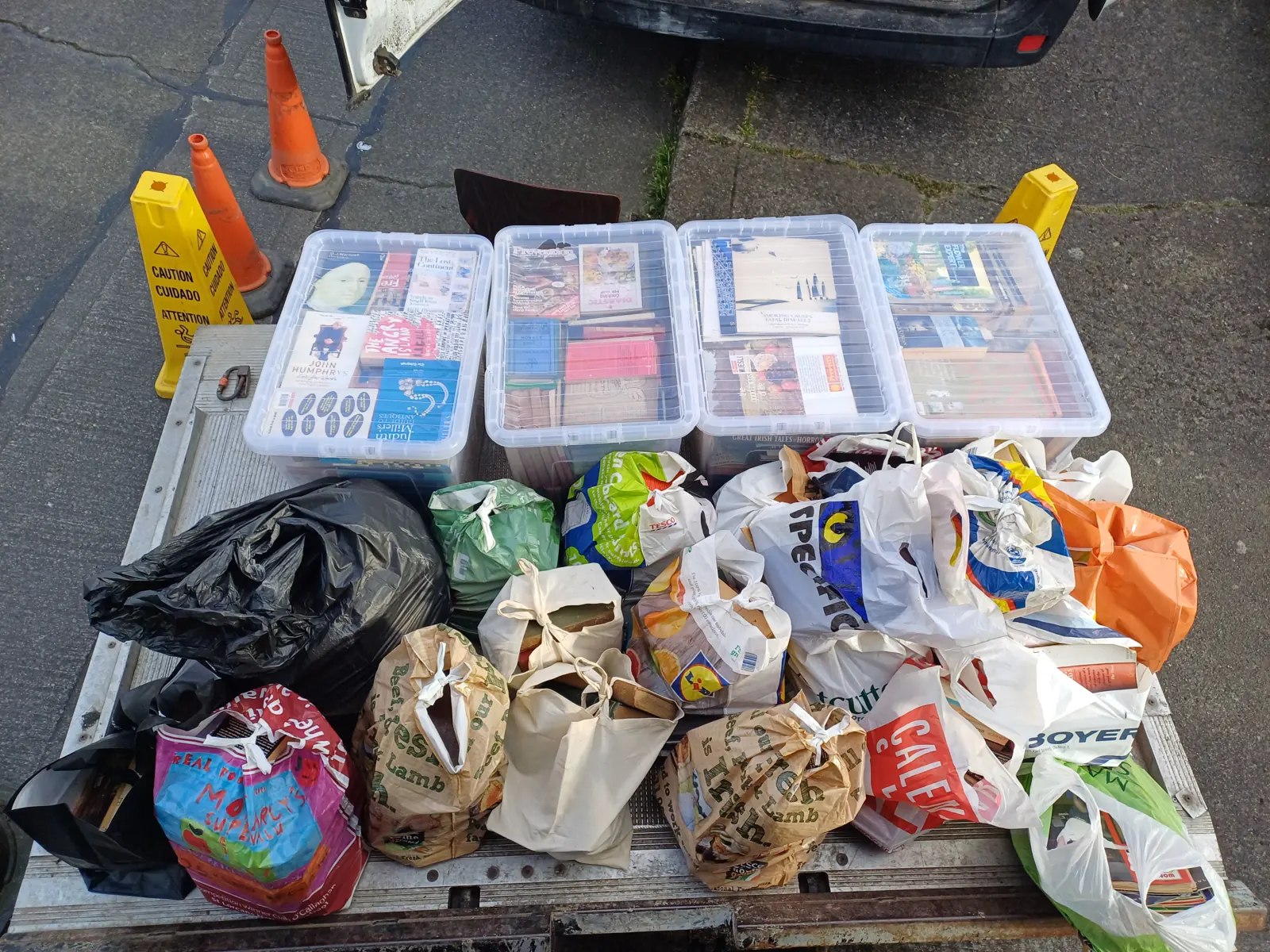
- Boxes of books, magazines and paperwork.
- Tiles, paving slabs, bricks and bags of cement or rubble left from a job.
- Hand tools, vices, engine parts and anything cast iron.
- Hardwood timber, old doors and sheets of board.
- A chest freezer, a second fridge or a washing machine.
None of these is a problem. They only need to be in the photos. A corner of paving slabs that nobody mentioned is the usual reason a garage takes longer than planned, and we would sooner allow for it in the price than find it on the day.
The shelf every garage has
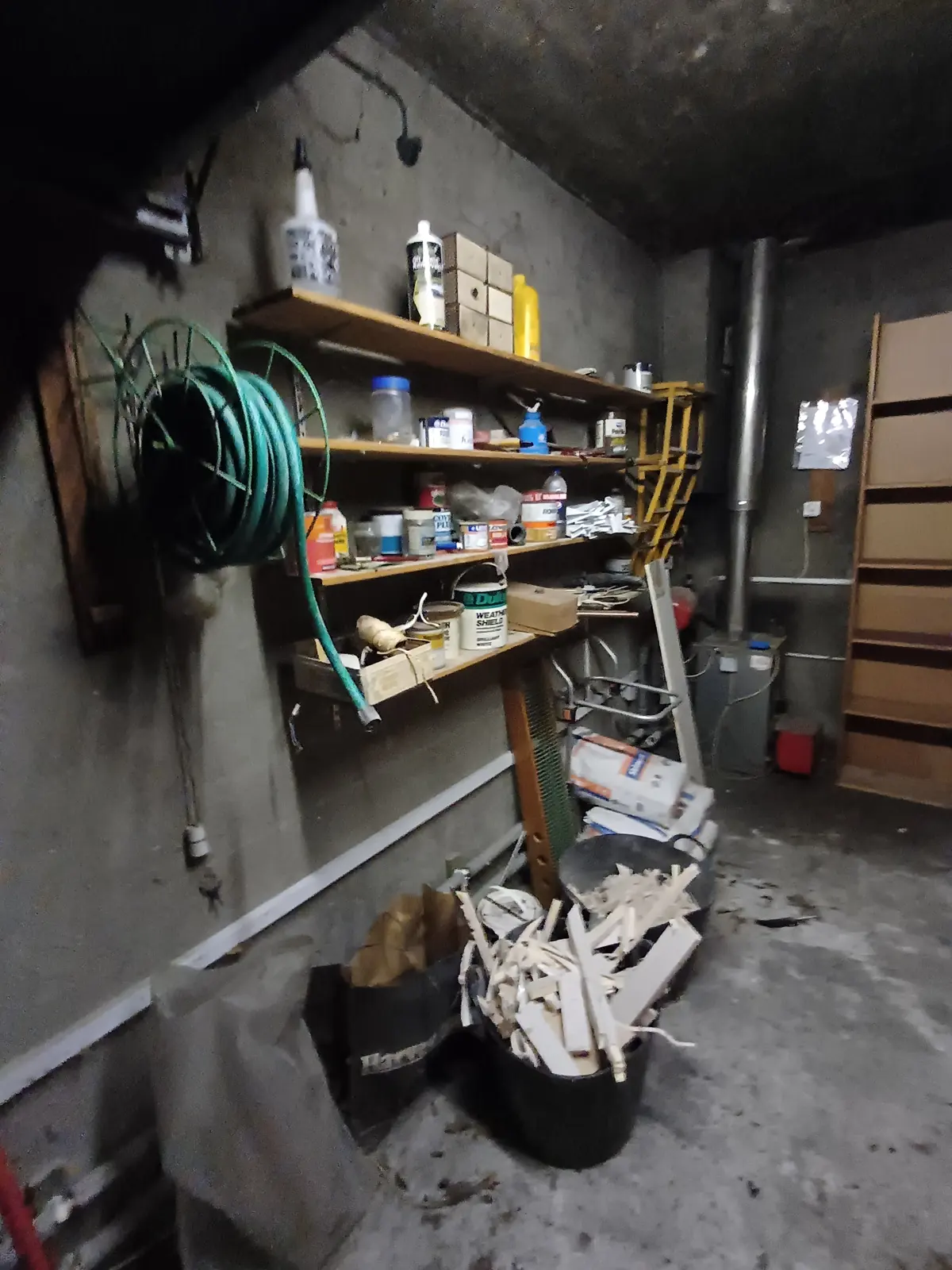
Somewhere in every garage there is a shelf of paint tins, a few bottles of white spirit and weedkiller, a can of two-stroke and a gas cylinder for a heater or a barbecue. None of it can go in the van.
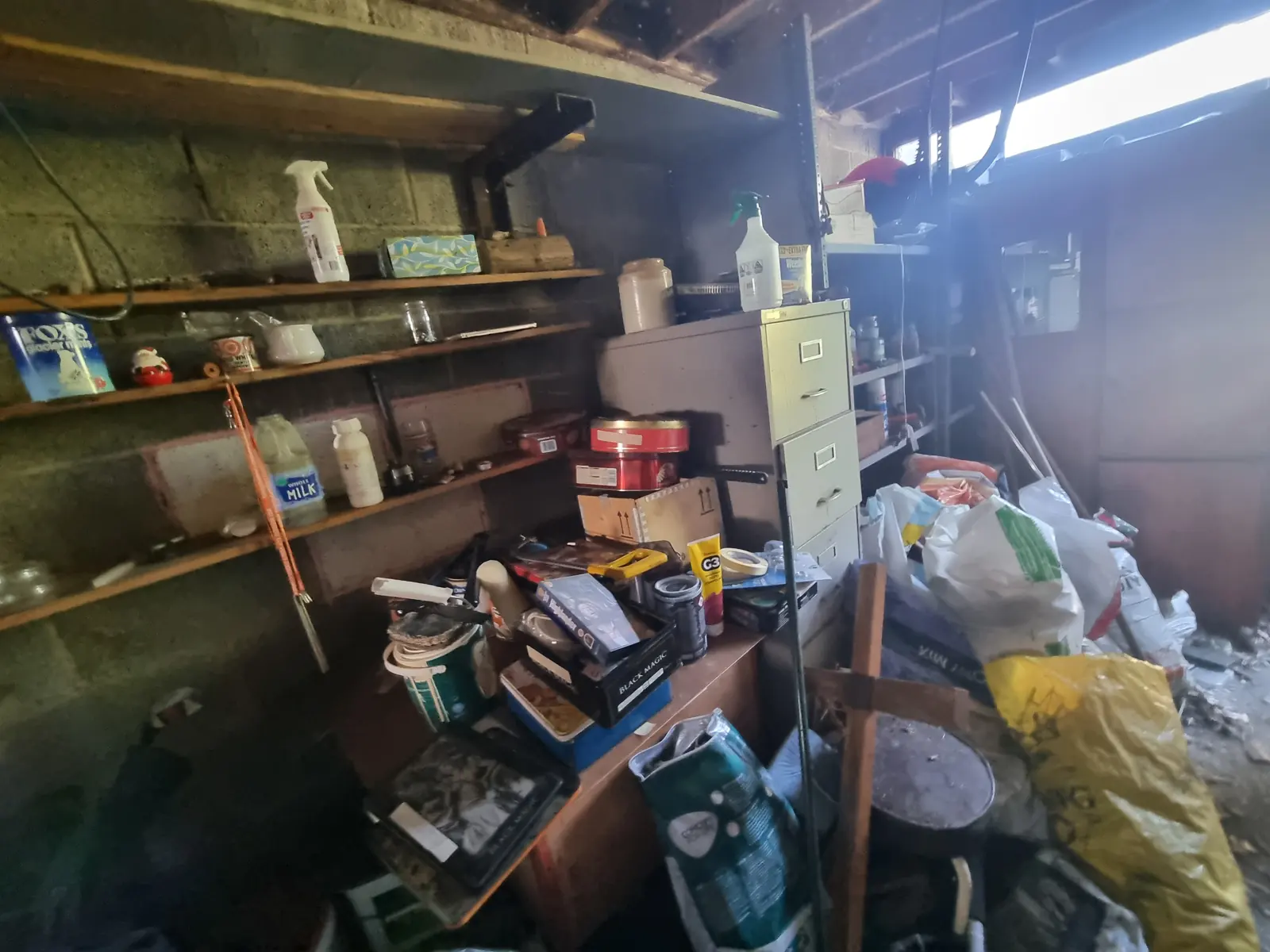
We do not collect paint, solvents, oils, fuel, chemicals, batteries or gas cylinders. The crew stands them together in one corner and tells you where they are, so the garage is still left clear around them. A civic amenity site takes most of them, and a gas cylinder goes back to a supplier of that brand.
We also do not take asbestos or clinical waste. If the garage roof is old corrugated cement sheeting, leave it alone and mention it, because it may contain asbestos and has to be removed by a specialist contractor.
The photos that fix the price
Five photos are enough for almost any garage:
- From the open door, standing back far enough to get both walls in.
- Each side wall, so the shelving and what is on it can be seen.
- The back wall, or as close as you can get, even if it means holding the phone above your head.
- Anything heavy or awkward: the freezer, a pile of slabs, a workbench, gym equipment.
- The driveway from the road, showing where a van can stand.
Add one line saying what is staying, and whether the shelving and bench are to go. With that we give you a fixed price in writing and tell you how many loads it is.
Getting the van to the door in Blackrock
Access is usually the easy part on the avenues. Most of the larger houses have a driveway, the van reverses up to the garage and everything goes straight in. If there are gate pillars or overhanging trees, a photo from the road tells us whether the van fits or whether we carry from the gate.
Closer to the village it is different. The streets around Main Street are narrow and busy, parking is tight, and where a house has a garage at all it is often on a lane behind the terrace. Tell us if that is your garage, and whether a van can get down the lane. If it cannot, the crew loads from the nearest point the van can reach, and that carry is allowed for in the price.
What Junk Removal does on a garage job
We are a clearance company. A two-person crew arrives with a box van, carries everything out from where it sits and takes it away. On a garage job these are the services that usually come together:
- Garage clearance: the contents, the shelving and the workbench, with the floor swept at the end.
- Shed clearance: emptied on the same visit, and a timber, metal or plastic shed taken down if you want the garden back.
- Attic clearance: everything handed down through the hatch, which is worth doing while the van is outside.
- Furniture removal: for the sofa, the beds and the wardrobes that went out to the garage when they were replaced.
- Junk and rubbish removal: the bags, the broken bits and the pile at the side of the house.
Working tools, bikes and good furniture are set aside for reuse where we can arrange it. Metal goes for scrap, appliances go for electrical recycling, and what remains goes to an authorised facility under our waste collection permit, NWCPO-25-13287-01. We are fully insured.
On the day
- You show us what stays. Marked items are left where they are, or moved to one side.
- We start at the door and work back. Each row comes out before the next is touched, so nothing is climbed over.
- Shelving and benches come down last, once they are empty.
- Paint, oils and cylinders are stood together in one corner for you to deal with.
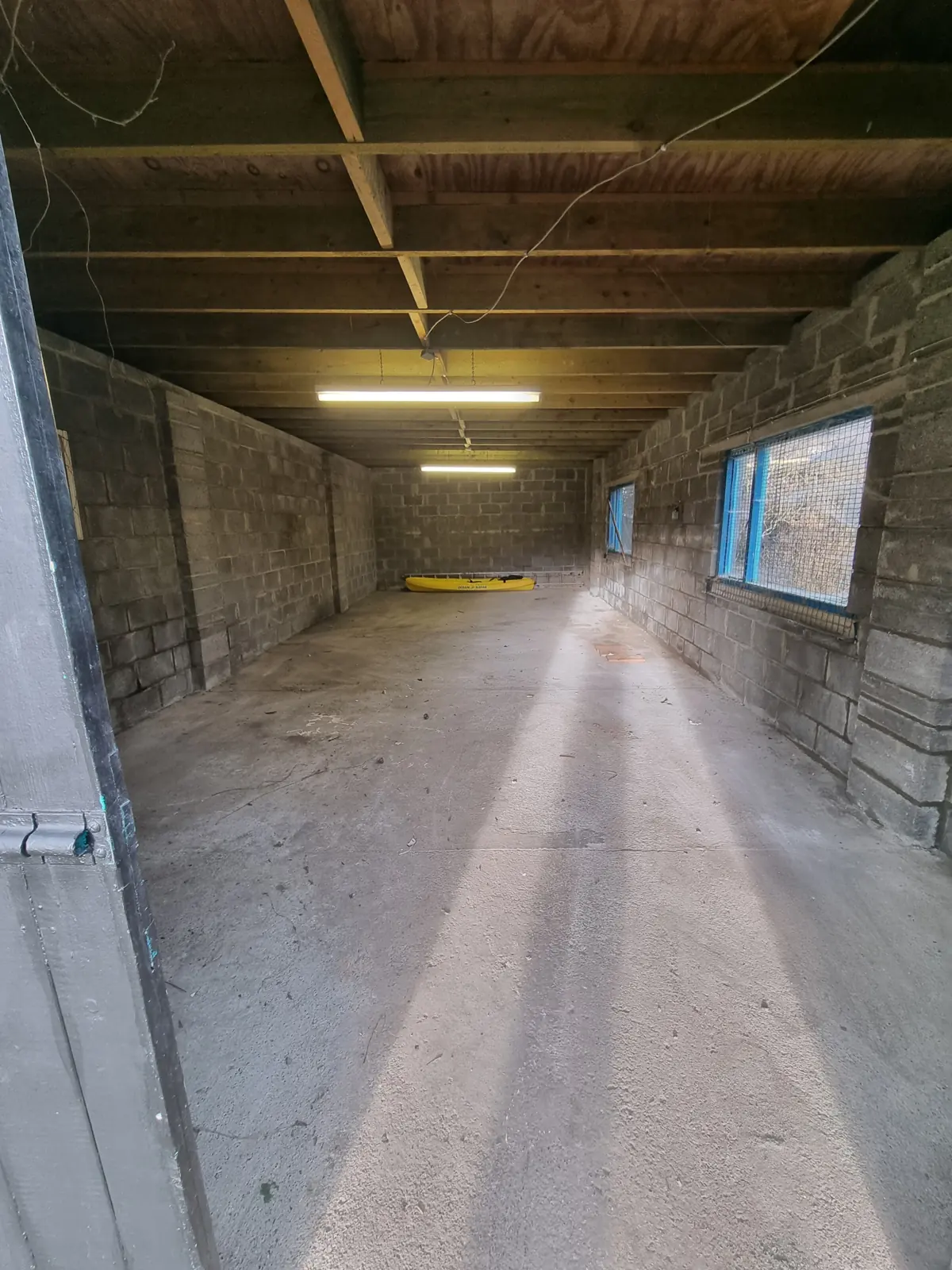
- The floor is swept and the door closed, and you get a photo of the empty garage if you are not there.
We work Monday to Friday from 8am to 5pm and Saturday from 8am to 2pm. If the garage is one part of a bigger job, house clearance vs skip hire explains when a van makes more sense than a skip, and our garage clearance guide covers sorting it yourself first.
Next step
Send the five photos on WhatsApp to 085 202 1222, or use the quote form below, and tell us what is staying. You will get a fixed price in writing, the number of van loads and a day that suits you.